
After 65: not long walks, not total rest – why geriatricians swear by “snack movement”
On a grey Tuesday in November, my dad, 72, announced he was going for “his big walk”. Scarf on, keys in hand, a sort of stubborn pride in his shoulders. Twenty minutes later he was back on the sofa, rubbing his knee and pretending Match of the Day was the reason the outing had been cut short. The truth was quieter and more awkward: one heroic burst of activity now left him exhausted for the rest of the day.
For years, that was the health advice he’d absorbed – get out, do your 30–40 minutes, hit your steps, then you’ve “earned” your rest. It sounded noble. It also meant most days he did nothing at all, because the idea of a proper walk felt too big. Between the Instagram hikes and the wearable-tech charts, everyday movement started to look like a project. One that many people simply stop handing in once they hit their late sixties.
A few months on, his GP suggested something that sounded almost too small to matter: three minutes of gentle movement, several times a day. Not a brisk walk. Not a workout. What some geriatricians now call “snack movement”.
The day the 10,000-step myth quietly fell apart
If you ask most people over 65 what “being active” means, you still hear the same answers: “a good walk”, “my aerobics class”, “swimming once a week if my hip allows”. All valuable. All also fragile. One cancelled class, one rainy spell, one flare-up of arthritis, and the whole plan collapses. The body learns a different routine instead: long stretches of sitting, punctuated by short trips to the kettle.
We cling to big, round numbers – 10,000 steps, 30 minutes of moderate exercise – as if they’re medical commandments. In reality, they were marketing or neat averages long before they were ever robust science. The deeper research in older adults is far less glamorous and far more humane. It keeps repeating one boring sentence: the danger is not that your walk is too short; it’s that your sitting is too long.
No one really tracks how many hours they sit in an armchair or at the kitchen table. Sedentary time creeps in between crossword clues and television episodes. Muscles quietly shrink, balance quietly worsens, blood sugar quietly misbehaves. Then one awkward fall or chest infection appears “out of nowhere”. Except it didn’t. It arrived on a long, smooth runway of stillness.
So geriatricians have begun to shift the question. Instead of “Did you manage your long walk today?” they ask, “How many times did you break up your sitting?”
The 3‑minute revolution hiding in plain sight
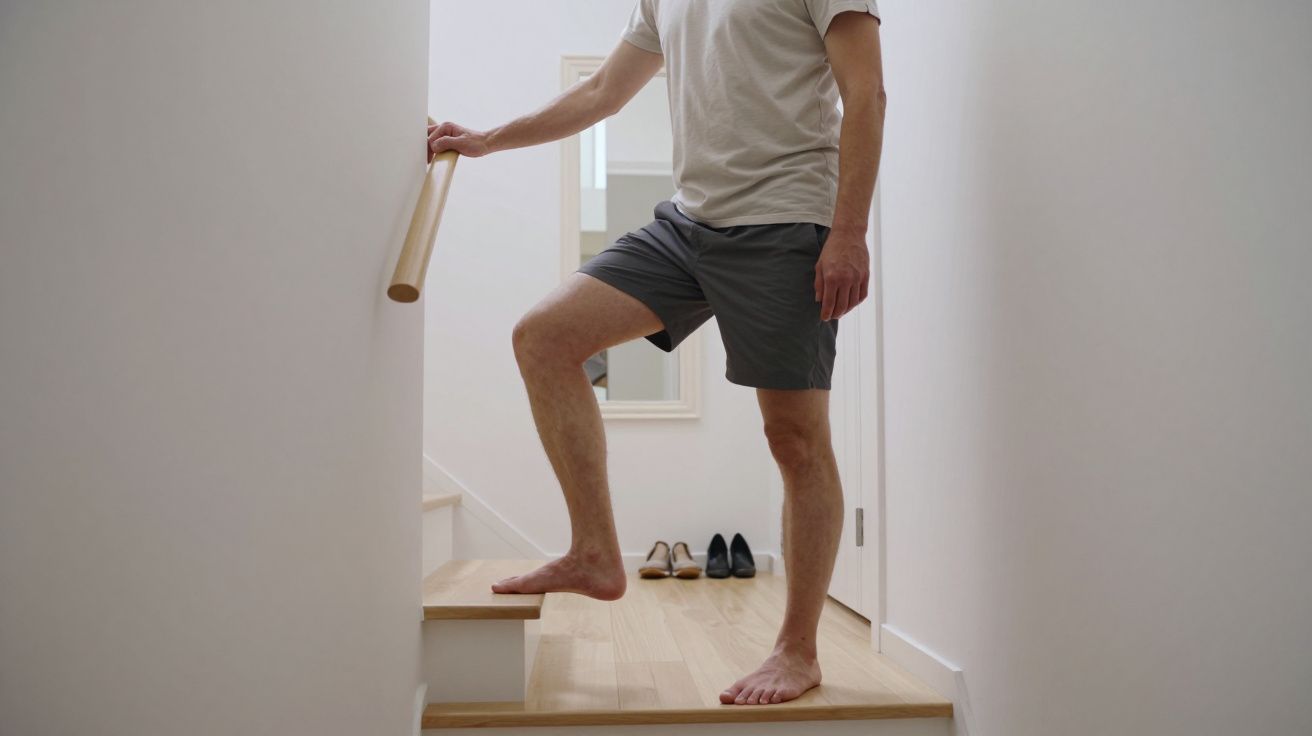
Enter “snack movement”: very short bursts of gentle activity, repeated over the day, almost like cups of tea. Three minutes to stand, stretch, potter, march on the spot, climb the stairs once, do a few heel raises at the kitchen counter. Nothing that requires changing shoes, checking the forecast or feeling particularly motivated.
On paper, it sounds like the diet version of exercise – a bit stingy, a bit unserious. Yet the effect on an older body is quietly dramatic. When you stand up and move:
- Blood pressure in your legs resets.
- Blood sugar after a meal stays lower.
- Joints get lubricated instead of stiffening.
- Balance and coordination get microscopic practice.
- The brain receives a little jolt of oxygen and stimulation.
Do that 8–10 times in a day and you’ve chalked up 24–30 minutes of movement without once having to “go for your exercise”. You’ve also shrunk the longest periods of sitting, which seems to matter more than total step count once you’re past 65.
Geriatricians like it for another, less technical reason: people actually do it. Three minutes feels possible when your back is sore or the weather is dire. A small promise you can keep tends to beat a large promise you perpetually delay.
Not workouts, nudges
Think of snack movement as a nudge, not a session. You’re not aiming to sweat. You’re aiming to avoid rust. The best version is almost boring:
- During the adverts, stand up and walk slowly around the room.
- While the kettle boils, hold the counter and do 10 slow heel raises.
- After finishing a chapter, stand, roll your shoulders, and sit down again in a different chair.
- Before every main meal, do a three‑minute lap of the hallway or garden.
None of these will impress a fitness tracker. All of them will impress your circulation.
Why geriatricians now say “not long walks, not total rest”
It’s tempting to swing between extremes. There is the heroic mode: long walks, silver‑fitness classes, charity cycles. Then there is the resignation mode: “my walking days are over, I’ll just take it easy”. Medicine, infuriatingly, sits in the middle. It knows that:
- Total rest weakens you. Just a week or two of near‑constant sitting can noticeably reduce leg strength in older adults.
- Heroic bursts backfire. Occasional big efforts without daily foundations increase the risk of falls, strains and sheer discouragement.
- Your body loves consistency more than drama.
A 75‑year‑old who never manages a 40‑minute walk but sprinkles the day with 3‑minute snacks will usually do better than someone who marches for an hour once a week and is largely still the rest of the time. The “always something” pattern appears to guard muscle, mind and mood.
The new message from many geriatric clinics sounds almost suspiciously gentle: trade ambition for regularity. Keep your beloved class or long walk if you can; just stop pretending they’re enough on their own. What protects you is what you do on ordinary Tuesdays when nothing special is scheduled.
The boredom test, for your body
There is a quiet test doctors sometimes apply when they listen to older patients talk about exercise: would you still do this if no one praised you for it? If there was no step count, no charity page, no story to tell your grandchildren?
Snack movement passes that test easily. No one boasts about walking round the dining table while the microwave hums. No one needs to. The point isn’t performance. It’s maintenance. You’re not training for a marathon; you’re training for your own life – getting out of chairs, managing stairs, catching yourself when you wobble on an uneven pavement.
Once you frame it that way, three minutes stops sounding trivial. It becomes a deposit into a quietly crucial account: your independence.
The emotional snag: saying goodbye to your “old legs”
Hidden underneath the science is something softer: grief. For many people in their late sixties and seventies, the hardest part of changing how they move isn’t physical at all. It’s admitting they no longer have the body that happily strode for miles without thinking.
I watched my dad avoid gentle chair exercises with far more determination than he ever avoided a hill walk when he was 40. Part of him didn’t want to see himself as someone who needed them. Long walks felt like the “real him”; snack movement felt like a demotion.
Geriatricians, at their best, offer a different story: your worth is not pegged to your old distances. Letting go of the version of you who hiked for hours is not failure; it’s honesty. The question isn’t “Can you still do what you did at 50?” It’s “What can you do regularly at 72 that keeps 82‑you on their feet?”
Each three‑minute burst is, in that sense, an act of respect for your current body, not an apology for the past one.
Turning movement into a habit, not a project
The power of snack movement is that it can hitchhike on things you already do. You don’t need a yoga mat in the lounge or a schedule on the fridge, unless those help. You need prompts woven into daily life:
- Every time you stand to use the loo, add 30 seconds of gentle marching on the spot before you sit again.
- After phone calls, pace the length of the room twice before you hang up or sit down.
- When you put the kettle on, choose a simple move – heel raises, side steps, shoulder circles – and always do that one.
- When the news headlines change, stand for that segment instead of watching it seated.
These tiny pairings slowly shift your identity from “someone who sits all day and sometimes exercises” to “someone who rarely sits for very long without a pause”.
If you like numbers, you can still count. Many geriatric specialists now suggest aiming for 8–12 movement snacks a day, each around 2–3 minutes. That’s enough to cut through the long blocks of stillness without feeling like a part‑time job.
A tiny plan for tomorrow morning
You don’t need a masterplan. You need a first quiet experiment. Tomorrow, try this:
- As you get out of bed, stand holding the back of a chair and slowly rise onto your toes 10 times.
- After breakfast, walk the length of your home three times at a comfortable pace.
- Before lunch and before tea, repeat that same three‑minute walk.
- In the evening, during one advert break, stand and gently march on the spot until the programme returns.
That’s four or five snacks. Notice how your body feels, not during them, but afterwards. Less stiff? Slightly warmer? Sleep a touch deeper? Those are the signals to watch, not your step count.
Living with “just enough” movement in a world shouting “more”
Modern fitness culture still sells a loud story: more is better, higher is healthier, sweat equals virtue. It photographs well – Lycra, trails, medals. Quiet, repeated three‑minute shuffles around the kitchen do not. They also do not flare up your hip, drain your energy for the day, or require perfect weather.
“Enough” movement after 65 looks unimpressive on paper. It might be:
- Two longer walks a week that feel genuinely pleasant, not punishing.
- Ten short bouts of pottering, climbing stairs, or standing exercises most days.
- A simple home routine for balance and strength twice a week, perhaps prescribed by a physio.
The magic is not in any single element. It’s in the fact that your muscles, joints and brain never go on full standby for hours on end. In a body that has fewer reserves, that alone can be the difference between coping and sliding.
If you still enjoy big walks and classes, keep them; they’re precious. Just stop treating the rest of your time as a waiting room.
So what does this look like when you’re 78 and just want your tea?
It looks ordinary. You stand up more often than your younger relatives expect. You choose to climb the stairs once instead of asking someone else to fetch the thing. You pause halfway through the crossword to roll your shoulders and flex your ankles. You put on the radio and sway for one song while the soup warms.
Your home will still see long afternoons, dozing in front of the television. You’re allowed to rest. The point of snack movement is not to become hyper‑productive in retirement. It is to keep your body familiar with the act of moving, so that when you truly need it – to step away from a wobble, to get up from the floor, to recover from an illness – the pathway is still there.
The miracle is not in the three minutes themselves. It’s in the quiet fact that you chose movement over stillness, again and again, without waiting for perfect motivation or a sunny day. That is what geriatricians are really prescribing when they talk about snack movement: not heroics, but stubborn, almost boring loyalty to your future self.
FAQ:
- Is snack movement really enough to count as exercise after 65? For many older adults, regular three‑minute bouts spread across the day significantly improve strength, balance, blood sugar and mood, especially when long walks are difficult. It’s not about replacing all other activity but about protecting you from long, harmful stretches of sitting.
- What if I already enjoy long walks? Should I stop them? No. Keep any movement you love, as long as it feels safe and manageable. The advice is to add frequent short breaks in sitting, not to abandon your favourite activities.
- I have arthritis and worry about pain. Can I still do this? Gentle, low‑impact movements – marching on the spot, seated leg lifts, supported heel raises – can usually be adapted around painful joints, and often help stiffness. Check specific exercises with your GP or physiotherapist.
- Do I need special equipment or clothes? Not at all. Snack movement is designed to fit into your normal day: ordinary shoes, normal clothes, using chairs, walls or counters for balance when needed.
- How do I remember to move every few hours? Link it to habits you already have: every cup of tea, every TV advert break, every phone call. Some people set a soft alarm on their phone or smart speaker as a reminder to stand and move for three minutes.


Comments (0)
No comments yet. Be the first to comment!
Leave a Comment