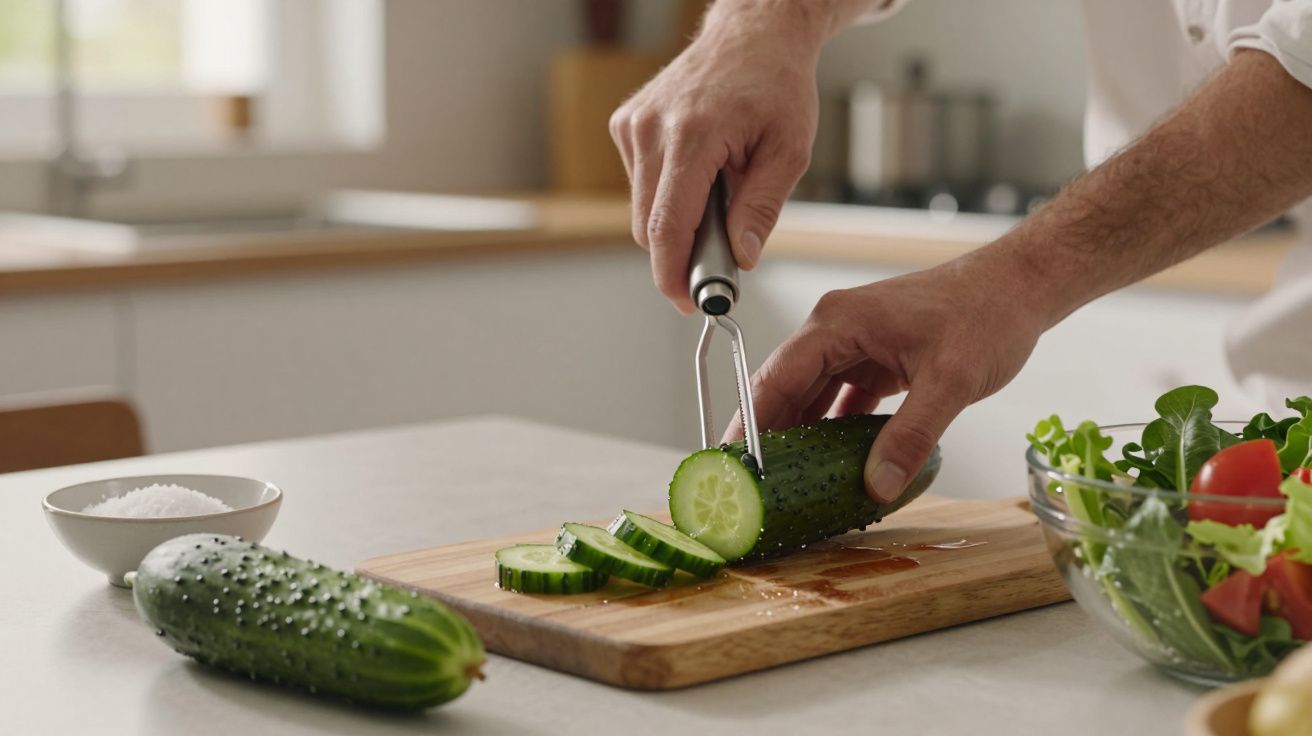
“Don’t peel it yet”: chefs explain the surprising reason to leave cucumber skin on until the last second
I’m standing at a prep bench in a hot, humming kitchen, watching a line cook reach for a cucumber. Knife poised, he does what most of us do at home: takes off the ends, goes straight for the peeler, and leaves a pale, naked cylinder on the board within seconds. It looks neat, clean, restaurant-ready.
A chef walking past stops him with a quiet, “Don’t peel it yet.” The knife hovers in mid-air. There’s no drama, no lecture, just a small correction that seems fussy until you know what’s really at stake.
No one at the table will notice the difference by sight. But they’ll feel it in the crunch, the flavour and even how long the salad stays good.
The quiet job cucumber skin is doing while you look away
Cucumber skin is not just a green wrapper. It’s a natural barrier that slows down water loss and keeps the flesh underneath crisp. Once you strip it away, the cut surface starts to weep moisture almost immediately, especially in a warm kitchen or under bright lights.
That water doesn’t just vanish. It leaks into dressings, dilutes seasoning and turns what should be a lively crunch into something tired and soft. Leave the skin on until the last minute, and you buy yourself precious time before that slump sets in.
There’s also flavour riding quietly in the peel. The green edge of “cucumber-ness” - those slightly bitter, fresh notes that make a tzatziki or a gin and tonic feel sharp rather than bland - lives largely in the outer layer. Take it off too early, and those aromatics have longer to fade or oxidise, especially once you slice.
Professional kitchens are obsessed with timing for exactly this reason. The same cucumber, treated two ways, can taste like two different ingredients depending on when you peel and dress it.
Why chefs wait: texture, timing and less soggy salad
Ask a few chefs about cucumbers and they’ll tell you a similar story. The common enemy isn’t the vegetable; it’s water. A cucumber is more than 90% water. How you manage that water decides whether you get snap or sludge.
Peeling early exposes a larger wet surface to the air. In a busy service, those slices might sit in a container for an hour before they meet oil, salt or vinegar. By then, they’ve already given up a good chunk of their crispness. Peel right before you slice, and the flesh has been shielded until the last possible moment.
There’s a second timing trick at play. Many kitchens salt cucumbers to draw out some moisture deliberately before dressing them. If you peel too soon, the salt bites harder and faster, pulling out more liquid than you need and leaving a floppy texture. Skin-on until just before salting means you control how far that process goes.
Think about the salads that mysteriously flood the plate. The culprits are usually watery ingredients prepped too far in advance. Change one small step - delay the peel - and that same bowl arrives on the table fresher for longer.
How to prep cucumbers like a chef at home
Here’s how professionals stack the odds in their favour without turning lunch into a science project.
Step-by-step timing at the chopping board
- Wash, then dry the cucumber thoroughly while the skin is still on.
- Trim the ends, but do not peel yet.
- Decide on your cut: ribbons, half-moons, batons or thin slices.
- Peel only the section you’re about to cut, leaving the rest intact until you need it.
- Slice, salt (if required), then dress and serve as close to eating time as real life allows.
That last bit matters. The further you can shorten the gap between “peel” and “serve”, the more the cucumber tastes like it just came out of the fridge, rather than the back of yesterday’s buffet.
In restaurants, a common compromise is partial prep. They’ll wash and box whole cucumbers, sometimes even pre-cut them into large chunks with the skin on. The final peel and slice happens on the ticket. At home, you can copy this by keeping cucumbers whole in the fridge and only taking off what tonight’s meal genuinely needs.
When to keep the peel, when to strip it
Not every recipe wants the same amount of skin. Sometimes you want the full green edge, sometimes just a whisper.
Many Mediterranean and Asian chefs like to leave stripes of skin, peeling lengthways in alternating bands. It keeps some structure, looks pretty in the bowl and softens the bitterness for anyone who finds the full peel too assertive. In soups and smoothies, the peel adds colour and a slight thickness, but it can turn the blend murky if you use a lot.
For delicate dishes - think tea sandwiches, fine canapés, or anything aimed at small children or sensitive digestions - peeling fully still has a place. The trick is to do it late, not early in the day. That way you get the soft, pale slices you want without sacrificing all the crunch.
The same goes for removing seeds. If you’re making a raita, salsa or anything that hates extra water, split the cucumber just before serving, scoop out the seed core, then slice. Seed removal and last-second peeling together make the biggest difference in how long a dish stays bright.
Storing cucumbers so they stay crisp
Timing at the board helps, but how you store cucumbers before they ever see a knife matters too.
Most home fridges are colder and drier than cucumbers really want. Unwrapped on a shelf, they dehydrate faster and the skin can pucker, which is often when people think “this one’s getting old” and peel the whole thing out of habit. A simple fix is to keep them in their original plastic or in a loose paper bag tucked inside a produce drawer.
Once you’ve cut into a cucumber, keep the spare piece unpeeled if you can. Wrap the exposed end tightly in cling film or a beeswax wrap, and use it within a day or two. If you’ve already peeled more than you need, wrap those sections in a damp piece of kitchen paper inside a sealed container and reach for them first next time you open the fridge.
One rule chefs swear by: avoid letting pre-cut cucumber sit in acidic dressings for hours. Vinegar and lemon accelerate softening. Store slices plain, then dress them just before they hit the plate.
Simple uses that benefit most from last-second peeling
Some everyday dishes gain a lot from this minor habit shift.
- Lunchbox salads: Peel and slice in the morning, but keep dressing in a separate pot. Mix just before eating.
- Open sandwiches and rolls: Peel and cut the cucumbers while your bread toasts or your fillings warm. Assemble straight away to avoid soggy crumbs.
- Stir-fries and quick pickles: Keep skin on for colour and bite, then peel only if a recipe really insists. Add cucumber right at the end of cooking or marinating.
- Drinks: For jugs of water or cocktails, peel decorative strips just before serving; the aroma rides up with the first pour rather than getting lost in the fridge.
None of these moves takes longer than what you already do. The difference is where you place the peel in your routine: at the last second instead of the first.
Key points at a glance
| Step | What to do | Why it helps |
|---|---|---|
| Before prep | Wash and dry with skin on | Protects flesh, slows moisture loss |
| During prep | Peel only just before slicing | Maximises crunch and flavour |
| For storage | Leave leftover pieces unpeeled, well wrapped | Keeps texture for the next meal |
FAQ:
- Is cucumber skin safe to eat? Yes, as long as it’s washed well. The peel carries more fibre and some antioxidants. If you’re worried about wax or pesticide residue, wash under warm running water and dry, or buy organic when possible.
- What if I dislike the bitterness of the peel? Try peeling in stripes or trimming just a thin outer layer rather than all of it. You still get some structural benefit without the full bitter edge.
- Can I prep cucumbers hours in advance for a party? You can wash, dry and even cut them into large chunks with the skin on. Save fine slicing, peeling and dressing for as close to serving time as you reasonably can.
- Does this matter for English cucumbers versus short, bumpy ones? The principle is the same. Thinner-skinned varieties may taste less bitter, but their flesh still loses water once exposed, so late peeling still protects texture.
- What about peeling machines or gadgets? They’re fine if used at the right moment. The crucial part is not the tool but the timing: run the peeler, then cut and serve without a long pause in between.
With that small switch - peeler at the end rather than the beginning - the same humble cucumber tastes cleaner, stays firmer and carries its weight properly in the dish. It’s not glamorous. It just quietly works.





Comments (0)
No comments yet. Be the first to comment!
Leave a Comment