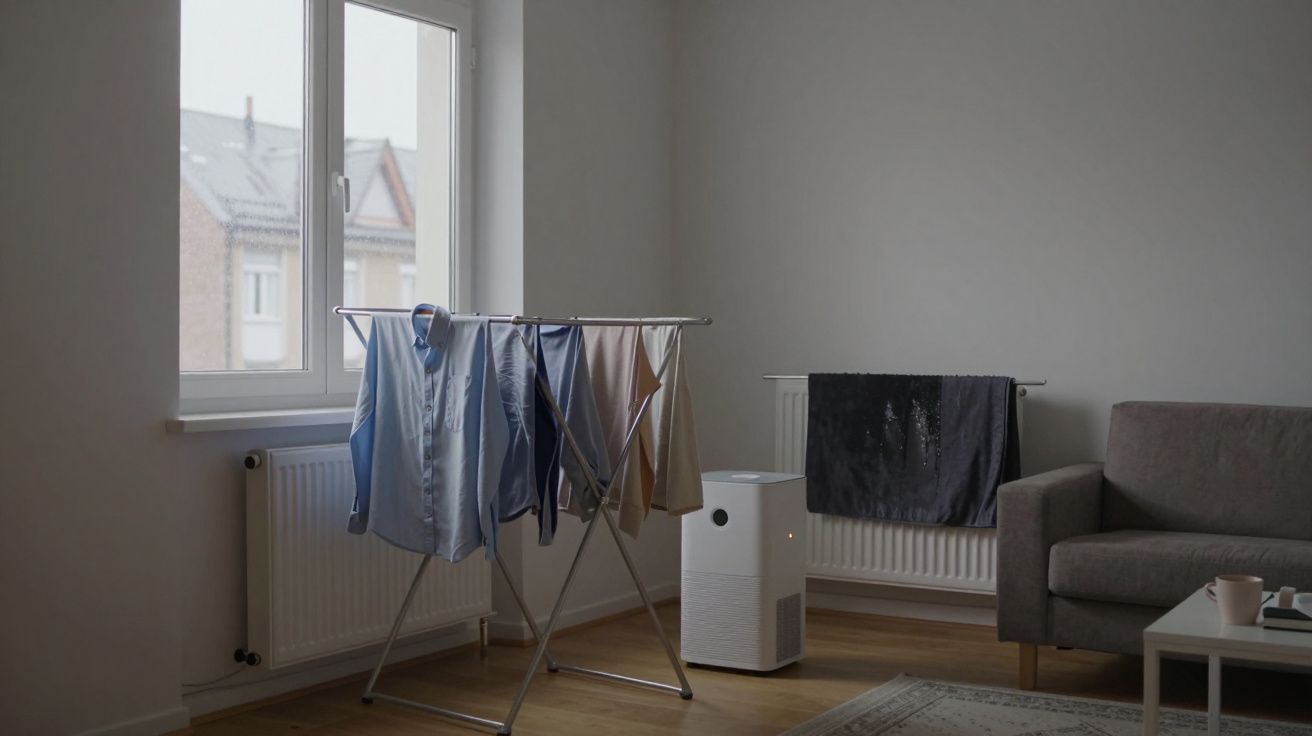
Experts warn: this common way of drying laundry indoors sends your heating bill soaring and fogs your windows
You picture a cosy scene: clothes airing gently on a rack by the radiator, socks steaming near the boiler, a faint smell of fabric softener hanging in the room. It feels thrifty, homely, almost virtuous compared with blasting the tumble dryer. The image is strong. It’s also quietly expensive.
By breakfast the next day, your windows are milky with condensation. The room feels stuffy, the heating seems to be “doing nothing”, and the radiator under the rack is scorching to the touch. You nudge the thermostat up a degree, then another. The washing dries, eventually. The bill climbs, every time.
The bad news: draping wet laundry over radiators and in unventilated rooms is one of the fastest ways to waste heat and feed mould.
The good news: you can still dry clothes indoors without steaming your home like a greenhouse.
Why drying on radiators sends your bills up
At first glance, the logic sounds neat: the radiator is hot, my clothes are wet, put the two together and job done. In reality, that damp towel over the panel acts like a thick winter coat. It traps heat, blocks airflow, and forces your boiler to work harder and longer to reach the same room temperature.
The numbers add up faster than you think. Central heating relies on warm air rising and circulating. A radiator buried under jumpers can lose a large chunk of its output into the fabric itself instead of the room. The thermostat senses that the space is still cool, so the boiler keeps firing. You pay to evaporate water that could have left the clothes just as well in front of, not on top of, the heat source.
Then there’s the moisture itself. A full load of washing can release over two litres of water into the air as it dries. In a small, closed room that water hangs around, raising humidity, chilling surfaces and making your heating feel less effective. The damper the air, the slower everything dries, and the more tempted you are to turn the radiators up “just a bit more”.
The hidden cost: fogged windows and creeping mould
Fogged windows may look harmless, even a little nostalgic on a cold morning. They’re also a visible warning sign that the air in your home is overloaded with water vapour. That mist settles out onto the coldest surfaces first: window frames, external walls, the back of wardrobes, the corners behind sofas.
Left alone, those damp patches don’t politely evaporate. They feed black spotting on sealant, furry mould on skirting boards, and that faint, sweet musty smell in bedrooms and box rooms. Anyone with asthma, allergies, or a winter cough feels it first. Clothes dried in very humid rooms can even pick up a stale scent before you’ve had a chance to wear them.
Let’s be honest: most people don’t fling every window wide in January just because there’s a rack up. You shove it near a radiator, shut the door to “keep the heat in”, and hope for the best. That heat then spends hours battling water in the air rather than simply warming the room.
How to dry clothes indoors without punishing your boiler
You don’t have to live with a tumble dryer running all day or a house full of steamy windows. A few small tweaks to how and where you dry make more difference than another notch on the thermostat.
Start with the location, not the radiator:
- Use a free‑standing airer a short distance away from the heat source, not directly on it.
- Space items out so air can snake between them, instead of layering three jumpers on one bar.
- If you have to use a bedroom or living room, pick one with at least one window you can crack open.
Then manage the moisture:
- Open a window on vent latch or run the extractor fan in a nearby bathroom or kitchen while clothes dry.
- Keep the door to that room mostly closed so the damp air has somewhere to escape rather than drifting through the whole house.
- If you own a dehumidifier, park it next to the airer and run it on a low setting; many people find clothes dry faster and the room feels warmer at the same thermostat setting.
We’ve all had that Sunday night panic when school uniforms or work shirts are still damp at 9pm. That’s when radiators end up buried. Instead, spin clothes on a higher speed in the washing machine (if the fabric label allows) to strip out more water before they ever reach the rack. A second short spin costs far less than three extra hours of heavy heating.
“Think in layers: remove as much water in the drum as you can, then give the rest somewhere to go - out a window, into a dehumidifier - instead of into your walls and windows.”
- High‑speed spin first; it’s the cheapest drying stage you have.
- Dry on an airer near, not on, the radiator.
- Vent the room: a cracked window, trickle vent or extractor fan makes all the difference.
- Use a dehumidifier as a ‘drying partner’ rather than cranking the boiler.
- Rotate heavier items halfway through so no panel stays “wet‑blocked” against warm air.
Common mistakes that make heating and drying fight each other
Most of the problems come from tiny habits repeated all winter, not one dramatic error. The pattern is familiar: drape, shut, crank.
Blocking the radiator front and top. Clothes plastered over the full face and top grille stop hot air escaping. Even a “clever” radiator rack that hooks directly on can rob it of convective flow if you overload it. You feel heat on the laundry but not across the room, so the thermostat stays unsatisfied.
Drying everything in the coldest, stillest room. Box rooms and north‑facing corners often feel like the right choice because “nobody sits there”. They also have the coldest walls and least airflow, so water from clothes leaps straight onto cold plaster and frames. That’s why mould blooms in rarely used rooms and behind spare‑room furniture first.
No venting and constant low‑level drying. A rack that never goes away - always “one more thing drying” - means your home never really gets a chance to dehumidify. The background damp creeps up degree by degree. Windows fog at lower outdoor temperatures. Heating feels sluggish because warm, moist air carries less “comfort” than warm, drier air.
If you recognise your own routine here, don’t panic. You don’t have to stop indoor drying; you just need to separate “heat the house” from “evaporate water” so they’re not wrestling each other every evening.
“Treat your laundry like a short‑term guest: give it its own corner, its own airflow, and a set time to be there - then send the moisture out, not into the plaster.”
- Keep at least 10–15 cm of clearance between radiators and hanging fabrics.
- Aim to dry in shorter, more deliberate sessions rather than a permanent rack.
- Wipe window sills and frames in the morning if they’re wet; it stops that damp soaking in.
Smarter indoor‑drying set‑ups (for different homes and budgets)
You don’t need a utility room makeover. A few small set‑ups shift you from “radiator drape” to “quietly efficient”.
| Option | Best for | Why it helps |
|---|---|---|
| Folding airer + dehumidifier | Small homes, no outdoor space | Speeds drying while sucking moisture from the air instead of your walls |
| Ceiling or pulley airer | High‑ceiling rooms, period homes | Uses rising warm air without blocking radiators or walkways |
| Heated airer with cover | No radiator access, frequent loads | Uses lower wattage than a tumble dryer and contains moisture if vented |
If you install or use any of these, think sequence rather than brute force. Spin hard, hang spaced out, run ventilation or dehumidifier for a defined window of time, then switch it off. Your aim is to move moisture out efficiently, not to keep heat or gadgets going all day “just in case”.
Where this leaves the radiator‑drying habit
Part of the appeal of radiator drying is emotional: it looks frugal and feels immediate. When energy prices rise, draping a jumper over hot metal feels like using every last drop. The awkward truth is that it often does the opposite - you get fewer warm rooms for more gas or electricity, and a slow drift towards damp corners and fogged glass.
You don’t need to ban yourself from ever hanging a pair of socks on a radiator again. You do need to stop treating it as the default for every load. Reserve direct‑on‑radiator drying for the genuine emergencies. The rest of the time, let the heating warm the room and let airflow and extraction finish the job.
Over a winter, these quiet adjustments matter. Rooms feel clearer. Windows clear faster in the morning. The heating cycles off more often instead of labouring endlessly against damp air. Laundry still dries - only now it isn’t taking your thermostat and your window seals down with it.
FAQ:
- Is drying clothes on radiators really that bad for the boiler? It’s not that the boiler breaks; it’s that it has to run longer and hotter to bring the room up to temperature when radiators are smothered. You’re essentially paying more to heat water in fabric instead of the air in the room.
- What’s the safest way to dry indoors without a dryer? Use a free‑standing airer in a room with some heat and a bit of ventilation, spin clothes on a high setting, and, if possible, run a small dehumidifier nearby to catch the released moisture.
- Will opening a window just waste heat? A small opening for an hour while laundry is drying usually saves more than it loses, because it lets wet air out so your heating doesn’t fight rising humidity. You’re trading a bit of warm air for a lot of excess moisture.
- Can a dehumidifier really replace a tumble dryer? It won’t spin or fluff clothes, but paired with an airer it can dry laundry efficiently at a lower running cost than many tumble dryers, while also protecting your walls, windows and lungs from excess damp.
- How can I tell if my home is too humid from indoor drying? Persistent window condensation, musty smells, or black spotting on silicone and corners are signs. A cheap hygrometer can confirm: aim for roughly 40–60% relative humidity in winter, not a constant 70%+.





Comments (0)
No comments yet. Be the first to comment!
Leave a Comment