Not bleach, not fabric softener: the pharmacist‑approved way to keep cotton underwear fresh and skin‑friendly
The laundry aisle looks reassuringly simple. Bottles promise “pure”, “dermatologically tested”, “baby‑soft” care. For the skin in contact with your underwear, the story is more complicated. What smells clean to your nose can quietly irritate the thinnest, most sensitive skin on your body.
Pharmacists see the consequences long before manufacturers change their slogans. Recurrent thrush, itching with no obvious cause, redness that flares after every wash cycle. Again and again, the same culprits turn up: too much detergent, “sensitive” softeners loaded with fragrance, and bleach used “just in case”.
Underwear hygiene does not start with harsher products. It starts with stripping back to what the skin and the fibres actually need.
Why your cotton underwear needs less, not more
Cotton is often sold as the safe, breathable choice. It is, on one condition: the fibres must stay open and free of residue. Detergent, softener and bleach all leave traces that cling to the threads and rub against the skin for hours. Each wash can quietly build a film of irritants where you are most exposed.
From a pharmacist’s point of view, the logic is blunt. Fragile vulval and perianal skin, or the thin skin of the scrotum, has a weaker barrier than the forearm. Soaps, fragrances and optical brighteners that the rest of your body tolerates can trigger stinging, dryness and micro‑inflammation there. Add warmth, moisture and friction, and you have the ideal environment for yeast and bacteria to overgrow.
A healthy microbiome in this area is slightly acidic and delicately balanced. Strong alkaline products and disinfectants disrupt that balance. The result is often mislabelled as “recurring infection” when the real trigger is laundry chemistry.
Bleach and fabric softener: why pharmacists advise caution
Household bleach looks like the obvious answer to “deep clean” underwear. In practice, it is a sledgehammer where a small, well‑aimed tool would do. Chlorine‑based products attack elastic, weaken cotton fibres, fade colours and increase the risk of tiny holes. More importantly, residues can remain trapped in the fabric and cause direct chemical irritation.
Fabric softeners create a different kind of problem. They work by coating fibres in a thin, waxy layer that feels smooth. That same layer traps sweat, natural secretions and detergent fragments against the skin. Many softeners also carry persistent perfumes and preservatives, two of the most common causes of contact dermatitis seen in community pharmacies.
For people already prone to eczema, psoriasis, lichen sclerosus, recurrent cystitis or thrush, these products often act as quiet accelerators. Stopping them is sometimes enough to break a cycle of symptoms that has lasted months.
The pharmacist‑approved washing routine
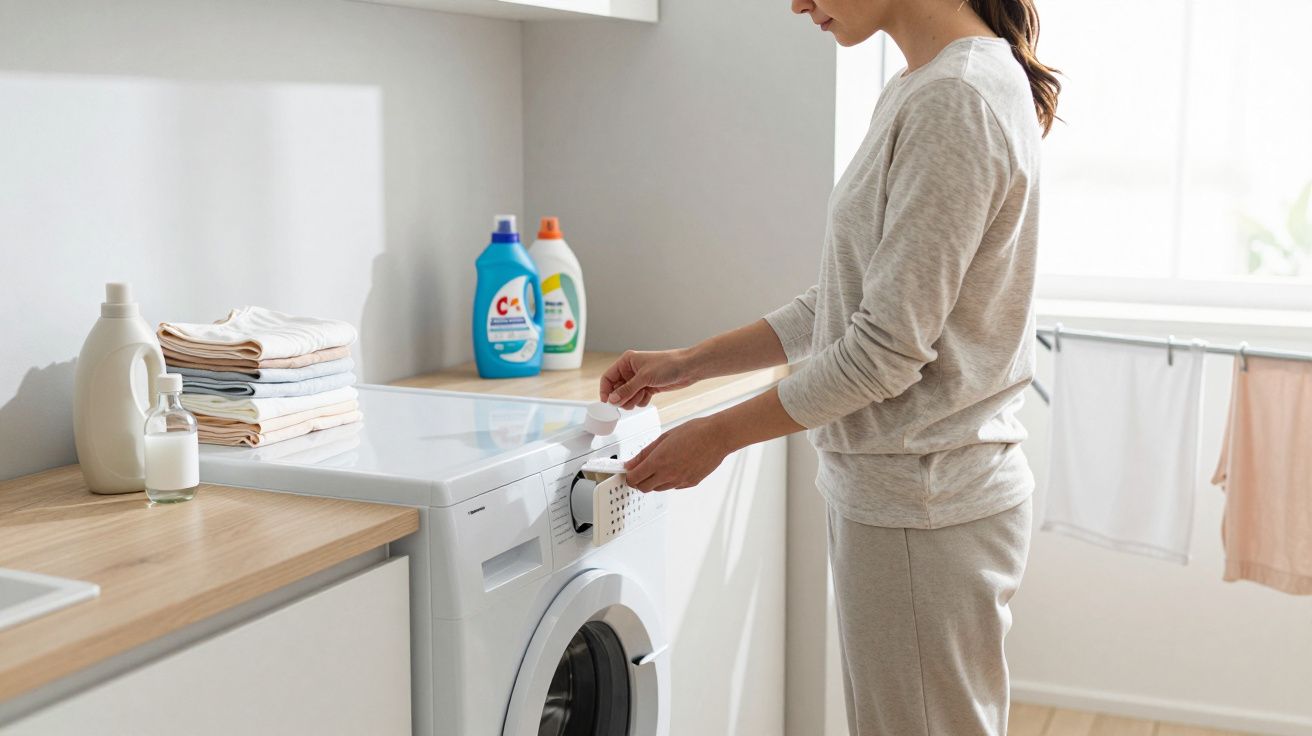
Pharmacists tend to recommend a simple, repeatable routine that focuses on three things: temperature, dosage and rinsing. The aim is to remove sweat, secretions and microbes without leaving a new source of irritation behind.
Choose a mild, fragrance‑free detergent.
Look for products labelled “non‑bio”, “fragrance‑free” or “for baby clothes”, without added softener. The shorter the ingredients list, the better. Powder often rinses more completely than thick liquid formulas.Use the right amount – or slightly less.
Overdosing detergent is a common mistake. Follow the lower end of the recommended dose, and reduce further if your machine is not full. Too many surfactants mean more residue, not more hygiene.Skip softener altogether.
If you like a softer feel, a pharmacy‑grade white vinegar (a small splash in the softener compartment) can help break limescale without leaving perfumes or oily films. It does not replace detergent; it complements rinsing.Wash at the right temperature.
For most cotton underwear, 40–60 °C is the sweet spot. Forty is usually enough for daily use if garments are changed regularly; sixty is useful during or after infections, heavy sweating or for shared households. Check the label, but do not be afraid of 60 °C for plain cotton.Add an extra rinse if possible.
Many machines offer an additional rinse cycle. Pharmacists often suggest using it for underwear, baby clothes and sports gear that sits close to the skin. The goal is residue as close to zero as you can manage at home.Dry thoroughly, quickly.
Humid fabric is a playground for yeast and bacteria. Dry underwear the same day, in a well‑ventilated space or outdoors. Avoid drying directly on radiators; excessive local heat can stiffen fibres and degrade elastics.
For sensitive skin, the best wash is not the one with the strongest smell. It is the one that leaves fabric clean, neutral, and almost “invisible” to the skin.
Small daily habits that keep underwear skin‑friendly
Laundry is only part of the picture. Pharmacists often see benefit when patients align three simple habits: fabric choice, wear time and personal hygiene.
Choose breathable, simple cuts.
Plain cotton, without lace in direct contact with the genitals, allows air to circulate and moisture to escape. Avoid thick synthetic layers for everyday wear; save them for short, specific occasions.Change at least once a day, more if needed.
During hot weather, exercise, menstruation or gastrointestinal upset, changing underwear more often reduces the time skin spends in a warm, damp microclimate.Avoid aggressive intimate washes.
The skin in contact with underwear does not need foaming gels or antiseptic wipes. Lukewarm water, or at most a very mild, pH‑balanced cleanser, is enough. Overwashing is a frequent trigger of dryness and soreness.Be cautious with panty liners and incontinence pads.
These products trap moisture and often contain perfumes. If they are necessary, choose fragrance‑free versions and change them frequently. Use cotton underwear beneath, not directly synthetic fabric against the skin.
By aligning these habits with a gentler laundry routine, many people see a reduction in itching, odour anxiety and the “need” to overcompensate with perfumed products.
When infections or odours keep coming back
Persistent odour or discharge is not something bleach or “extra‑fresh” softener will fix. Pharmacists are clear: if a change in washing habits and daily hygiene does not improve things within a couple of weeks, a proper medical assessment matters more than another new product.
Recurrent thrush, bacterial vaginosis, balanitis or urinary tract infections can be nudged by laundry choices but rarely caused by them alone. Diabetes, hormonal contraception, menopause, tight clothing, smoking and some medications subtly shift the balance too. Treating the skin as if it were a stubborn stain often delays useful diagnosis.
What laundry can do, with medical support, is help prevent relapse. After treatment:
- Continue washing cotton underwear at 60 °C for a few weeks.
- Keep to fragrance‑free, mild detergents at a modest dose.
- Avoid re‑introducing softeners, bleach pens and perfumed intimate sprays “to feel extra clean”.
Consistency, not intensity, protects the skin in the long run.
Quick comparison: what helps vs what harms
| Habit / product | Effect on skin and fabric | Pharmacist’s view |
|---|---|---|
| Mild, fragrance‑free detergent | Cleans with fewer residues | Recommended baseline |
| 40–60 °C wash + extra rinse | Balances hygiene and fibre care | Ideal for cotton underwear |
| Fabric softener (perfumed) | Coats fibres, traps irritants | Best avoided for underwear |
| Chlorine bleach | Damages fibres, irritates skin | Reserve for rare, specific cases |
| Daily change + thorough drying | Limits moisture and overgrowth | Strongly encouraged |
FAQ:
- Is it ever appropriate to use bleach on underwear?
Occasionally, for visible blood stains or in case of specific infectious risks, a diluted, well‑rinsed bleach wash can be justified. Pharmacists advise this as an exception, not a routine, and only for white cotton that tolerates it. An extra rinse cycle is essential.- Can I keep using fabric softener if I have never had irritation?
If your skin is robust and you have no history of genital or anal irritation, you may not notice problems immediately. However, pharmacists still tend to recommend skipping softener for underwear, especially if you develop new symptoms, change hormones (e.g. menopause) or start new medications.- Are “intimate wash” detergents for underwear useful?
Most are rebranded mild detergents in small, expensive bottles. A simple, fragrance‑free product labeled for sensitive skin is usually enough. Save specialised products for medical advice, not marketing promises.- What about synthetic sports underwear?
Technical fabrics can be practical for short, intense exercise because they wick sweat. Wash them quickly after use, avoid softener (which blocks wicking) and switch back to cotton for the rest of the day. If you are prone to thrush or irritation, limit synthetic contact time.- How long should I wait to see if changing my laundry routine helps?
Many people notice less itching or stinging within 1–3 weeks of switching to a mild detergent, dropping softener and increasing rinse quality. If symptoms persist, worsen or are accompanied by discharge, pain or bleeding, a consultation with a GP or sexual health clinic is more important than further product changes.



Comments (0)
No comments yet. Be the first to comment!
Leave a Comment