Not coffee grounds, not eggshells: the one kitchen scrap compost veterans say tomatoes truly love
Most tomato tips sound the same after a while: save your coffee grounds, crush your eggshells, pile on banana peels and call it “free fertiliser”. They make feel‑good reels and busy compost bins. Yet ask people who have been growing heavy, flavour‑packed crops for decades, and a different scrap rises quietly to the top.
It’s not the pretty one, and it won’t win you likes. It will, however, keep tomato roots cool, fed and quietly humming all summer.
The kitchen scrap serious tomato growers swear by
The scrap is simple: plain cardboard, especially brown corrugated and uncoated boxes, plus the dull, papery side of loo roll tubes and egg boxes.
Not glossy pizza lids, not printed delivery logos, not foil‑lined cartons. Just the boring brown stuff that usually hits the recycling bin without a second look.
“If I had to choose between coffee grounds and cardboard for my tomatoes, I’d keep the cardboard and never look back,” one long‑time allotmenteer told me.
Cardboard doesn’t shout “fertiliser” the way banana peels do. What it really offers is structure, moisture control and a slow, steady feed of carbon that unlocks nutrients already in your soil. Tomatoes love that balance more than another handful of half‑rotted kitchen odds and ends.
Why cardboard quietly outperforms the usual scraps
Most viral scrap hacks focus on what you can see and name: calcium from eggshells, nitrogen from coffee, potassium from bananas. Tomatoes do need all three, but the real engine of a healthy plant runs deeper, in the web of fungi, bacteria and tiny soil animals around the roots.
Cardboard feeds the workers, not just the plant
Tomatoes sit at the hungry end of the garden. They respond best when soil life is abundant, oxygenated and moist, not when one nutrient is dumped on top.
Here’s what brown cardboard does that eggshells and coffee grounds often don’t:
- Balances carbon and nitrogen. Kitchen scraps are mostly “greens” (nitrogen‑rich). Cardboard is “brown” (carbon‑rich). Mix them and the composting process speeds up instead of stalling into a slimy mess.
- Improves structure. Shredded, damp cardboard opens up heavy clay and helps sandy soil hold water. Roots push through more easily, bringing better access to nutrients.
- Holds moisture at the surface. Laid as a mulch, it keeps evaporation down, so tomatoes avoid the wild wet‑dry swings that trigger blossom‑end rot and split skins.
- Supports soil fungi. Those white strands you sometimes see under cardboard? Fungal hyphae. They’re the delivery network that moves phosphorus and micronutrients into tomato roots.
Coffee grounds alone can clump, go mouldy on the surface and even repel water. Eggshells take years to break down in any meaningful way. Cardboard, used smartly, gives the whole system a frame.
A compost pile is not a bin. It’s a recipe. Too many “greens” without enough “browns” leaves tomatoes hungry and roots stressed.
How to use cardboard so your tomatoes actually benefit
The trick is not to stuff whole boxes in a corner and hope for the best. Professionals treat cardboard as both ingredient and infrastructure.
1. As a high‑carbon backbone in your compost
Rip or cut cardboard into pieces roughly the size of a credit card or smaller. Avoid anything shiny, heavily printed, or with plastic tape and labels still attached.
Layer it like this:
- A base of coarse material (small twigs or woody stems) for airflow.
- A loose layer of shredded cardboard.
- A 5–10 cm layer of kitchen scraps, grass clippings or spent plant material.
- Another layer of cardboard, and repeat.
You’re aiming for at least half brown material by volume. That balance:
- Keeps smells down.
- Speeds up heating and breakdown.
- Produces a darker, crumblier compost that clings around tomato roots instead of washing away at the first storm.
Turn the heap when you can. Each turn mixes cardboard fibres with softer scraps, giving microbes and worms more surface to work on.
2. As a weed‑suppressing, moisture‑holding mulch
Tomato veterans often talk more about mulching than about liquid feeds. Cardboard is their quiet helper.
To mulch with cardboard:
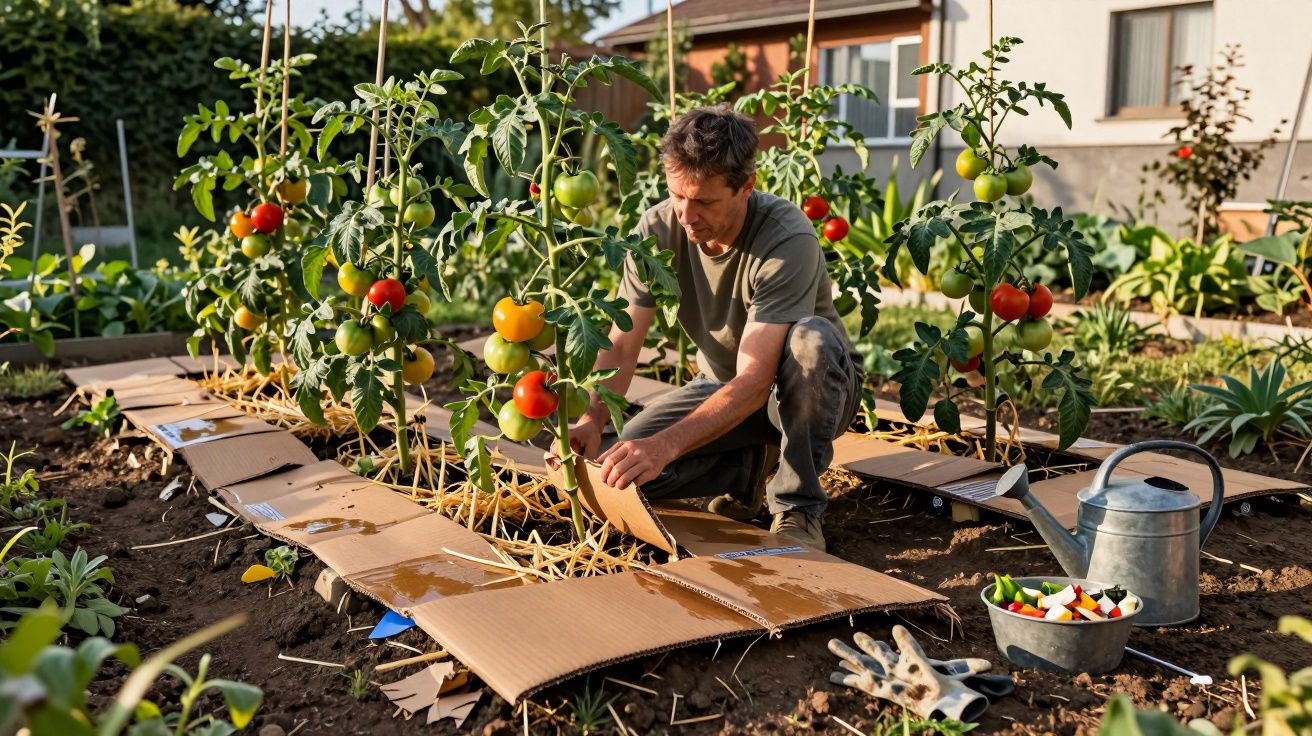
- Remove tape and stickers. Open boxes fully.
- Lay sheets around your tomatoes, leaving a neat gap around the main stem so it can breathe.
- Overlap edges like roof tiles to block light from reaching weed seeds.
- Soak the cardboard thoroughly with a watering can or hose.
- Top with 5–8 cm of something prettier and more UV‑resistant: compost, leaf mould, straw, or grass clippings that have dried a day or two.
That sandwich keeps the soil cool and damp, softens the cardboard over weeks, and invites worms to pull it down. Tomatoes respond with:
- Fewer water stress episodes.
- Less blossom‑end rot.
- More even growth through heatwaves.
A bare, dark compost surface bakes and cracks. Cardboard under a lighter top layer cuts that drama down.
But what about eggshells and coffee? Where they actually fit
None of this means you must bin your other scraps. It just shifts them from “magic bullets” to supporting cast.
Eggshells: fine as a slow, slow extra
Crushed eggshells do contain calcium, but in the short window of a single tomato season, most of that calcium stays locked in the shell.
Use them smartly:
- Dry, then grind to a fine powder if you want any real impact.
- Add to the compost heap, where acidity and microbial action work on them over time.
- Don’t rely on them alone to “fix” blossom‑end rot. Consistent watering and overall soil health matter more.
Coffee grounds: good in moderation, mixed well
Fresh coffee grounds can acidify the surface slightly and mat together. Old, used grounds are milder, but still count as a “green”.
Use them like this:
- Sprinkle thinly, no more than a few millimetres deep, not in clumps.
- Mix with shredded cardboard or dry leaves before adding to compost.
- Avoid piling them straight onto tomato stems or leaving them in a dense crust that sheds water.
Banana skins and other showy scraps fall into the same bucket: fine when chopped and composted with cardboard, not plastered raw around plants in hope.
The compost veterans’ rule of thumb: for every bowl of wet kitchen scraps, add at least an equal volume of shredded cardboard or similar browns.
Common mistakes that starve or stress tomato plants
The problems people blame on “weak fertiliser” are often compost balance and moisture issues in disguise.
- Wet soup heaps. Buckets of peelings with no cardboard or dry matter turn smelly, anaerobic and slow. Tomatoes fed from that heap see fewer nutrients and more disease risk.
- Patchy mulches. A token ring of grass clippings leaves most soil bare. Roots at the edge suffer heat and drought, even if the stem looks snug.
- Plastic‑coated “help”. Shiny, heavily printed packaging and foil‑lined boxes don’t break down cleanly. They leave shreds and block water rather than supporting soil life.
Straightening those habits with a stack of dull brown boxes can improve yield more than a new brand of feed ever will.
A compact guide to tomato‑friendly scraps
| Scrap type | Best use with tomatoes | Pitfall if misused |
|---|---|---|
| Plain cardboard | Browns in compost, sheet mulch | Repels water if left dry |
| Eggshells | Fine‑ground in compost | Stay intact if added whole |
| Coffee grounds | Thinly mixed with browns | Clump, mould, go anaerobic |
A practical rhythm for the season
You don’t need a perfect system, just a simple, repeatable one.
- Winter to early spring: Shred cardboard, build your heap with alternating kitchen scraps and browns, turn when you remember.
- Planting time: Work finished compost into the planting hole. Lay sheets of damp cardboard around young plants, cover with a loose organic mulch.
- Mid‑summer: Top up mulch if cracks appear. Add any new cardboard under the existing layer rather than exposing fresh sheets.
- Autumn clean‑up: Chop spent tomato vines, mix with more cardboard, and start the cycle again.
Tomatoes feel the benefit not as a single “boost”, but as an absence of shocks: fewer bone‑dry days, fewer waterlogged sulks, steadier access to nutrients.
FAQ:
- Can I use printed cardboard from delivery boxes? Light, non‑glossy printing is usually fine once tape and labels are removed. Avoid anything shiny, waxed or heavily coloured, as coatings and inks can linger in the soil.
- Will cardboard steal nitrogen from my tomatoes? When used as surface mulch, it mainly interacts with the top layer and breaks down gradually. In a heap, balance it with enough green material. If your compost finishes dark and crumbly, you’ve not “lost” nitrogen in a way that harms plants.
- How thick should the cardboard mulch be? One or two overlapping layers of box card are enough. Any thicker and water penetration becomes an issue unless you soak it thoroughly and cover with a loose organic layer.
- Can I just bury whole boxes in the bed? You can, but roots may struggle around big, intact sheets for a while. Shredding or at least tearing into wide strips makes life easier for both worms and tomatoes.
- Do I still need fertiliser if I use lots of cardboard and compost? Heavy‑cropping tomatoes often benefit from an additional balanced feed in pots or poor soils. Think of cardboard as the backbone of structure and moisture control; use feeds as a targeted top‑up, not a substitute for good compost.

Comments (0)
No comments yet. Be the first to comment!
Leave a Comment