Not vinegar, not baking soda: this forgotten cupboard staple lifts limescale from toilets in 10 minutes flat
It starts the way these things usually do: you open the loo, catch sight of that chalky ring or rusty streak, and feel a flicker of quiet defeat. You’ve tried the thick gel, the blue blocks, the overnight vinegar soak that made the bathroom smell like chip shop spill. The stains pale, then creep back, as if the bowl itself has a long memory. One evening, while hunting for a spare loo roll in the back of the cupboard, your hand lands on an old box you haven’t really noticed in years. Not vinegar. Not baking soda. Something older, duller – and surprisingly effective.
Citric acid.
On paper it sounds more chemistry set than cleaning hero. In practice, it can strip limescale in about ten minutes, without the fumes, the scrubbing marathon or the guilt about “hazardous to aquatic life” labels. The trick is not magic, just a quiet bit of chemistry most of us have forgotten we already own.
Why limescale clings – and why citric acid cuts through it
Limescale is mostly calcium carbonate, left behind when hard water splashes, sits and dries. Toilets are perfect for it: constantly refilling, rarely wiped dry, pipes and rims that hide slow drips. Over time, the minerals lock onto the porcelain in a rough, stubborn crust. Add traces of iron from old pipes and you get the classic brown-orange stains that never quite shift.
Traditional go‑tos attack the problem from different angles. Vinegar is acidic but weak and runny, so it slips off vertical surfaces before it’s done much work. Baking soda is alkaline, so it’s better as a gentle scrub than a scale dissolver. Strong commercial descalers do work, but often by sheer force: thick acids, synthetic surfactants, warning pictograms.
Citric acid sits in an interesting middle ground. It’s a weak organic acid too, but in powder form you can control how concentrated it gets. Dissolved in warm water and poured into a drained bowl, it surrounds the limescale and quietly reacts, turning that stubborn chalk into soluble salts that simply flush away. No harsh smell, no need for a gas mask.
You’re not “bleaching it whiter”; you’re dissolving the thing that makes it look dirty.
The 10‑minute toilet trick, step by step
This method works best when you give the acid a chance to actually touch the scale, not just dilute into the water.
Drop the water level.
Turn off the isolation tap behind or beside the toilet, then flush once. If water still sits over the stains, push it down the trap with a small jug or an old sponge until the worst of the limescale is exposed.Mix your solution.
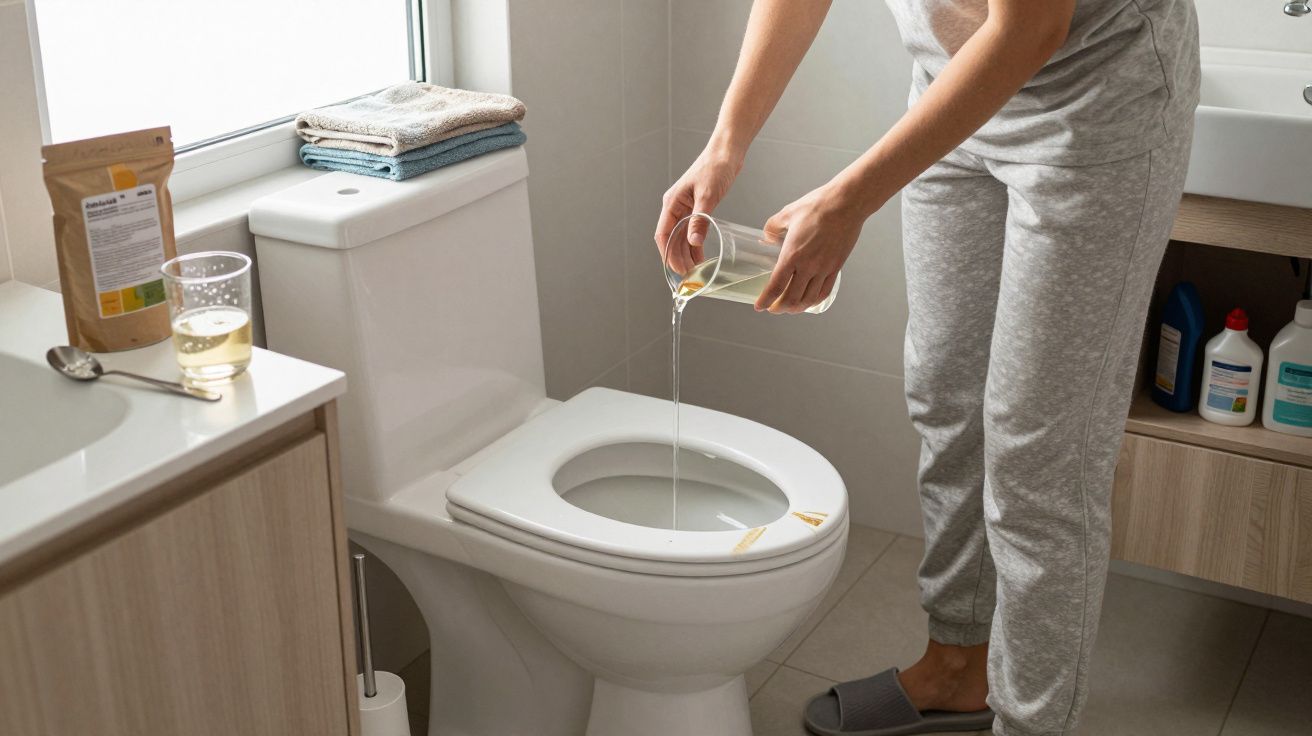
Add 2–3 heaped tablespoons of food‑grade citric acid to about 500ml of very warm (not boiling) water. Stir until dissolved. You’re aiming for a clear, slightly sharp‑smelling liquid, not a sludge.Pour and coat.
Slowly pour the solution around the inner rim and directly onto any obvious scale bands or brown streaks. Work steadily so it clings and runs over every part that needs help.Wait 10 minutes.
This is where the chemistry does the heavy lifting. For light to moderate scale, ten minutes is often enough to see it soften and pale. If the bowl is badly encrusted, give it 20–30 minutes.Light scrub and flush.
Take a toilet brush and sweep around the bowl. You’ll usually feel the texture change from gritty drag to smooth glide. Then flush with the water back on. Any loosened flakes should vanish down the bend.
Common mistakes are almost all about impatience. Pouring, scrubbing immediately, then declaring it “doesn’t work” skips the actual reaction time. Using too little powder just makes expensive flavoured water. On the flip side, dumping half a tub in doesn’t speed things up much; it just wastes product.
How it compares to the usual suspects
| Product | How it works | Typical trade‑off |
|---|---|---|
| Vinegar | Mild acid, slow on heavy scale | Needs long soaks, strong odour |
| Baking soda | Gentle abrasive, deodoriser | Doesn’t dissolve limescale |
| Bleach | Whitens and disinfects surfaces | Leaves scale in place |
| Citric acid | Dissolves limescale into solution | Needs water level dropped |
Citric acid doesn’t replace a disinfectant if you’re dealing with illness or deep cleaning. It does, however, remove the mineral crust that harbours discolouration and odours, so any follow‑up cleaner can work on a genuinely clean surface rather than a chalky one.
Where to find it – and how to store it
Walk into any big supermarket or high‑street chemist and it’s there, just not always shouting. Sometimes it lives in the baking aisle near jam sugar and pectin, because it sharpens homemade cordials and helps jams set. In other shops it hides with the home‑brew kits, or in the cleaning section packaged as a descaler for kettles and irons.
A kilo bag looks unassuming and usually costs less than a branded bottle of “bathroom miracle gel”. Used by the spoonful, it lasts months. Store it like you would salt: in a cool, dry cupboard, well away from curious pets and children who might mistake the crystals for sweets.
If you already own dishwasher tablets or kettle descaler, check the ingredients list. A surprising number lean on citric acid as their core active ingredient, rebadged for different appliances.
“It’s basically posh lemon juice without the stickiness,” a chemist friend told me. “All the acid, none of the pulp.”
Beyond the bowl: quiet jobs it handles well
Once you’ve watched it lift that grey ring from the toilet, it’s hard not to go hunting for other scale to conquer. Used sensibly, the same tub can tackle most hard‑water headaches in a flat.
- Shower heads and taps – Soak detachable heads in a warm citric acid solution for 20–30 minutes, then rinse. For fixed taps, wrap paper towel soaked in the solution around the crusty area, cover with cling film to stop it drying out, then remove and wipe.
- Kettle and coffee machine – Run a weaker solution through, then flush thoroughly with plain water. Always check the appliance manual first to avoid voiding warranties.
- Glass screens and tiles – Spray on a dilute solution, leave briefly, then wipe. It can dull delicate natural stone like marble or limestone, so spot‑test first.
- Washers and dishwashers – An occasional empty hot cycle with a small amount in the drum or dispenser can help keep scale at bay. Follow manufacturer guidance and avoid regular heavy doses.
There are limits worth respecting. Citric acid is still an acid: use gloves if you have sensitive skin, don’t mix it with bleach (you’ll generate irritating fumes), and keep it away from surfaces the manufacturer warns against acid contact. The goal is to be precise, not reckless.
Keeping limescale from settling in again
Once you’ve evicted years of mineral build‑up, a little routine keeps the toilet from sliding back into its old habits.
- Do a quick citric‑acid treatment once a month in hard‑water areas.
- Fix slow leaks that cause a constant trickle from cistern to bowl.
- Don’t rely on bleach “tabs” in the cistern; they hide build‑up rather than preventing it.
- If you travel from soft‑water to hard‑water areas, expect to adjust your cleaning rhythm.
Hard water is not a personal failing. It’s a postcode lottery written in bedrock. The aim is not a showroom‑perfect bowl, just a clean one that doesn’t make you grimace every time you lift the lid.
FAQ:
- Is citric acid safe for all toilets? For modern ceramic toilets, yes, when used as described. Avoid prolonged heavy soaking on enamelled cast iron and always rinse well if in doubt.
- Can I just use lemon juice instead? You can, but it’s far weaker and full of sugars and pulp that can get sticky. Pure citric acid is cleaner and more effective gram for gram.
- Will this remove very old, thick limescale in one go? Probably not. Several treatments, each followed by a light scrub, work better than one heroic session.
- Is it eco‑friendlier than standard descaler? It’s biodegradable and generally considered low‑toxicity, especially at household concentrations, but packaging and transport still carry a footprint.
- Can I use it as a general bathroom cleaner? As an occasional descaler on taps, tiles and glass, yes. For everyday cleaning and disinfecting, pair it with a suitable bathroom cleaner rather than relying on acid alone.
Comments (0)
No comments yet. Be the first to comment!
Leave a Comment