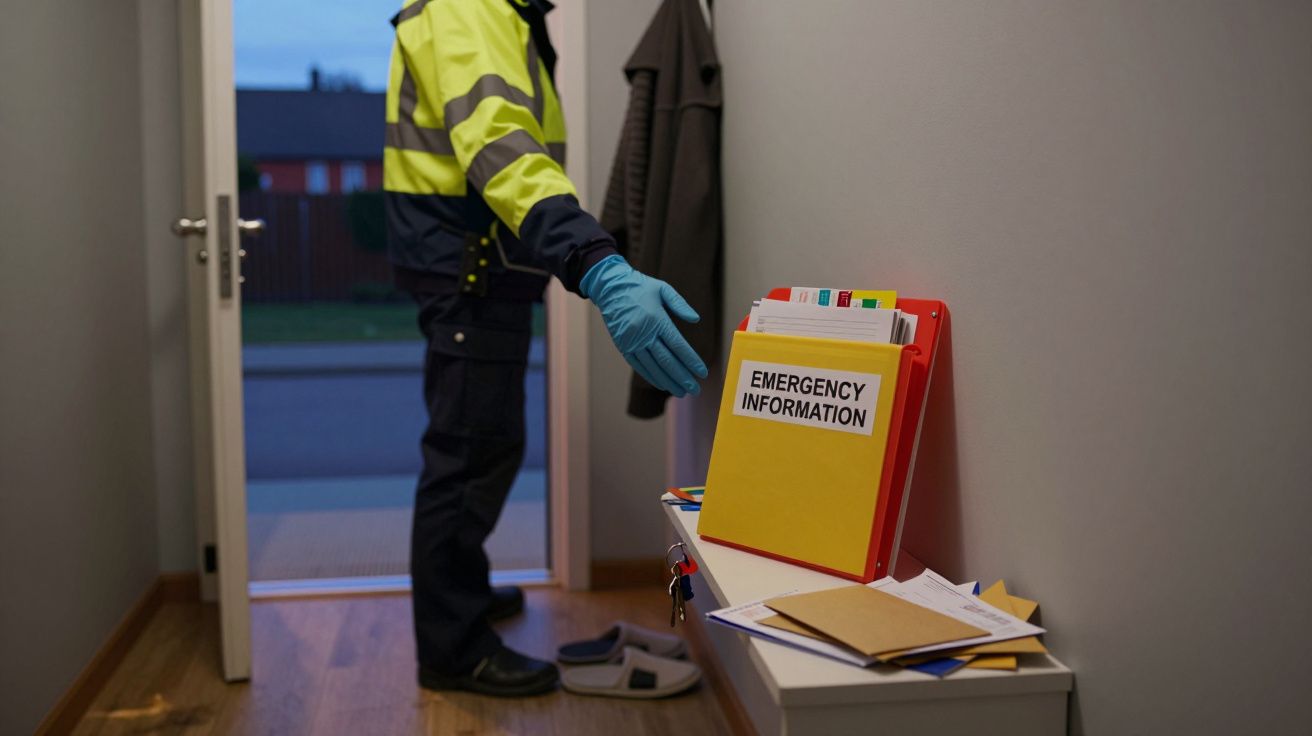
Paramedics explain the household object they wish everyone kept by the front door for emergencies
The house is quiet until it isn’t. You hear the thud on the stairs, the sharp intake of breath, the “Call 999” that doesn’t quite sound like it belongs to you. Hands shake, keys disappear, slippers slip, phones go missing under cushions just when seconds matter most. In those messy, frightened moments, paramedics say one small, boring object can quietly turn chaos into something manageable.
It’s not a defibrillator or a high‑tech gadget. It’s a simple, low‑cost “grab file” – a clear plastic wallet, folder, or pouch, kept by the front door, holding everything the crew needs in the first five minutes. On calls, they see the difference immediately. Homes with a grab file feel calmer. Homes without one often start with a frantic search.
The object: a clearly labelled emergency information folder, stored where paramedics enter first.
Why paramedics care about a plastic folder
Paramedics work in noise, clutter, and adrenaline. They arrive at a door with very little context: a brief note on the screen, a rough age, sometimes just “unwell”. Inside, they have to build a picture fast – Who is this person? What pills are these? Do they have dementia, a heart condition, a Do Not Attempt CPR order tucked in a drawer somewhere?
Every minute they spend opening cupboards and squinting at blister packs is a minute not spent stabilising breathing, stopping bleeding, or catching a silent heart rhythm change. Information is treatment. When it’s missing, care slows down and risks go up.
Crew members describe the same scene again and again: a worried partner saying “Everything’s in the study somewhere”, adult children rifling through files while the patient fades, critical documents that “must be here” but aren’t. The stress doesn’t just sit in the room; it seeps into every decision.
A folder by the door sounds almost trivial next to chest pain and blue lights. Yet paramedics say it flips the script. They walk in, someone points to the file, and in 30 seconds they know medications, allergies, baseline health, and who to call. It’s not dramatic. It is profoundly useful.
What to put in your “front‑door grab file”
Think in terms of one thing: what would a stranger need to keep you safe if you couldn’t speak properly? The contents don’t have to be perfect or beautifully organised. They just need to be complete enough and easy to read when everyone is under pressure.
Core papers
- A one‑page summary with:
- full name, date of birth, NHS number if you know it
- address and GP practice
- main medical conditions (e.g. diabetes, heart failure, epilepsy)
- known allergies, especially to medicines
- full name, date of birth, NHS number if you know it
- An up‑to‑date list of current medications, including doses and times
- Copies of any key clinic letters for serious conditions (cardiology, oncology, neurology)
- Any official care plans or advance decisions (e.g. DNACPR, ReSPECT forms, hospice plans)
Contacts and access
- Next of kin and emergency contacts, with mobile numbers
- Carer or neighbour who holds a spare key, if relevant
- Social worker or care agency details, if support visits happen regularly
- A simple note on pets in the home – “Cat indoors, please don’t let out” is useful at 2 a.m.
Practical extras
- A basic list of mobility or communication needs: hearing aid, oxygen, non‑verbal, dementia
- Information about implants or devices: pacemaker, insulin pump, metal hip
- If you live in a block: flat number, entry code, directions if your place is hard to find
- A short line on language needs if English is not the first language
Aim for 5–10 pages maximum. Clear, current, and legible beats comprehensive but chaotic.
Where to keep it – and how to make it obvious
Paramedics do not have time to search for clever hiding places. They look where their training and experience tell them to look: the hallway, the fridge, the kitchen table, any obvious folder marked “emergency”. The front door is the anchor point for their whole visit. That’s why they keep coming back to it.
A simple system that crews consistently recommend:
- Use a bright, waterproof wallet or A4 folder – red, yellow, or clear with a bold label.
- Write “EMERGENCY INFORMATION – FOR PARAMEDICS” in large letters on the front.
- Store it:
- hanging on a hook next to the front door
- in a small basket or tray on the hall table
- or in a wall‑mounted file holder by the entrance
- hanging on a hook next to the front door
- Tell family, neighbours, and paid carers where it lives and ask them not to move it.
If you prefer discretion from the street, keep it just inside the hallway, still clearly visible once the door is open. The goal is that a crew stepping over the threshold can spot it within five seconds without asking.
Some ambulance trusts also use sticker or magnet schemes – a small symbol on the front door or fridge to show information is nearby. If you’re part of one, mirror it with your folder so the symbol truly points to something useful.
How this simple object changes a 999 call
From the outside, a grab file is just paper and plastic. Inside a crisis, it quietly changes the order of events. Paramedics describe three shifts they notice on calls where one exists.
First, assessment becomes sharper, faster, and safer. Instead of guessing from a carrier bag of mixed medications, they see a clean list. They can spot dangerous combinations, understand what “normal” looks like for you, and avoid drugs you are allergic to. That can change which hospital you go to and how aggressively they treat you.
Second, families stay more present with the patient. Instead of scattering upstairs and downstairs looking for “that blue folder from the consultant”, they stay in the room, holding a hand, answering questions calmly. Paramedics get better history; relatives feel less helpless.
Third, plans and preferences are more likely to be honoured. If there is a valid DNACPR or detailed end‑of‑life plan, a grab file means it is in the hands of clinicians when it matters, not found in a drawer two hours later. That difference is deeply human, not merely procedural.
| Element | Without a grab file | With a grab file |
|---|---|---|
| Time to key info | 5–15 minutes of searching | 30–60 seconds |
| Family stress level | High, scattered, apologetic | Focused, more in control |
| Risk of missed allergies/plans | Significant | Reduced |
Small preparation shifts the emotional tone of an emergency from “we are scrambling” to “we had a plan”. The event is still frightening, but it feels less like free‑fall.
Who most needs a front‑door emergency folder
No household is “too healthy” for a grab file, because emergencies don’t check age or lifestyle first. Still, paramedics flag a few groups where it makes an outsized difference.
- Older adults living alone, especially with multiple conditions or lots of tablets
- People with long‑term illnesses: heart disease, COPD, severe asthma, epilepsy, diabetes
- Anyone with memory problems, learning disabilities, or communication difficulties
- Families where one person is a main carer and carries all the information in their head
- Children with complex medical needs or rare conditions that crews may not see often
If you recognise someone in that list, treat the folder as part of the home, like a smoke alarm or carbon monoxide detector. Quiet, unglamorous, vital.
Paramedics also suggest that relatives who live far away encourage their parents or grandparents to set one up and help keep it updated. A fifteen‑minute phone call reading out medications and contacts into a simple template can pay off in the moment you hope never comes.
Keeping it alive: update, review, repeat
A perfect folder that is three years out of date is more dangerous than a rough one that’s current. Medicine names change, doses creep up, new diagnoses appear, old conditions resolve. The document needs to breathe with real life.
A light, realistic maintenance plan:
- Every new prescription: add the label to the list or take a fresh photo and print it.
- Every hospital appointment letter: skim and only keep ones that change the big picture.
- Every six months: check the top page for:
- new phone numbers
- changed GP practice
- new key safe codes or access details
- new phone numbers
- When a preference changes – resuscitation, preferred hospital, hospice involvement – update the wording and shred the old copy.
You do not need to redesign the whole folder each time. Crossings‑out in clear pen are better than silence. What matters is that the paramedic can trust the information more than the pile of old boxes in the bathroom cupboard.
Think of it as a living document, not a project you “finish”.
How to start one this weekend in under 30 minutes
It’s easy to read all this, nod, and never actually put the folder together. So keep it simple, almost deliberately scruffy at first.
- Grab any plastic wallet or envelope you have in the house and a thick marker.
- Write “EMERGENCY – PARAMEDIC INFORMATION” on the front.
- On a single sheet of paper, handwrite:
- full name, date of birth, address
- next of kin and phone number
- main conditions and allergies
- full name, date of birth, address
- Tip all current medication boxes or blister packs on the table, list them, and staple the list to the sheet.
- Add any official forms you already know you’re meant to keep accessible (DNACPR, care plans).
- Put the wallet by the front door and tell at least one other person where it is.
Done is better than perfect. You can always refine it later, print a cleaner version, or add sections. The win is that tonight, if something goes wrong, the first responder who walks over your threshold won’t be starting from zero.
FAQ:
- Isn’t this what my medical records are for?
Not in the first few minutes of a 999 call. Paramedics may not have instant access to full digital records, or they may be patchy or out of date. A folder in the home gives them a reliable snapshot of your current reality.- What if my situation is simple and I take no regular medicines?
A one‑page sheet with your details, NHS number, emergency contacts, and any allergies is still worth having. It speeds up identification and lets crews focus immediately on treatment.- Is it safe to keep all this information by the front door?
You can keep it just inside, out of direct view from the street, and avoid including financial details. The clinical benefit in an emergency usually outweighs the small privacy risk.- How often should I update the folder?
Check it whenever your medication changes and roughly every six months. A quick skim and a couple of pen edits are often enough.- Do paramedics really look for this sort of thing?
Yes. Many ambulance crews routinely scan the hallway, fridge area, and obvious files for medication lists and plans as soon as they enter. A clearly labelled folder makes their job easier and your care safer.

Comments (0)
No comments yet. Be the first to comment!
Leave a Comment