The £1 toy that drains a dog’s excess energy faster than a long walk, trainers reveal
A rubber ring, a tatty old ball on a rope, a scrunched‑up charity‑shop teddy. The toy itself barely matters. What drains a dog faster than a long march round the park, trainers say, is structured play that makes them think as well as sprint. And you can set it up with something that costs less than a bus fare.
In living rooms and village greens, behaviourists are quietly swapping “more walks” for “better games”. The logic is simple. Many of the dogs that bounce off the walls after a 5‑mile hike are not under‑exercised; they are under‑worked in the brain. A cheap tug toy, used well, turns ten minutes into a full‑body workout and a problem‑solving session rolled into one.
Why a £1 toy beats another hour on the lead
Owners of young collies, cockapoos and working mixes know the pattern. You come back from a long stomp, shoes muddy, lead damp, and the dog does zoomies round the sofa as if the outing never happened. It feels like failure. It is, in a way, but not the one you think.
Dogs evolved to hunt, search, rip, carry and decide. Long, flat walks on pavements scratch only the itch to move. They barely touch the need to sniff out, stalk, wrestle and “win”. A cheap tug rope or rubber ring taps into more of those jobs at once. Pulling builds strength; dodging and darting trains co‑ordination; the rules of the game train impulse control. Ten focused minutes tick more boxes than an hour of plodding behind your shins.
Trainers describe it as “mixed‑mode” exercise. Muscles fire, lungs work, heart rate spikes, and the brain is busy reading your body language and the toy’s movement. That cocktail tires dogs deeply, especially breeds designed to make decisions on the move.
The tug game that rewires manners, not just muscles
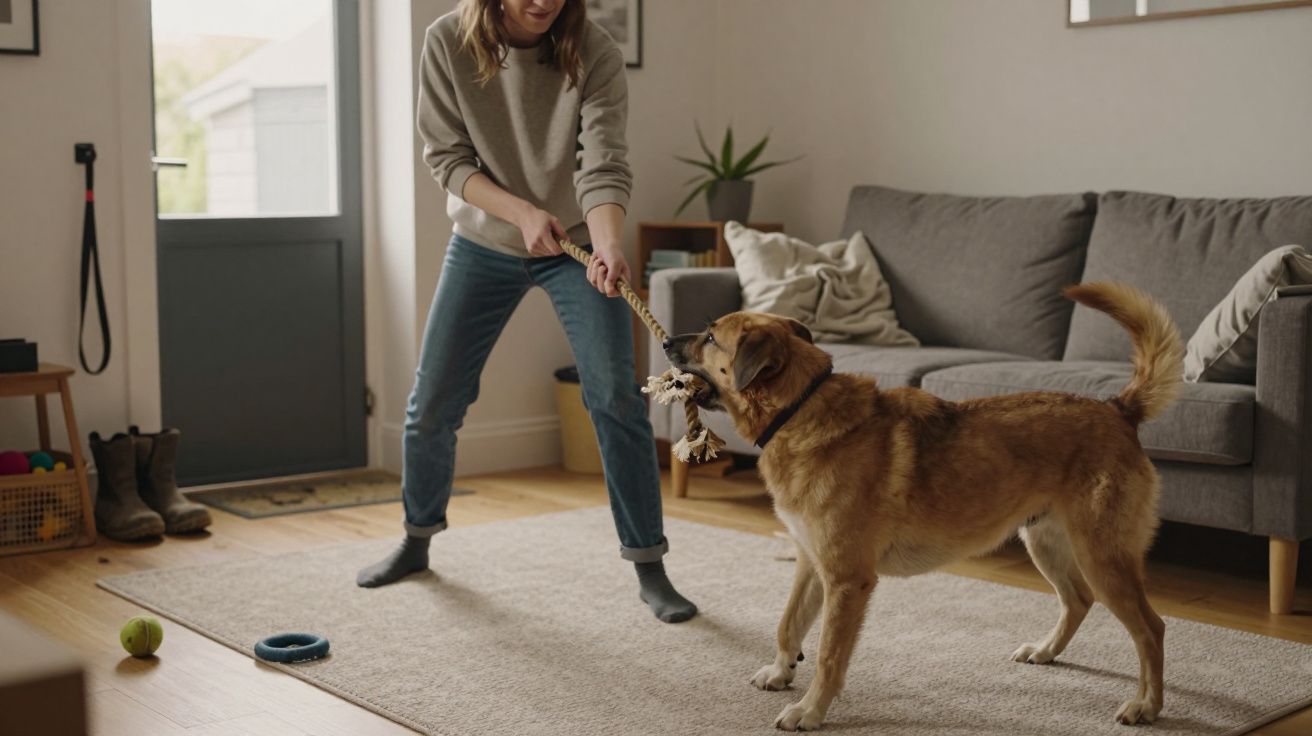
The tool most trainers reach for is basic: a tug toy. In its simplest form, that can be a knotted rope, a strip of fleece, or a £1 ball on a string from the bargain bin. What matters is how you use it.
The game starts with a clear cue: “Ready?” Toy goes live, wriggling low to the ground like prey. The dog latches on, you keep your grip soft in the elbows, and you move your feet, not just your wrists. Short, sharp bursts work best. Then comes the magic part. You freeze. Toy goes still. You wait. The moment the dog loosens their jaw or glances up, you mark it-“Yes!”-and the party starts again.
Two things happen. First, the dog gets a draining, full‑throttle outlet for all the “grab and shake” urges you do not want on sleeves, cushions or children. Second, they learn that letting go, looking away and listening make the fun resume faster. Self‑control stops being a boring rule and becomes a way to win the game.
Used like this, a £1 tug toy is less a gadget and more a lesson plan disguised as chaos.
How a £1 toy taxes the brain as much as the body
From the outside, tug or fetch looks like simple brawn. Under the fur, a lot more is going on. The dog is tracking moving targets, judging distance, adjusting grip, reading your shoulders, and switching between arousal and calm every time you start and stop.
That on‑off gearing is key. Dogs that struggle with reactivity or restlessness often live in one of two modes: wired or crashed. Games that deliberately cycle them up and down-tug, then stillness, then tug again-teach their nervous system to use the middle gears. It is like interval training for the brain.
Even something as humble as a squeaky rubber ring can become a puzzle. Toss it into longer grass, send the dog to “find it”, ask for a sit before release, then call them back mid‑chase once in a while and pay with an even better round of tug. The dog must remember rules, respond to cues and control their body in mid‑excitement. That effort tires them in a way a flat trudge never quite does.
Toy games vs long walks at a glance
| Approach | What it mainly works | Typical result |
|---|---|---|
| Long, flat walk | Stamina, basic movement | Fitter dog, often still mentally wired |
| Short, structured play with a tug/ball | Strength, co‑ordination, impulse control, focus | More satisfied, calmer dog for less time spent |
Making a £1 toy pull its weight
The trick is not the price tag; it is the structure you wrap round it. Trainers suggest a simple framework that most dogs can follow:
- Warm‑up: two minutes of pottering, gentle hand targets, short recalls.
- Game on: 5–8 bursts of tug or chase, 10–30 seconds each.
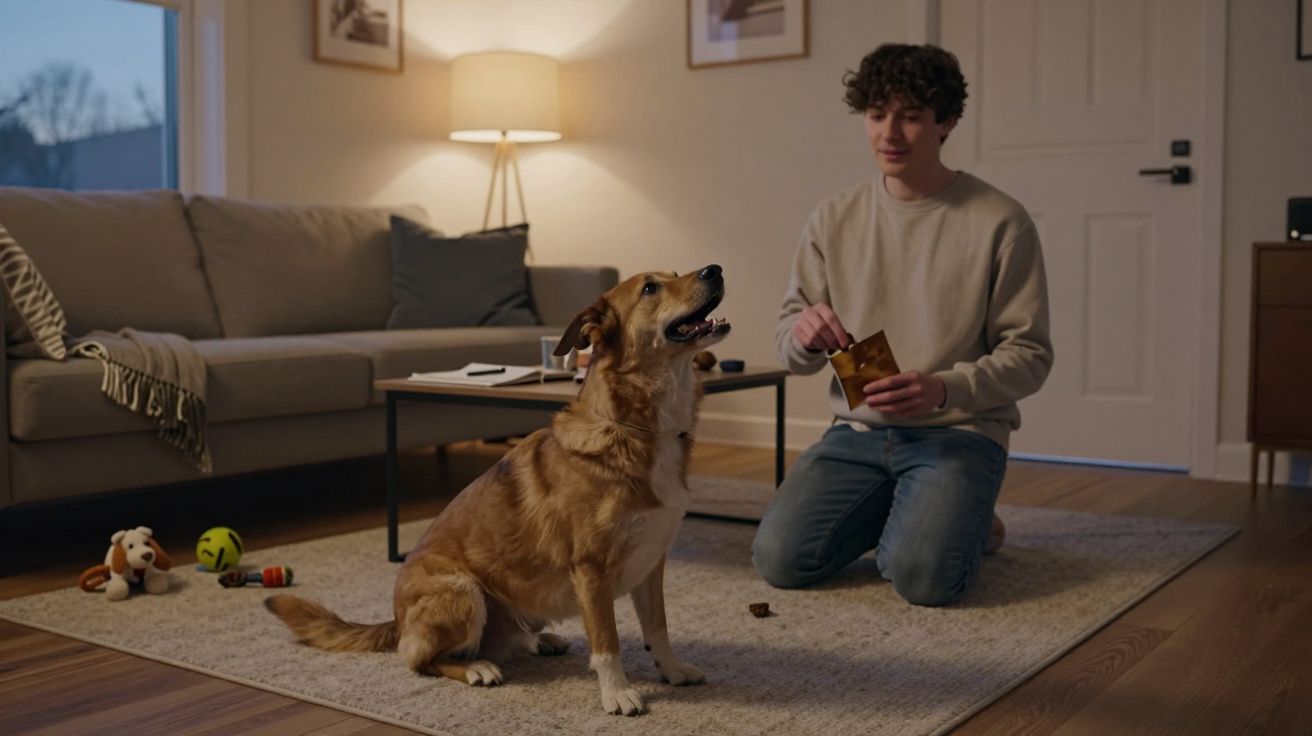
- Pauses: brief sits or downs between rounds; reward with the game itself.
- Cool‑down: slow sniffy walk, chew, or scatter‑feed to bring arousal back down.
Keep early sessions short enough that the dog finishes wanting one more go, not flopping away from overload. If you can hear heavy panting and see glassy eyes, you have probably overdone it. The goal is pleasantly spent, not wiped out.
Rotate toys to keep the novelty and to protect joints. A softer fleece tug for indoor work, a longer rope for outdoors, a squeaky ring for search games in the garden. All of them can cost less than a coffee. What you are really building is a shared language of start, stop, and “you did that right”.
Safety, breeds and when toys beat treadmills
Not every dog should fling themselves round the garden on a tight pivot. Growing puppies, seniors with creaky hips, and dogs with known joint issues need gentler angles and lower jumps. Here, the £1 toy still earns its keep, just with slower, more linear games-short straight chases, gentle tug at ground level, nosework where the toy is hidden rather than hurled.
High‑drive working breeds-spaniels, collies, Malinois, German shepherds-often show the starkest difference between more walking and better playing. Trainers working with them in tiny city flats routinely report that a handful of thought‑through toy sessions a day does more to calm the dog than doubling their mileage.
For brachycephalic breeds-pugs, French bulldogs, bulldogs-watch the breathing. Swap long, breathless tugs for very short bursts and plenty of “sniff breaks”. The toy still offers structure; the sessions just run cooler.
How to start if your dog “doesn’t play”
Some owners despair that their rescue or older dog looks blankly at toys. Often the toy is not the problem; the pitch is. Many dogs need the object to move like something alive before interest lights up. Drag it away from them, not towards them. Let it disappear round a doorway, then peek out. Tiny prey, not a static prop.
If food motivates your dog more than fluff, smear a little soft cheese on a rubber toy or wedge a few treats into a holey ball to start with. You can gradually reduce the food as the dog learns that gripping and chasing is fun in its own right. Keep early sessions quiet, with no children pulling or squealing around the dog. They are learning a new language; they need a calm classroom.
Some dogs will always prefer sniffing to tug. That is fine. The same principle-short, structured bursts of brain‑work-can still apply. Scatter a handful of kibble in the grass and use the £1 toy as a “jackpot” they get to chew once they have hoovered up the last crumb. The toy becomes the cherry on top of a scent puzzle.
The hidden benefit: a calmer house, not just a tired dog
The headline promise-draining excess energy-is only half the story. When a dog learns, through cheap toys and clear games, that you are the source of the best fun, a few quiet shifts follow. Recall sharpens. Lead manners improve. Chewing strays less often onto furniture and more often onto what you hand them.
Owners often report a gentler atmosphere indoors after a fortnight of regular, structured play. The dog is less likely to mug guests, pester at the table or bark at shadows, not because they are exhausted, but because the day has a rhythm that meets their needs. A £1 tug rope becomes a valve you can open and close, instead of hoping a long walk will somehow melt all the fidgets away.
FAQ:
- Will toy games replace my dog’s walks? No. Dogs still need daily walks for toilet breaks, sniffing, and life experience. Structured play is best seen as a powerful supplement that can shorten, not scrap, mileage on busy days.
- Is tug “bad” because it encourages aggression? Used with rules-start and stop cues, letting go on request-tug tends to improve control, not aggression. You are giving a safe outlet for natural grab‑and‑shake instincts.
- What if my dog gets too revved up with toys? Shorten sessions, build in more pauses, and end with calm activities like sniffing or gentle chew time. If your dog struggles to come down at all, work with a qualified trainer.
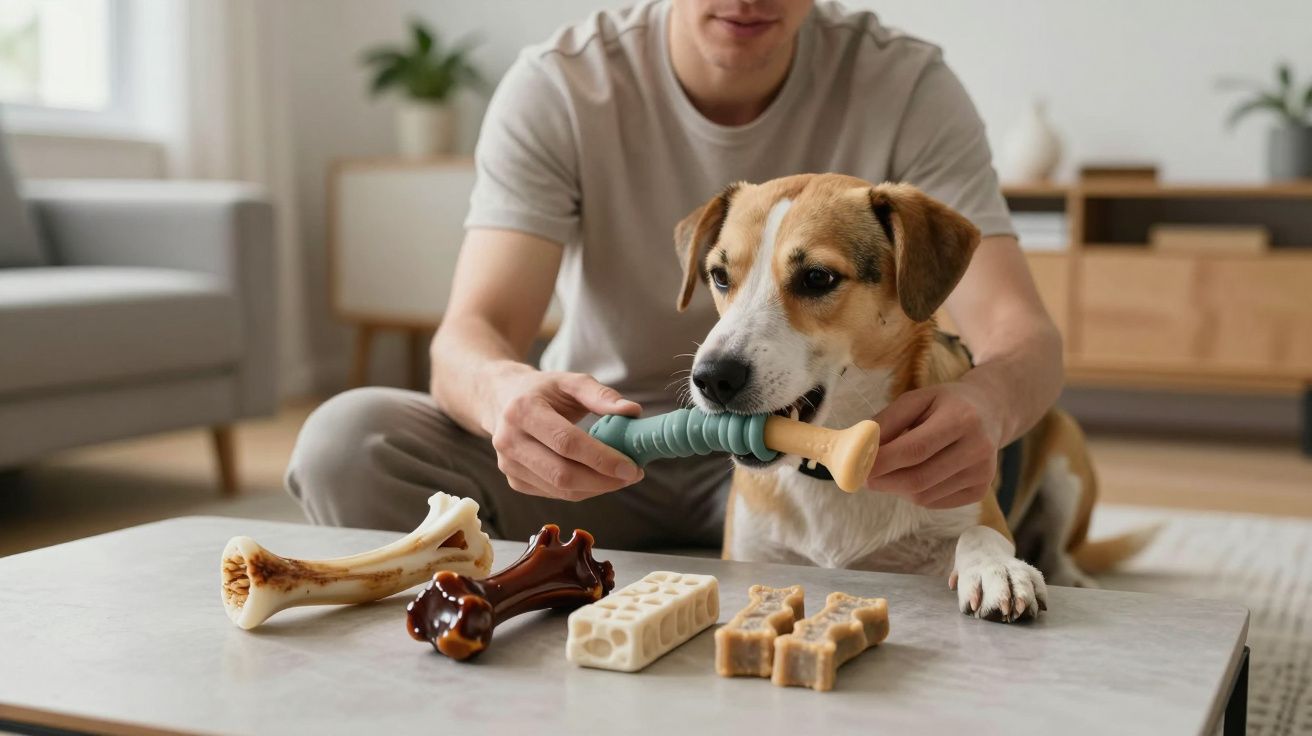
- Can I use any cheap toy? Avoid very hard plastics that can crack teeth and toys that shred into swallowable strings. Look for soft but sturdy materials and supervise play, especially with heavy chewers.
- How often should I play like this? For most healthy adult dogs, one or two short sessions a day-5 to 15 minutes each-is plenty. Watch your dog’s body language and adjust the volume rather than chasing an exact number.
Comments (0)
No comments yet. Be the first to comment!
Leave a Comment