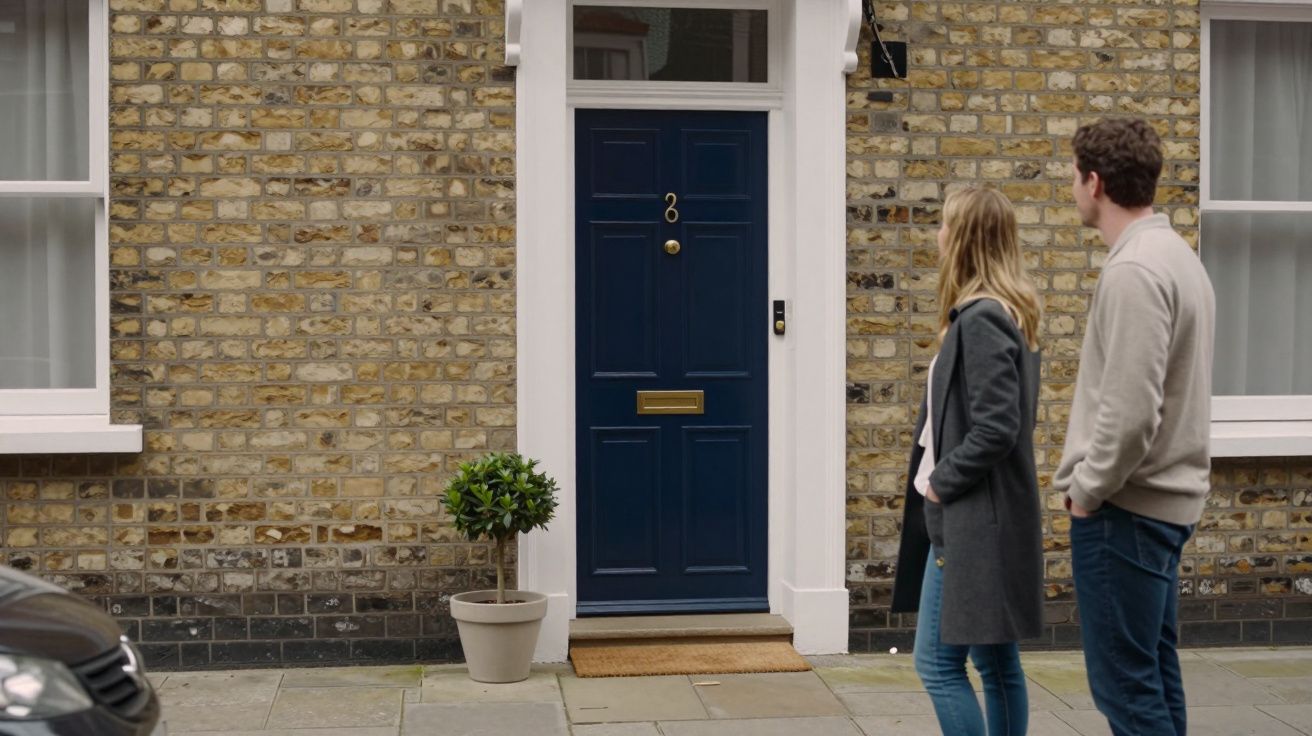
The colour on your front door that estate agents claim adds the most perceived value on viewing day
The buyers arrive three minutes early. They hover on the pavement, glance up at the windows, then settle on the one thing they can’t help but judge first: the front door. Paint flakes, a wobbly number, a faded doormat that’s seen better years. Before they’ve even stepped inside, they’ve filed your place under a category in their mind: “loved” or “left to drift”.
Estate agents know this moment like muscle memory. It’s the ten seconds where buyers decide whether they’re about to see a dream or a negotiation project. And when you ask them which front-door colour quietly lifts perceived value the most on viewing day, the answer is absurdly simple.
It’s navy. A deep, confident navy blue.
Not royal, not turquoise, not a shouty cobalt. The shade that lives somewhere between midnight and ink. The one buyers, when asked later, remember as “smart” and “solid”, even if they couldn’t name the paint brand to save their life.
Why navy blue makes your home feel more expensive before anyone sees the kitchen
There’s a reason so many estate agents gently push sellers towards darker, classic tones. A deep navy door sends a stack of signals buyers rarely say out loud. It whispers “well maintained”, “quietly upmarket”, and “someone has made considered choices here”. All of that happens before a single floorboard creaks under their feet.
Your front door is the cover of the book. Buyers still read the chapters – the layout, the light, the boiler they’ll pretend to understand – but that first impression colours everything. A clean, freshly painted navy door frames the whole visit. The hallway scuffs feel less dramatic. The small second bedroom feels more “cosy” than cramped. The mind is already expecting care, not chaos.
Here’s a tiny story. Amir and Priya were selling a two-bed terrace on a busy road in Leicester. The house was spotless, the garden tidy, but the original white UPVC door had yellowed and picked up the odd mystery mark over the years. Their agent suggested swapping it for a solid timber door and painting it a deep navy, with new hardware. Cost: just under £400 all in.
Viewings the month before the change had been polite but chilly. After the door went in, the tone shifted. Same price, same photos, same road noise – but people lingered longer on the doorstep. Two viewers mentioned they “loved the entrance” before they’d seen the lounge. Within three weeks, Amir and Priya accepted an offer just over asking. Did the door alone do that? Of course not. But it set the stage so the rest of the house could play its part.
Your budget hates big, risky upgrades right before a sale. A new kitchen? Too late. A loft conversion? Definitely too late. But a front door is a contained, highly visible project. The cost sits in one line on your spreadsheet. The impact lands in every buyer’s first sentence: “Oh, this looks nice.”
The small psychology of a dark, classic door
Estate agents won’t usually talk in colour theory, but they feel it. Dark blues sit in the sweet spot between safe and special. They don’t scare off traditional buyers the way a bright yellow might. They don’t disappear into the background like tired brown. On older homes, they read as period-appropriate. On new builds, they add weight to what can otherwise feel a bit boxy.
Buyers carry mental shortcuts they rarely unpack. Deep blue gets filed under:
- “Stable” – like a blazer that goes with everything.
- “Low maintenance” – it hides the everyday grime better than white.
- “Grown-up” – less shouty than red, less cold than black on some streets.
There’s also a subtle contrast trick. Navy against light brick or render makes the doorway pop in photos and in real life. Online, where most buyers first meet your home, that thumbnail shot with a crisp, dark door and clean frame can nudge your listing into the “save” pile instead of the “maybe later” scroll.
Let’s be honest: nobody is saying buyers will walk away purely because you chose sage green instead of navy. But in streets where three almost-identical houses are on the market, tiny cues do heavy lifting. The one that looks more “finished” wins more hearts, faster.
How to get the “expensive navy door” effect without making costly mistakes
You don’t need to rip out your entire entrance to get this right. Estate agents who see hundreds of sales a year quietly recommend three steps.
Decide if you’re repainting or replacing.
If the existing door is structurally sound but shabby, fresh paint and new hardware may be enough. If it’s warped, cracked, or clearly past its best, buyers will mentally bill you for a replacement anyway. In that case, you might as well choose one that earns its keep now.Choose the shade with your street, not your Pinterest board.
Stand opposite your house and squint slightly. What dominates – brick, render, greenery, a dark hallway glimpsed through glass? A slightly softer navy works better against very pale façades; a near-black navy can be stunning on red brick. Many paint ranges now literally label these shades “front door” or “exterior wood and metal”, which removes guesswork.Upgrade the jewellery.
A navy door with flimsy, pitted chrome handles looks like a blazer with a broken button. Swap in:
- A solid, weighty handle or knob
- A clean letterplate
- A clear, modern number or simple house name
Brass, brushed nickel or black all play nicely with navy. Shiny, cheap-looking fittings drag the whole effect down.
Two quiet traps estate agents mention again and again: rushing the prep, and picking a finish that doesn’t survive the weather. Exterior paint needs a clean, lightly sanded surface and a dry day. Gloss shows every brush mark; eggshell or satin often looks more forgiving and more up-to-date.
“Front doors are cheap drama,” one London agent told me. “New paint and hardware can add thousands in perceived value for hundreds in real cost.”
Quick checklist for a value-boosting navy door
- Scrub, sand, and repair before painting – no shortcuts.
- Tape edges properly so the lines are crisp against the frame.
- Paint the doorframe and surround to match or complement, not clash.
- Replace any cracked glass panels; fogged glazing screams “hidden problems”.
- Add a simple, fresh doormat and trim back any plants hiding the entrance.
None of this is glamorous. But together, it turns “oh… okay” into “oh, lovely” at the exact second buyers decide how much mental room they’ll give your home.
What if navy really doesn’t suit your place?
Some houses push back. A chocolate-box cottage with a thatched roof might feel wrong with a sharp, urban navy. A block-managed flat where every door must be identical gives you no room at all. That doesn’t mean you’re stuck; it just means you lean on the principle, not the exact pigment.
The principle is simple: choose a clean, confident, intentional colour that fits the building and the street. For some homes, that might be:
- Deep charcoal or near-black on modern townhouses
- Rich bottle green on Victorian terraces with lots of planting
- A strong, glossy black on classic London-style fronts with columns
What estate agents quietly warn against are the “maybe one day I’ll repaint” colours: faded pastels, once-red-now-rose, budget white that’s gone nicotine-cream. They signal delay, compromise, and “we did this in a rush last weekend”. Those aren’t words you want in a buyer’s head as they step over the threshold.
If you’re torn, ask your agent which front doors on your regular walking route make houses look more expensive than you know they are. You’ll notice a pattern: solid, saturated colours, good hardware, no clutter.
Turning ten seconds of paint into more confident offers
A front door won’t fix a leaky roof or hide a train line at the end of the garden. But it does something almost as useful: it buys goodwill. Buyers are more forgiving inside when the outside makes a promise of care that the interior mostly keeps.
On viewing day, when you’re already juggling last-minute hoovering and wondering if the candles are too much, that navy door earns its keep quietly. People arrive with their shoulders a fraction lower. They step in expecting “nice”, not “needs everything”.
Perceived value lives in those tiny shifts. It’s the difference between “we’ll think about it” and “should we go back for a second look?” It’s the gap between a cheeky offer and a fair one, especially in a market where buyers are hunting for reasons to walk away.
In the end, the choice is small: a weekend with sandpaper, paint, and a few new fittings, in exchange for hundreds of private, silent judgements tilting just slightly in your favour.
The real question isn’t whether navy is magical. It’s what you could unlock if the very first glance at your home quietly said, “This place has been looked after” – before a single word is spoken on the doorstep.
| Key point | Detail | Why it matters for sellers |
|---|---|---|
| Deep navy boosts “perceived value” | Reads as smart, solid and upmarket across styles | Buyers arrive expecting care, not compromise |
| Hardware and prep do half the work | Clean lines, good handles, fresh frame amplify the colour | Avoids the “new paint on a tired door” effect |
| Fit the street, not the trend | Classic, saturated colours that suit the building win | Helps your listing stand out without putting buyers off |
FAQ:
- Is navy always the best door colour to help a sale? Estate agents regularly report that deep navy or similar dark blues perform well across many areas, but the “best” colour is the one that looks intentional and suits your building and street.
- Will a new door actually increase my home’s value? It’s more accurate to say it increases perceived value and reduces objections. That can support stronger offers or a quicker sale, especially when buyers are comparing similar properties.
- Can I just repaint my existing UPVC door navy? Some specialist paints work on UPVC, but many agents find a solid, well-fitted timber or composite door creates a more substantial feel. If replacement isn’t in budget, careful prep and the right product are essential.
- What if my management company controls the front door colour? Check the lease or handbook. If changes are restricted, focus on spotless paintwork, upgraded hardware, lighting, and a clear, welcoming entrance instead.
- Is it worth doing if I’m not selling for another year? Yes. You get to enjoy the smarter entrance now, and by the time you list, the door will feel like part of a long-standing, cared-for home rather than a last-minute fix.


Comments (0)
No comments yet. Be the first to comment!
Leave a Comment