The “doorway rule” memory trick that actually has a scientific explanation
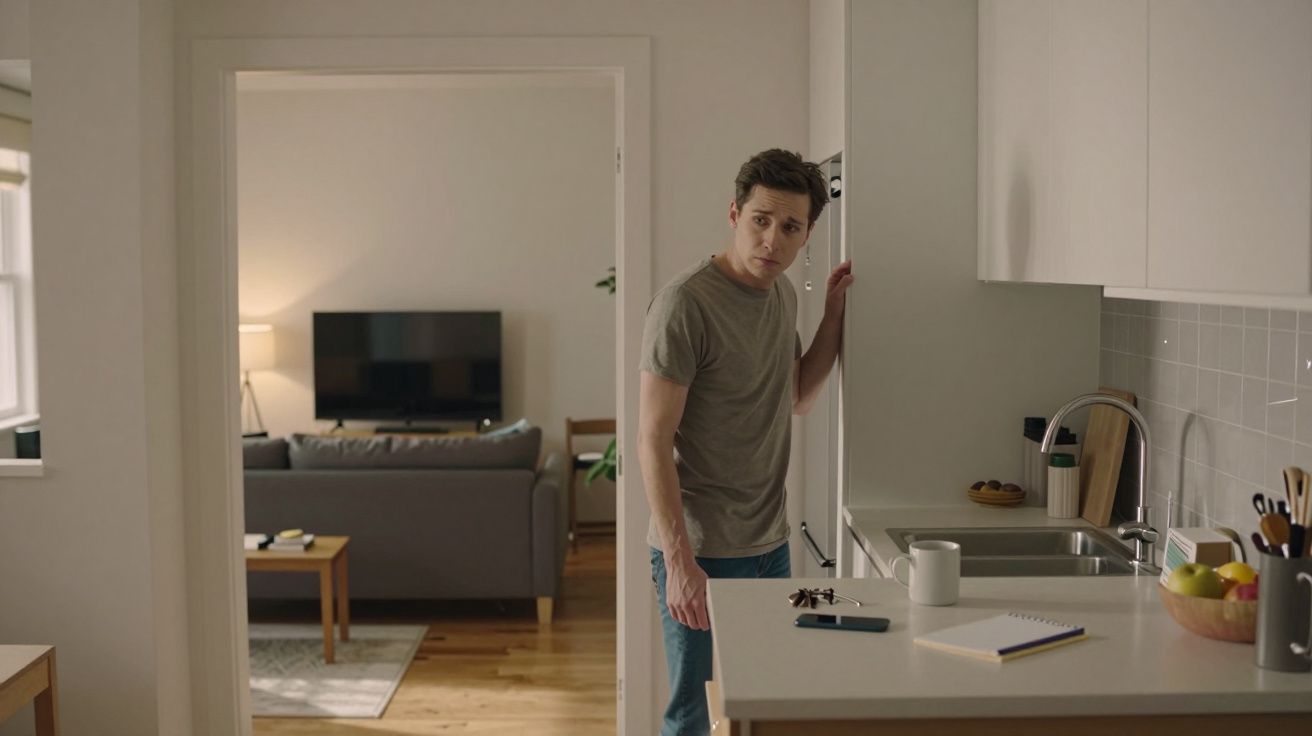
The first time you notice it, you think you’re just tired. You walk from the living room to the kitchen with a clear mission – grab your phone, pick up the keys, turn off the oven – and the second you step through the doorway, the thought slips clean out of your head. You stand there, staring at the counter like it personally offended you, trying to rewind the last 30 seconds of your life.
Then it happens again the next day, and the next week. You half‑joke that you need more sleep, fewer tabs open in your brain, maybe more omega‑3. Somewhere, you read a line about “go back to where you started and it’ll come back”. You try it, retrace your steps to the sofa, and the lost reason for your journey pops back into focus as if it had been waiting in the air.
There is a name for this, and it is not “getting old” or “being useless”. It is the doorway effect. And behind the viral “doorway rule” memory trick, there is real cognitive science.
What actually happens in your brain when you cross a doorway
Psychologists have been poking at this for years. In a series of experiments at the University of Notre Dame, volunteers moved objects between tables in a virtual environment and in real rooms. Sometimes they crossed a doorway between tasks, sometimes they didn’t. Sometimes they picked up a new object in the same room, sometimes after entering a new one.
Across versions of the experiment, a pattern kept appearing. Memory for what you had just been doing got worse the moment a doorway was involved. People were more likely to forget which object they’d moved, or mix it up with another, if the action had been separated by passing from one room into another, even when walking the same distance in a single room did not cause the same drop.
In other words, the doorway itself was doing something. It wasn’t the number of steps that mattered. It was the change of context.
Crossing a doorway acts like a mental “scene cut”: the brain quietly closes one little chapter and starts a new one.
Your mind constantly chops experience into events, scenes and segments. A doorway is a sharp cue that “we are now somewhere else, doing something new”. That cue helps you navigate daily life, but it also comes with a trade‑off: details from the just‑finished micro‑event are filed away faster, so you have more room for what comes next.
The “doorway rule”: a tiny hack with a big pay‑off
If a doorway can nudge the brain to reset, you can flip that logic. The so‑called “doorway rule” is simple: when you forget why you went into a room, go back to the place where you first had the thought. Recreate the scene. Let your brain reload the last chapter.
You are not “summoning the muse”. You are handing your memory the exact retrieval cue it was using in the first place: the sofa, the lamp, the position of your body, the TV murmuring in the background. Back in the original context, the brain’s event file for that moment opens again, and the missing intention often falls straight out.
People do this on instinct. They walk back to the hallway, stand where they were when they decided something, and remember the thing they forgot. The “rule” is just putting a name on that instinct and using it deliberately.
There are ways to make it work even harder:
- Pause for half a second before you stand up, and say the task out loud: “I’m going to the bedroom to get my headphones.”
- As you walk, briefly picture yourself doing the target action in the next room.
- If you do forget, go back to where you started, stand still, and let your eyes fall on the object or spot you were focusing on when you first thought of the task.
None of this makes you superhuman. It simply leans on how context‑dependent memory already is.
Event boundaries, context, and why your brain does this on purpose
From a cognitive point of view, doorways are just one kind of event boundary. A shift in time, place or activity – sitting down, standing up, someone else starting to talk – marks the end of one unit of experience and the start of another. Your brain uses these boundaries to file memories efficiently.
This filing system has benefits. By bundling related details into events, you can later remember “that meeting on Tuesday” or “the time I got lost in Lisbon” as coherent episodes. The flip side is that information that is not fully embedded before a boundary – like a fragile “I’ll grab the washing from the machine in a minute” thought – is easier to drop.
Doorways are strong boundaries because they slam together several changes at once. The light, sound, temperature and layout all shift in a step. Your goals often change too: “reading on the sofa” turns into “tidying the bedroom” turns into “checking an email”. The brain is doing precisely what you want it to do most of the time: stop clinging to the last scene and pay attention to the current one.
So when you curse yourself in the kitchen, you are really bumping into a system designed for survival, not for keeping track of your slippers.
How to use the doorway effect instead of fighting it
You can’t stop your brain marking boundaries. You can, however, work with them. Think of doorways as mental punctuation. Then decide where in the sentence you want your most important words to land.
Some simple, practical tricks:
- Anchor key intentions before you move. Pair the task with something concrete: “When I touch the kitchen door handle, I will put the pasta water on.”
- Carry the cue with you. If you stand up to get your glasses, hold the empty glasses case in your hand as you walk. Your body becomes a portable context reminder.
- Create intentional “reset” points. Use a doorway on purpose to drop a nagging thought. When you leave your desk for lunch, tell yourself, “Work stays in that room,” and let the boundary help you switch off.
- Reduce “floating” intentions. If something can go straight on a list or into a reminder app instead of living in your head through three room changes, do that. The fewer fragile mental Post‑its you juggle, the better.
In offices, hospitals and schools, designers quietly exploit this. A change in flooring, colour or light near a doorway marks zones and helps people shift tasks. In your own home, a simple hook by the door for keys, or a bowl where your wallet always goes, externalises memory so you are not relying on a brain that is busy closing chapters every time you cross a threshold.
When forgetting more than “why am I in this room?” is a red flag
Everyday doorway slips are normal. They show up in lab experiments with young, healthy adults and in busy lives where attention is stretched thin. They do not, on their own, signal that something is wrong.
Patterns matter more than isolated moments. If you find yourself:
- Repeatedly forgetting important appointments or conversations,
- Getting lost in familiar places,
- Struggling to follow stories or instructions,
- Or noticing that friends and family are worried about your memory,
then it is worth talking to a GP. They can distinguish between normal, context‑related lapses and signs that deserve further assessment. Stress, poor sleep, certain medications, depression and anxiety can all blur memory in ways that feel worse than the odd doorway blank.
In the meantime, small, grounded habits help everyone: regular sleep, getting outside, movement, decent food, and structured ways to offload tasks from your head to paper or screen.
| Everyday slip | Likely cause | What can help |
|---|---|---|
| Forgetting why you entered a room | Doorway effect, attention shift | Use the doorway rule, say tasks out loud |
| Misplacing keys or phone | Divided attention, no fixed place | Create a single “home” spot, add a visual cue |
| Losing track mid‑sentence | Distraction, overload | Slow down, reduce background noise |
After the doorway: remembering what matters
Once you notice the doorway effect, you see it everywhere. The way you forget a point the moment you open a new browser tab. The way walking out of a heated argument into the garden shifts your mood as if someone cracked a window in your skull. The way stepping into a gym, a library or a hospital changes what you expect of yourself.
The “doorway rule” memory trick is a small way of reclaiming that automatic system. Go back to where you started. Let your brain rewind a few frames. Use thresholds as handles, not enemies.
Your memory is not failing you every time you stand in a room wondering what on earth you came in for. Most of the time, it is doing exactly what it evolved to do: draw a clean line under the last scene, so you have space for the next one.
FAQ:
- Does the doorway effect mean my memory is getting worse? Not necessarily. Experiments show it in healthy young adults too; it reflects how the brain segments events, not a general decline.
- Why does going back to the previous room help me remember? Returning recreates the original context – sights, sounds, posture – which acts as a powerful cue to reopen the “file” where that intention was stored.
- Can I prevent forgetting when I move between rooms? You can’t switch off event boundaries, but you can support memory by saying intentions out loud, carrying a physical cue, or setting quick reminders before you move.
- Is it still the doorway effect if I forget after opening a new app or tab, not a literal door? Yes. Any sharp context switch – new screen, new task, new place – can act like an event boundary and briefly disrupt working memory.
- When should I worry about my forgetfulness? If lapses become frequent, affect work or relationships, or come with confusion or getting lost, speak to a GP for a proper assessment.
Comments (0)
No comments yet. Be the first to comment!
Leave a Comment