The legal line between normal party noise and an official nuisance complaint, explained by solicitors
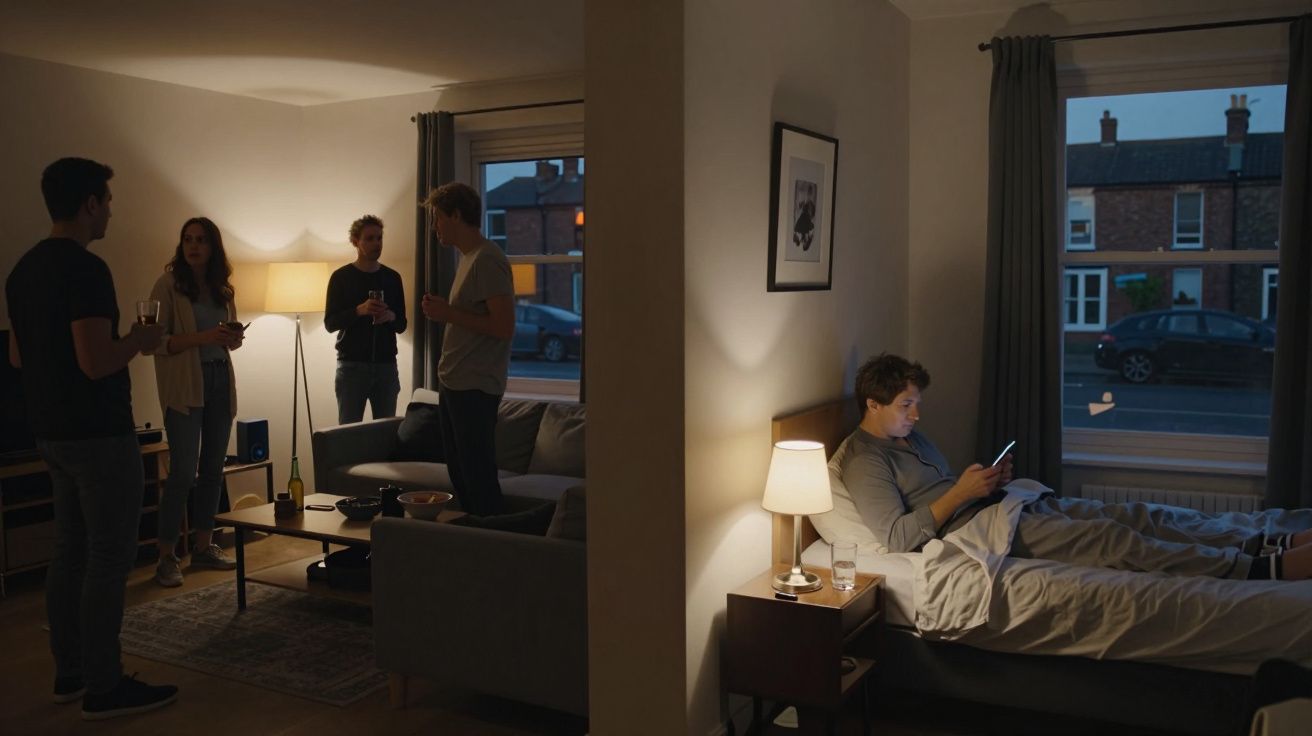
It usually starts with something small: a Friday night birthday, a Bluetooth speaker that creeps up a few notches, a neighbour who slams a window instead of saying anything. By Sunday morning you’re wondering if you’ve done something wrong – or, on the other side of the wall, if what you’re hearing is just “one of those nights” or something you could actually report.
A solicitor I spoke to described it as “the gap between mildly annoying and legally unreasonable”. The law doesn’t care if you dislike drum and bass. It cares if the noise is so frequent, loud or badly timed that it interferes with how a normal person can use their home. Somewhere between those ideas lies the line between a social grumble and a statutory nuisance.
When loud becomes unlawful: what “nuisance noise” really means
UK law doesn’t ban “noise” in general. It bans statutory nuisance – noise that unreasonably and substantially interferes with your use or enjoyment of your property, or harms your health. A one‑off birthday that runs late is treated very differently from a weekly 3 a.m. rave in the living room.
Councils and courts look at patterns. They ask: how often, how loud, how late, and what kind of area is this? A party in a city-centre flat above a pub sits in a different context to bass-heavy music in a quiet cul‑de‑sac where you can normally hear birds and the postman’s footsteps. The law makes room for everyday living; it doesn’t guarantee silence.
Here’s the boring‑but‑crucial bit. There is no automatic “curfew time” in national law where all noise magically becomes illegal. The 11 p.m. idea is more social norm than statute. That said, noise at night (usually 11 p.m. to 7 a.m.) is judged more harshly because most people are trying to sleep. Councils can use specific “night noise” powers where sound is clearly excessive in those hours.
How councils decide: music, timing and your neighbours
Think of environmental health officers as the referees. They’re the ones who visit, listen and decide if what’s happening crosses the statutory nuisance line. They’re not patrolling for laughter at barbecues. They’re called out when somebody says, “I can’t live like this any more.”
When officers assess party noise, they typically weigh:
- Volume and character – Is it low-level chatter or thumping bass that penetrates walls and windows?
- Frequency and duration – A few evenings a year, or every weekend until sunrise?
- Time of day – Is it 8 p.m. on a Saturday, or 2 a.m. on a school night?
- Location – Busy high street, student area, or quiet residential lane?
- Impact – Are you raising your voice to talk, losing sleep, children woken?
They don’t need a decibel meter to act, though some councils do use them. Their own professional judgement, notes and recordings are enough. If they find a statutory nuisance, they can serve an abatement notice ordering the noise to stop or be reduced. Ignoring that notice can become a criminal offence, with fines and even equipment seizure.
Hosting a party without crossing the legal line
Most people want to be good neighbours and still enjoy a birthday or big match. The law expects a bit of give and take, not silent houses and empty living rooms. A few habits keep your party firmly in “reasonable” territory.
Do the simple, early things:
- Tell your neighbours in advance. A note, a quick knock, a rough finish time. People tolerate more when they’re not surprised.
- Control the bass. Low frequencies travel through walls and floors. Keep subwoofers off the floor, angle speakers away from party walls.
- Set an internal “wind‑down” time. Turning music down significantly by 11 p.m. and moving people indoors matters more than you think.
- Use soft furnishings. Curtains, rugs and sofas absorb sound. Bare, echoey rooms project it.
Watch the drift. Volume has a way of creeping up as people relax. Nominate one person who’s sober enough to be “noise monitor”, checking in from the hallway or garden. If you step outside and can clearly hear lyrics at the kerb, so can your neighbours – and so can an officer.
“We’re not here to shut down every get‑together,” one environmental health solicitor told me. “We’re here to stop the parties that become a weekly assault on somebody else’s home life.”
- A handful of events a year with clear end‑times is usually fine.
- Regular, late‑night parties with booming bass are the classic nuisance case.
- If a neighbour complains to you politely, take it seriously and adjust.
- If the council warns you, treat it as your last easy chance to fix things.
What to do if you’re the one kept awake
We’ve all had that moment at 1.30 a.m. when you lie staring at the ceiling, music seeping through plasterboard, wondering whether to call the police, the council, or just cry into your pillow. Let’s be honest: nobody really wants a war with next door. The law, however, gives you options long before it gets that far.
Start low‑key where you can:
- Speak to them, calmly. A daytime chat or a polite knock early in the evening often works. Avoid going over when you’re furious or when everyone’s drunk.
- Keep a diary. Note dates, times, type of noise, how it affects you (can’t sleep, children woken, work impacted). This is gold dust if it escalates.
- Use your council’s noise service. Many councils have an out‑of‑hours team for night noise. They can attend, witness and, if needed, warn or serve notices.
- Record short clips. On your phone, from your property. They don’t replace officer evidence, but they help show pattern and severity.
If the council agrees it’s a statutory nuisance and serves an abatement notice, repeated breaches can lead to prosecution, fines, and seizure of sound equipment. In serious or persistent cases, you can also bring a private nuisance claim through the courts, though solicitors usually suggest exhausting council routes first because they’re cheaper and quicker.
The private route: when you involve the courts yourself
Sometimes council resources are stretched, or the pattern is just on the edge of what they’ll act on, yet still unbearable to live with. The law allows you to apply directly to the magistrates’ court for an order under section 82 of the Environmental Protection Act 1990.
You’d need to:
- Give written notice to your neighbour, usually at least 3 days before going to court.
- Present your evidence – diaries, recordings, witness statements – showing a continuing nuisance.
- Ask the court to make an order requiring the noise to stop or be reduced.
If your claim succeeds and the neighbour ignores the order, they may face fines. This route is more formal, and you may want legal advice first, but for some people it’s the lever that finally works when polite knocks and warning letters don’t.
The bigger picture: being a “reasonable person” on both sides of the wall
Noise law in the UK quietly rests on a single idea: the reasonable person. Not the most sensitive ear on the street, not the loudest party host, but an ordinary neighbour trying to get on with life. When solicitors talk about “unreasonable interference”, that’s who they have in mind.
Once you see it that way, the line between normal party noise and official nuisance looks less like a mystery and more like a spectrum you can read:
| Point clé | Détail | Why it matters |
|---|---|---|
| Pattern over one‑offs | Law cares about repeated, persistent disturbance | Occasional parties are tolerated; weekly all‑nighters aren’t |
| Timing and impact | Late‑night, sleep‑spoiling noise is judged more harshly | Helps you decide when to complain or turn it down |
| Reasonableness test | “Average neighbour” standard, not extremes | Calms expectations on both sides of the wall |
Small choices shift where you sit on that spectrum: a note through the door, a speaker turned 90 degrees, a diary started after a rough weekend. They’re not dramatic, but they’re the moments that decide whether a late night becomes a one‑off story or an official complaint file.
FAQ:
- Is all loud party noise after 11 p.m. automatically illegal? No. There’s no blanket curfew in national law. Noise after 11 p.m. is scrutinised more closely, but it only becomes a statutory nuisance if it’s unreasonable in volume, timing and impact.
- Should I call the police or the council about party noise? For ongoing noise issues, it’s usually the council’s environmental health team. Police may attend if there’s disorder or threats, but they’re not the primary noise authority.
- Can I be fined for one loud party? It’s unusual. Councils typically warn first unless the party is extreme or you ignore previous advice. Persistent problems after a formal notice carry the real risk of fines.
- Do I have to confront my neighbour before complaining? It’s not a strict legal requirement, but councils and courts expect you to try reasonable informal steps first where it’s safe to do so.
- What if I work nights and need quiet during the day? Your needs can be considered, but the “reasonable person” test still applies. Everyday daytime noise is harder to challenge than repeated, excessive noise, whatever your shift pattern.



Comments (0)
No comments yet. Be the first to comment!
Leave a Comment