The new quiet rule in many UK parks: why some councils now ask joggers to leave this gadget at home
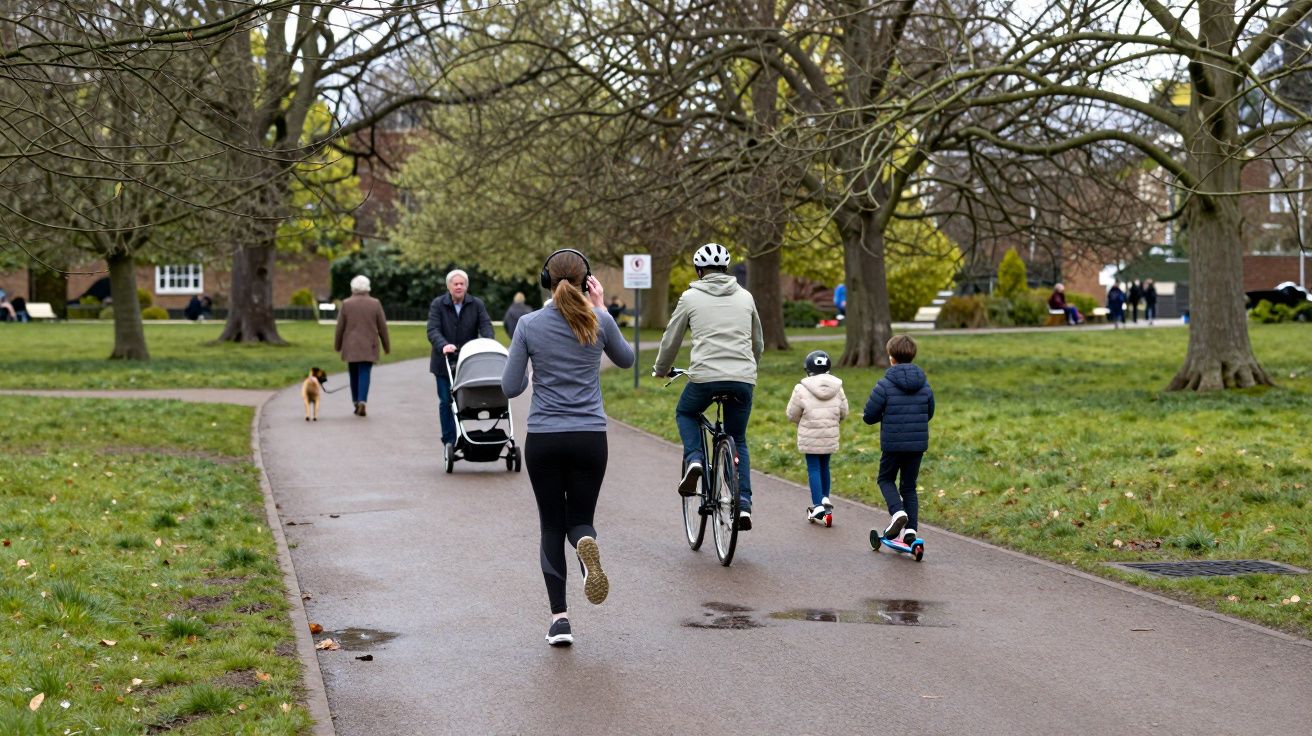
Sunday morning in a London park used to sound like birds, dogs, and the soft slap of trainers on damp paths. Lately, parks staff say there’s a new layer on top: tinny bass lines leaking from armbands, podcast monologues riding the wind, and the occasional shouted “What?” from a runner wearing noise‑cancelling cans the size of teacups. That’s why a handful of UK councils have started floating a small, almost silly-sounding request: if you’re jogging in shared green space, please leave your over‑ear headphones at home-or at least take one ear out.
At first it felt fussy, like being told what socks to run in. Then you watch a cyclist slam on the brakes behind a runner who never heard the bell, or a dog walker jump as a jogger appears at full tilt from behind a hedge, and the logic lands. Parks are one of the last bits of public life where people of all ages, speeds, and attention spans mix without lanes or lanyards. When some of us are effectively sealed off in a private sound bubble, the risks and the tension go up for everyone else.
The new “quiet rule” isn’t about banning joy or workouts. It’s more about keeping the park a place where you can hear a bike, a child, a “Sorry, passing on your right,” before metal or bone get involved.
From polite sign to park‑wide experiment
It started, as these things often do, with a laminated sign cable‑tied to a fence. In one Midlands park, the first notice was tentative: “For everyone’s safety, please avoid using over‑ear headphones while running or cycling.” A warden told me they expected it to be ignored. Instead, parents on the playground WhatsApp shared it, local Facebook groups argued about it, and by the end of the month the same wording had appeared at three other entrances.
On paper, it’s not a by‑law with fines attached. It’s a social nudge, more like “keep dogs on lead near wildlife” than a parking ticket. But nudges, repeated, become norms. Joggers who’d never considered how mute they’d become in the middle of a busy shared path started clocking the elderly couples stepping aside late, the mobility scooter forced into the mud, the jogger‑on‑runner near misses. A few running clubs began trialling “one ear only” sessions in local parks. A council in the North West quietly added a line about “staying aware of your surroundings-no full noise‑cancelling devices” to its park use guidance.
Why touch headphones at all, when there are bigger problems? Because they’re small enough to change tomorrow and visible enough that the change is contagious. The sound you don’t blast into your ears becomes the sound that keeps someone else safe.
Why parks care what’s on your ears
The case isn’t built on puritanism or a war on playlists. It’s built on three simple observations rangers keep seeing on muddy Monday mornings.
First, reaction time. If you can’t hear a bell, a shout, or the rumble of wheels behind you, you only find out what’s happening when it’s already very close. One London borough logged 27 near misses between joggers and cyclists on a single riverside stretch last summer. In 19 of them, at least one person had over‑ear or noise‑cancelling headphones on. Nothing catastrophic, but enough scraped knuckles and shaken kids to leave a mark.
Second, shared space is messy. A park path is not a running track. It’s buggies, scooters, stray balls, dogs on flexi‑leads, and the person who stops dead to photograph blossom. Visual awareness helps, but a lot of “I’ll just adjust my line” moments are driven by sound-tyres on gravel, a wheeze, a bell, even footsteps changing rhythm. Strip that layer away and everyone has to work harder, with less notice.
Third, noise itself. Multiple open‑back headphones, mini Bluetooth speakers hanging from belts, and phones on loud podcast mode turn quiet corners into accidental sound systems. For people using the park to decompress-a carer on a 20‑minute break, someone managing anxiety, a neighbour who just wants birds not banter in their ears-it can feel like there’s nowhere left to hear their own thoughts.
One parks manager in Bristol put it bluntly:
“We’re not trying to police what you listen to. We’re trying to make sure you can hear the bell that stops you knocking over a five‑year‑old on a scooter.”
The mechanics behind a “quiet rule” you might actually respect
A rule scribbled on a noticeboard is easy to laugh at. A rule that fits your life is harder to shrug off. The councils that seem to be making this work have settled on a few practical points.
Most focus on method, not music. They’re not asking you to ditch sound altogether; they’re asking you to choose formats that leave your ears partly open to the world:
- bone‑conduction headphones that sit on the cheekbone, not in the canal
- in‑ear buds set to transparency/ambient mode, with volume under control
- no over‑ear noise‑cancelling cans in crowded sections, especially near playgrounds and narrow paths
A small but growing number of parks now mark “shared use” sections with symbols: a bike, a runner, a pram, and an ear icon with a simple text line-“Stay aware: no full noise‑cancelling here.” Wardens hand out tiny cards on busy days with the same message. It’s nudging, not naming and shaming.
The data behind it is basic but honest. One coastal council counted complaints and incidents on a busy seafront park over a summer, then introduced signage and a “please keep one ear free” campaign through local running clubs. Over three months, headphone‑related complaints halved. Joggers kept coming; they just tweaked their gear. The council published the numbers in a short online update instead of hiding them in a committee report. People could see cause and effect.
The pattern is familiar: keep the ask small, show the why, and make compliance more like good manners than punishment.
How to run with sound and still hear the park
If you’re already composing your “I can’t possibly run without music” speech in your head, this bit is for you. The councils trialling these guidelines aren’t asking you to jog in monk‑like silence. They’re asking you to run like other people exist.
Some simple swaps:
- Use bone‑conduction or “open” earbuds for park runs; save heavy noise‑cancelling cans for the treadmill.
- If you only own closed headphones, keep one ear cup off and the volume modest in shared sections.
- Switch your phone or buds to transparency/ambient mode as you enter the park, and back to full noise‑cancelling when you leave.
If you really can’t stand altering your routine, pick your routes with that in mind. Reserve the busiest, narrowest, dog‑densest paths for your lower‑volume, ears‑open days. Use quieter canal towpaths or roads with proper pavements and clear sightlines for your fully plugged‑in runs.
Biggest mistake? Treating parks like private gyms. They’re not. There will be unpredictable moves, small humans who can’t judge speed, and people whose hearing or vision rely on you not being locked in a soundproof bubble. We’ve all had that moment when a runner brushes past so close you feel the air move and think, “Where did they come from?”
Don’t be that runner.
“I thought I needed my over‑ears to get into the zone,” one club runner in Manchester told me. “Switched to bone‑conduction in the park and, weirdly, I feel less stressed. I can hear bikes coming. My shoulders don’t creep up around my ears.”
- Best for parks: bone‑conduction, open buds, one‑ear listening
- Avoid in crowds: full noise‑cancelling cans, blasting portable speakers
- Frequency: treat “ears‑open runs” as your default in shared green spaces
Why a tiny ear icon might signal something bigger
Seen from a distance, one more small rule in one more public space can feel like nit‑picking. But the quiet headphone guidance in UK parks is tapping something larger: how we share the last few places where everyone, from toddlers to triathletes, has to negotiate the same strip of ground without a booking system.
Done well, the “leave the gadget at home-or open your ears” rule becomes less about control and more about trust. Councils trust runners to adjust without being dragged there by fines. Runners trust that if they do their bit, others will do theirs: dog walkers shortening leads, cyclists using bells politely, parents steering scooters away from blind corners. It’s a collective etiquette, not a crackdown.
It also hints at how we might handle other tech that blurs our awareness-AR glasses, louder pods, even e‑scooters piping navigation into a sealed headset. If we can agree that some spaces require us to be properly present, then the next gadget doesn’t automatically get a free pass just because it fits on a wrist or in a canal.
For now, the symbol is small: an ear on a sign, a line in a park notice, a warden’s gentle, “Mind just cracking those open a bit?” The effect, if it sticks, is bigger. A park where you can hear the bell before the bike. A run where you arrive home sweaty and charged, but still part of the world you moved through.
| Key point | Detail | Why it matters to you |
|---|---|---|
| Parks need your ears | Over‑ear and noise‑cancelling headphones blunt awareness in crowded shared spaces | Fewer near misses, less tension, safer runs |
| Small tweak, big gain | One ear free, lower volume, or open‑style headphones keep sound and safety together | You keep your motivation without risking others |
| Norms, not fines | Councils lean on signs, club partnerships, and gentle nudges | Easier to accept, easier to copy, harder to dismiss |
FAQ:
- Are headphones actually banned in UK parks now? No. Most councils using this approach frame it as guidance, not a legal ban. They focus on discouraging full noise‑cancelling and over‑ear use in busy shared areas rather than policing every bud.
- Is this really about safety, or just people disliking visible tech? The push came from repeated near misses and complaints where at least one person couldn’t hear a warning. Aesthetics play a part, but incident logs and staff reports are the main driver.
- What if I’m neurodivergent and use headphones to cope with sensory overload? Many councils explicitly allow for that and encourage open dialogue with park staff. Open‑style headphones and careful route choice can sometimes balance your needs with general awareness.
- Can I still use music for interval training in the park? Yes, but consider using open‑ear devices or keeping one ear free, especially in peak times and on narrow paths. Save full immersion for quieter stretches or treadmill sessions.
- Will this spread to more parks? Likely. If early trials continue to cut complaints and collisions without heavy‑handed enforcement, other councils will copy the model. As with many park rules, local feedback will shape how far it goes.



Comments (0)
No comments yet. Be the first to comment!
Leave a Comment