The one mistake when reheating rice that food safety experts label “a quiet food poisoning risk”
You don’t need to throw out last night’s takeaway or give up on meal prep to stay safe. What matters is one decision in the gap between cold rice and hot dinner. Get that moment right, and you keep a favourite carb from becoming a quiet health hazard.
It’s Tuesday, you’re home late, and the leftovers in the fridge feel like a small victory. A tub of rice, a bit of curry, maybe some stir-fried veg. You peel back the lid, fork through the clumps, and pop it straight into the microwave on full blast. Three minutes later it’s piping hot, smells fine, and you’re starving. What you can’t see is that the riskiest part of the story already happened hours ago.
Across UK hospitals, food poisoning linked to cooked rice rarely makes headlines. It sits in the background, logged as “gastroenteritis”, “suspected Bacillus cereus”, or simply a bout of vomiting that passes in a day. Public health teams have a blunter phrase for it: a quiet food poisoning risk we keep underestimating on weeknights and at buffets.
The real danger window is not when you reheat
Most people think the key question is: “Is my rice steaming hot all the way through?” That matters, but it isn’t the main mistake. The real problem is this: letting cooked rice sit too long at room temperature before you cool it and chill it.
Cooked rice is one of the few foods where bacteria can be waiting inside the grain before you ever turn on the hob. Bacillus cereus spores live quite happily in dry rice. Cooking kills off most ordinary bacteria but not these hardy spores. If the rice then lingers warm on the counter, the spores can wake up, multiply and start producing toxins.
Heat will kill live bacteria, but it will not reliably destroy the toxins some of them leave behind.
That’s why reheating rice “until it’s very hot” does not undo damage done earlier in the day. Once those toxins are present in enough quantity, they can trigger sudden vomiting, cramps and diarrhoea a few hours after you eat, even from rice that looks and tastes normal.
Where the quiet risk creeps in at home
The most common pattern, according to environmental health officers, is ordinary and well‑intentioned. A big pot of rice is cooked “to last a couple of days”. Everyone serves themselves, then the pan sits on the hob.
Someone plans to tidy up “in a bit”, but life intervenes. After dinner, the rice is still warm, the lid goes on, and the pan is pushed to one side. Only later does it get scraped into a container and put in the fridge, sometimes three or four hours after cooking. That time at a cosy lukewarm temperature is exactly what Bacillus cereus enjoys.
The same thing happens with takeaway tubs. Rice from the local Chinese or curry house is left on the coffee table while you watch something “just one more episode” long. By the time anyone thinks about the leftovers, it has spent the evening in the bacterial comfort zone between 15°C and 50°C.
Food safety specialists often describe this as a “quiet risk” because the symptoms can feel like “a 24‑hour bug” and rarely send people to A&E. Yet outbreaks traced to banquet dishes and large pots of rice are well documented in Europe, Asia and North America.
The one habit that changes everything
You don’t need a thermometer by the stove or a degree in microbiology. You need a small reflex right after cooking: cool rice quickly, then refrigerate promptly.
In practice, that looks like this:
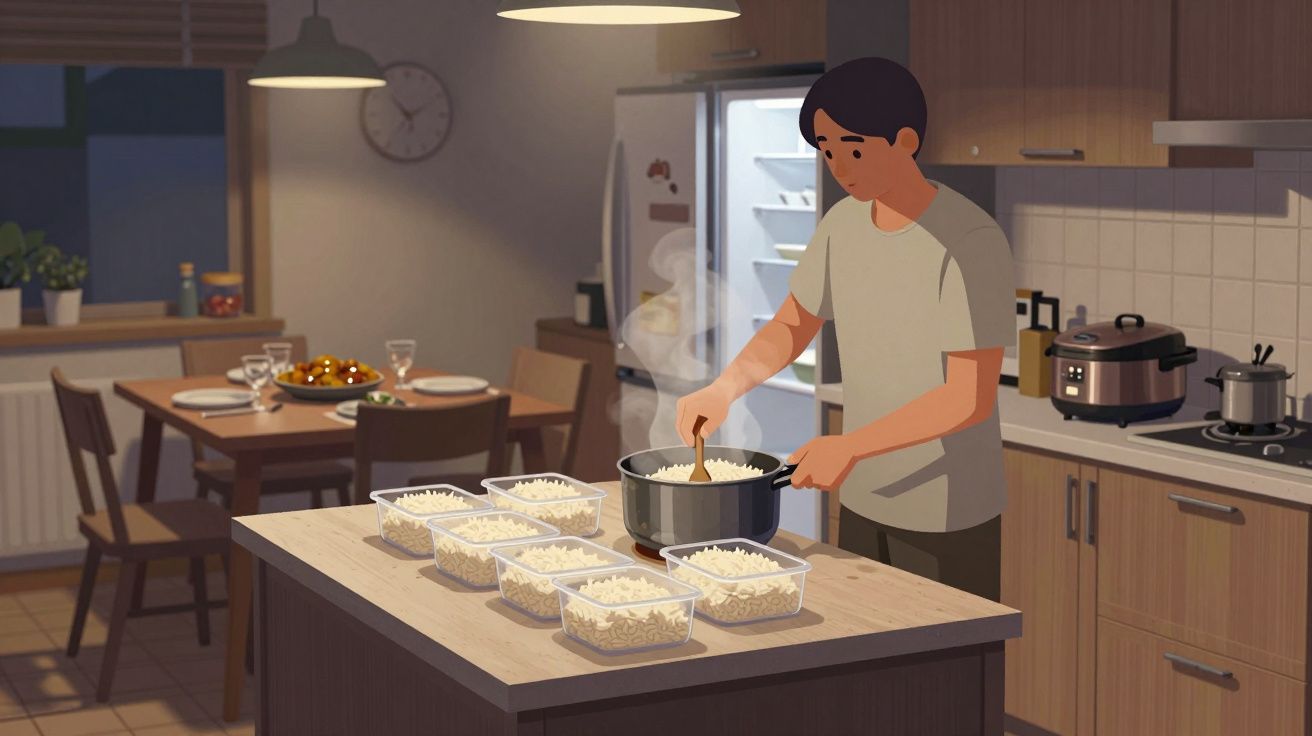
- As soon as everyone has taken their portion, transfer leftover rice into shallow containers rather than leaving it in a deep pan.
- Spread it out a little so steam can escape and the temperature drops faster.
- Aim to get it into the fridge within an hour of cooking, ideally sooner.
- Keep the fridge at 5°C or below, and eat the rice within 24 hours.
Done once, this sets you up for safe reheating later. The risk doesn’t vanish entirely – nothing in food safety is absolute – but you dramatically shorten the time that spores have to multiply and make toxins.
“It’s not reheating that makes rice unsafe; it’s the long, warm pause before you chill it,” as one UK food safety trainer likes to tell catering students.
How to reheat rice without stressing about it
Once your rice has been cooled and stored properly, reheating becomes straightforward. The rules are simple and surprisingly flexible.
The basics that actually matter
- Reheat only once. If you warm it up, don’t cool it down again for a third outing.
- Get it steaming hot all the way through. No cool pockets in the middle.
- Add a splash of water or stock and cover it, so the steam helps heat evenly.
- Stir halfway if you’re using a microwave, or toss regularly in a pan.
Here are three common methods that keep things safe and pleasant:
| Method | How to do it | Good for |
|---|---|---|
| Microwave | Break up clumps, add a spoon of water, cover, heat and stir once | Fast weeknight leftovers |
| Hob | Warm a little oil or water, add rice, stir on medium until steaming | Stir-fries, “fried” rice |
| Steaming | Place in a heatproof dish, cover, steam until hot through | Larger batches, softer texture |
If you’re turning cold rice into fried rice, treat the frying itself as the reheating step. Start with rice straight from the fridge, move briskly over high heat, and don’t let it slowly warm for ages while you prep everything else.
Tiny course corrections that make rice safer by default
The hardest part is rarely knowledge; it’s habit. Many households already batch-cook and meal prep. With rice, a few minor tweaks have outsized impact.
- Cook closer to what you’ll actually eat. A modest pot is safer than a mountain you’ll keep revisiting.
- Serve once, store once. As soon as plates are dished, move leftovers to shallow tubs and into the fridge before sitting down to a long chat.
- Avoid the “keep warm” trap. Rice cookers and ovens left on low for hours keep food in the danger zone. Use the automatic keep-warm setting for short windows, not the whole evening.
- Be stricter in summer. Warm kitchens and picnics speed up bacterial growth. Either eat rice soon after cooking or pack it chilled and insulated.
For people with small children, older relatives or anyone with a weaker immune system, these habits matter even more. What might be a grim but brief 24 hours for a healthy adult can knock others much harder.
Food inspectors sometimes describe rice as “a high‑risk food with a low‑risk reputation”.
How to handle takeaway and buffet rice
Events and takeaways add a layer of logistics. The same principles still apply, but the timings feel tighter.
With takeaway rice:
- Take it out of the carrier bag so it can cool a bit rather than sweating.
- Eat what you want within an hour of getting home.
- If you plan to keep some, transfer it to a shallow, clean container soon after eating and refrigerate promptly.
- The next day, reheat once until steaming hot and then finish it.
Buffets and parties are trickier because you don’t control how the rice has been kept. If a dish of rice is sitting out at room temperature with no heat source or chilled tray under it, and it’s been there “a while”, it’s reasonable to skip it or take a small amount and eat it soon.
Caterers are advised to keep hot rice at 63°C or above, or to cool and chill it properly and then bring it out for short service periods. As a guest, you can’t see the temperature charts in the kitchen, but you can pay attention to signs of tired, dried-out rice that has clearly been sitting around.
Practical takeaways for UK kitchens
For busy households, the aim is not to make rice scary. It is to tuck one new reflex into routines you already have.
- Treat rice like chicken or shellfish: not dramatic, but not casual either.
- Make it a rule that rice never rests on the hob for “later”.
- Move leftovers into shallow tubs and into the fridge before the washing-up.
- Reheat once, fast and hot, with a bit of moisture and a lid.
Done this way, yesterday’s pilau or coconut rice can still be tomorrow’s lunch or the base for a quick fried rice, minus the hospital visit.
FAQ:
- Can I eat rice that’s been left out all night if I reheat it thoroughly? No. If rice has sat at room temperature for several hours, especially overnight, reheating won’t reliably destroy any toxins that may have formed. It’s safest to bin it.
- How long can cooked rice safely stay in the fridge? Most food safety agencies recommend using refrigerated cooked rice within 24 hours. Up to 48 hours may be acceptable if it was cooled very quickly, but shorter is better.
- Can I freeze cooked rice instead of refrigerating it? Yes. Cool it quickly, portion into bags or tubs, and freeze promptly. Reheat from frozen until piping hot, or defrost in the fridge first.
- Is brown rice safer than white rice? Not really in this context. Both can carry Bacillus cereus spores, and both need the same cooling and reheating care.
- My takeaway rice is still warm when I’ve finished eating. Should I wait for it to cool completely before refrigerating? No. Let it steam off briefly in a wider container, then refrigerate while still slightly warm. The priority is to move it through the danger zone quickly, not to wait for it to reach room temperature.






Comments (0)
No comments yet. Be the first to comment!
Leave a Comment