The second‑hand toy boxes in your loft that collectors now pay hundreds for
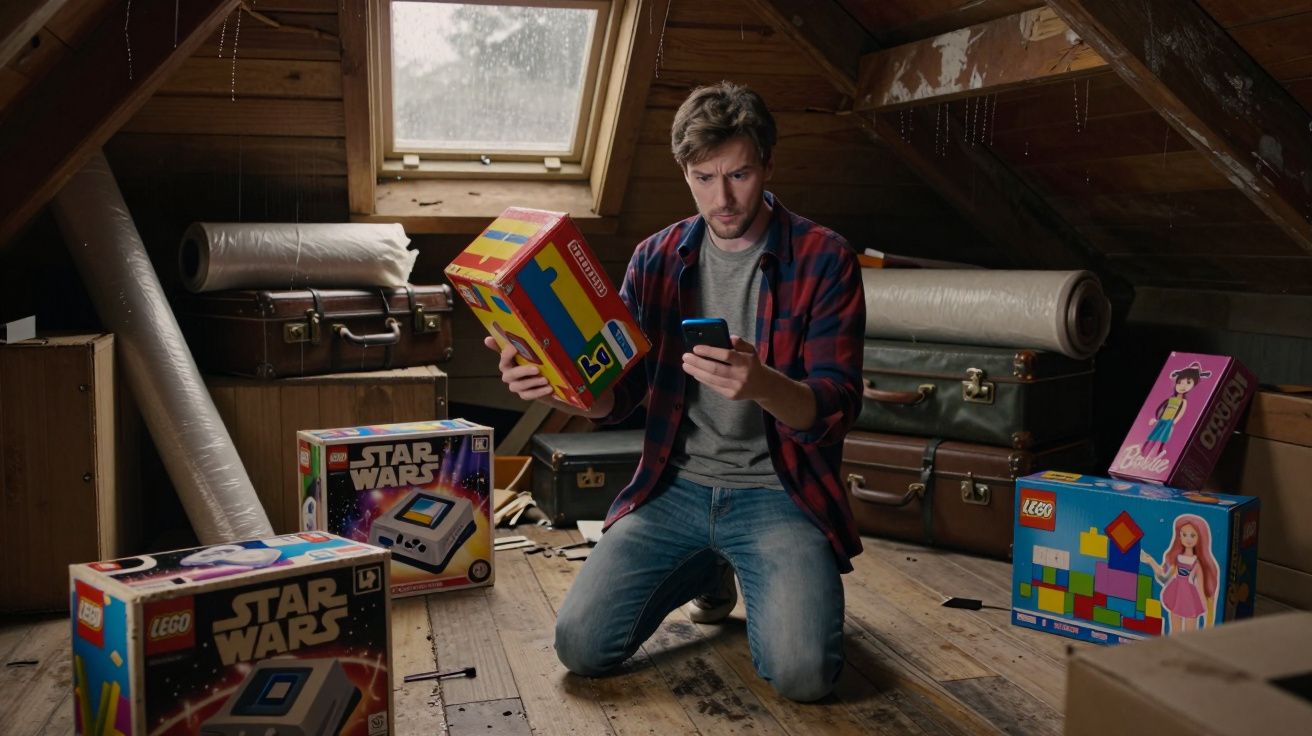
The cardboard felt softer than he remembered. On a rainy Sunday, clearing the loft before the insulation team arrived, Tom wedged himself between joists and tugged a dust‑filmed crate into the light. Inside sat a stack of toy boxes-Action Man, Polly Pocket, a battered Nintendo 64 bundle-with that particular attic smell: dry dust, old glue, a hint of childhood. The toys themselves had long since vanished to charity shops and cousins. The boxes, somehow, stayed.
He almost flattened them for recycling, then paused and typed a model number into his phone. The same empty box, scuffed in the same corner, had just sold on eBay for £137.00. Another, for a Star Wars X‑Wing he’d definitely crashed into a skirting board in 1998, had bids nudging £90. When did rubbish become a retirement fund?
Why collectors pay so much for “just” a box
Most toys were played with; their boxes were not. That’s the simple maths at work here. Children tore through blister packs on Christmas morning, parents binned the cardboard by teatime, and packaging designers assumed nobody would care. The result, a few decades on, is scarcity: the toy might be common, the original box astonishingly rare.
To a collector, packaging isn’t an afterthought. It’s proof. Logos and age ratings pin a toy to a specific year; barcodes and regional labels whisper which shop shelf it once sat on. A box in decent shape turns a loose figure into a “complete” set and can double-or triple-the value. Sometimes the box is the star: early Game Boy and NES boxes with bold, blocky art are framed like album covers.
There’s also something softer running underneath: nostalgia needs props. Opening a faded cardboard flap that squeaks the way it did in 1993 hits harder than scrolling a photo online. The dent where a present was jammed under a tree, the handwriting on an old price sticker, the Toys “R” Us logo in a font that doesn’t exist anymore-these are time machines that happen to fold flat.
The toy boxes worth climbing into the loft for
Not every cereal‑box freebie is a goldmine, and not every scuffed carton is a pension. But certain categories make seasoned collectors sit up, even when they’re empty.
Look for:
- Video game consoles and handhelds (1980s–early 2000s): Nintendo, Sega, early PlayStation and Xbox. Original boxes with polystyrene inners and paperwork can fetch serious money, even if the console is long gone.
- Star Wars, Transformers and 80s action figures: Ship and playset boxes, especially from Kenner and early Hasbro lines. Even flat‑packed, they complete high‑value displays.
- Barbie, Sindy and fashion dolls: Window boxes and trunks, particularly from special editions or UK‑only releases. Condition and artwork style matter most here.
- Lego sets with distinctive art: Classic Space, Pirates, early Technic. Boxes with intact lids and tray inserts are fiercely hunted.
- Limited runs and shop exclusives: Toys R Us, Woolworths, Argos catalogue specials. If the shop is gone, the branding adds another layer of nostalgia.
The pattern is simple: brands that still have adult fanbases, from gaming to film franchises, and lines that people now have the money to buy back. If someone once built an entire childhood around it, there’s probably a Facebook group trying to track down its packaging.
How to tell if your old packaging is actually valuable
Standing in a loft with a stack of boxes and a patchy 4G signal, it helps to have a quick system. You don’t need to know every variant; you just need to know what’s worth a second look.
Start with the basics: brand, era, and condition. A Nintendo logo or Kenner stamp is a green flag. So is any date in the 70s, 80s or 90s. Check corners and edges; collectors tolerate scuffs but dislike rips that cut through the artwork or missing panels. Writing on the box (a child’s name, “Gran’s house”) isn’t automatically bad news; sometimes it adds charm, sometimes it kills the price. A quick search of the exact wording on the flap-model number, set name, region code-will show you recent sold listings, not just ambitious asking prices.
Then, look for clues that the box completes something. Foam or card inserts, twist ties, cardboard dioramas used as backdrops, even original price stickers can nudge a listing into “premium” territory. Flat, carefully unfolded boxes with all flaps present are often more desirable than crushed, still‑glued cubes. If you can photograph them so the artwork is legible, you’ve already done more than half the sellers online.
“Treat it like a missing puzzle piece,” one collector said, standing in front of a wall of boxed robots. “On its own, it’s odd. Put it back where it belongs, and suddenly everyone wants it.”
Quick value clues
- Famous brand + early logo style = likely interest.
- Complete structural box (all flaps) > mangled, taped wreck.
- Inserts and leaflets can be worth almost as much as the box.
Keeping, selling or recycling: what to actually do with them
Once you realise the folded cardboard in your hand could cover a week’s food shop, it’s tempting to hoard everything. Resist that. Not every McDonald’s Happy Meal box will pay for a boiler. The trick is to separate the genuinely collectible from the sentimental clutter and the recycling.
Make three piles. The first: named brands and consoles, anything with Star Wars, Nintendo, Lego, or a recognisable 80s–90s line clearly printed. Research these properly and store them flat in dry, acid‑free sleeves or even simple document wallets. The second pile: modern or generic toys from the last 10–15 years that don’t show up in sold listings. These are your “maybe one day” candidates; keep only if space allows. The third pile is everything else: sun‑bleached boxes for broken toys, supermarket own‑brand gadgets, anything that’s mouldy or smells of damp. Those can go.
When selling, honesty wins. Photograph every tear, crease and scribble; collectors rarely mind flaws if they’re disclosed. List on platforms where people search by specific names and numbers-eBay, specialist Facebook groups, forums-rather than vague local listings. Ship flat, with cardboard reinforcement and plastic sleeves, so the box arrives the way you advertised it. You’re not just posting cardboard; you’re posting the front cover of someone’s favourite memory.
| What to check | Why it matters |
|---|---|
| Brand, year, and logo style | Pinpoints desirability and collector interest |
| Structural completeness | Full flaps and inserts add value and ease of display |
| Condition and storage smell | Clean, dry cardboard survives; damp kills prices and interest |
What this quiet market really says about us
On paper, the whole thing looks absurd: adults bidding three figures for boxes they cheerfully threw away as kids. Underneath the listings and acronyms, it’s less about speculation and more about stitching time back together. The toys broke, the batteries leaked, the franchise moved on; the box stayed exactly as it was the day someone was too excited to read the instructions.
For some, that flat square of colour is the last reliable image of a Saturday morning when the world felt small and safe. For others, it’s a chance to finish something they began on a bedroom floor decades ago. In that sense, the loft clear‑out isn’t really about cardboard. It’s about deciding which parts of your past you’re willing to let someone else buy a ticket back into-and which you’d rather keep, quietly, on the top shelf above the suitcases.
FAQ:
- How do I quickly check if a toy box is valuable? Search the exact model name and number printed on the box on eBay, then filter for “sold items”. If multiple empty boxes have sold for more than £20, you’re probably holding something worth listing.
- Does damage make a box worthless? Not always. Light creasing, shelf wear and small tears are common and often accepted. Large missing sections, water damage, mould or heavy tape residue will drag the price down sharply.
- Is it worth keeping boxes for modern toys I’m buying now? For major brands, special editions and consoles, yes-flatten and store them dry. Everyday mass‑market toys are unlikely to gain much value, but complete packaging never hurts if you sell within a few years.
- Where is the best place to sell empty boxes in the UK? eBay remains the broadest market, but dedicated Facebook groups, collector forums and car boot sales near big cities can be surprisingly effective for niche lines.
- How should I store boxes I want to keep? Flatten if possible, slip into clear sleeves or document wallets, and store in a dry, cool place off the floor. Avoid loft spaces that get damp or extremely hot, as that warps card and fades colours.





Comments (0)
No comments yet. Be the first to comment!
Leave a Comment