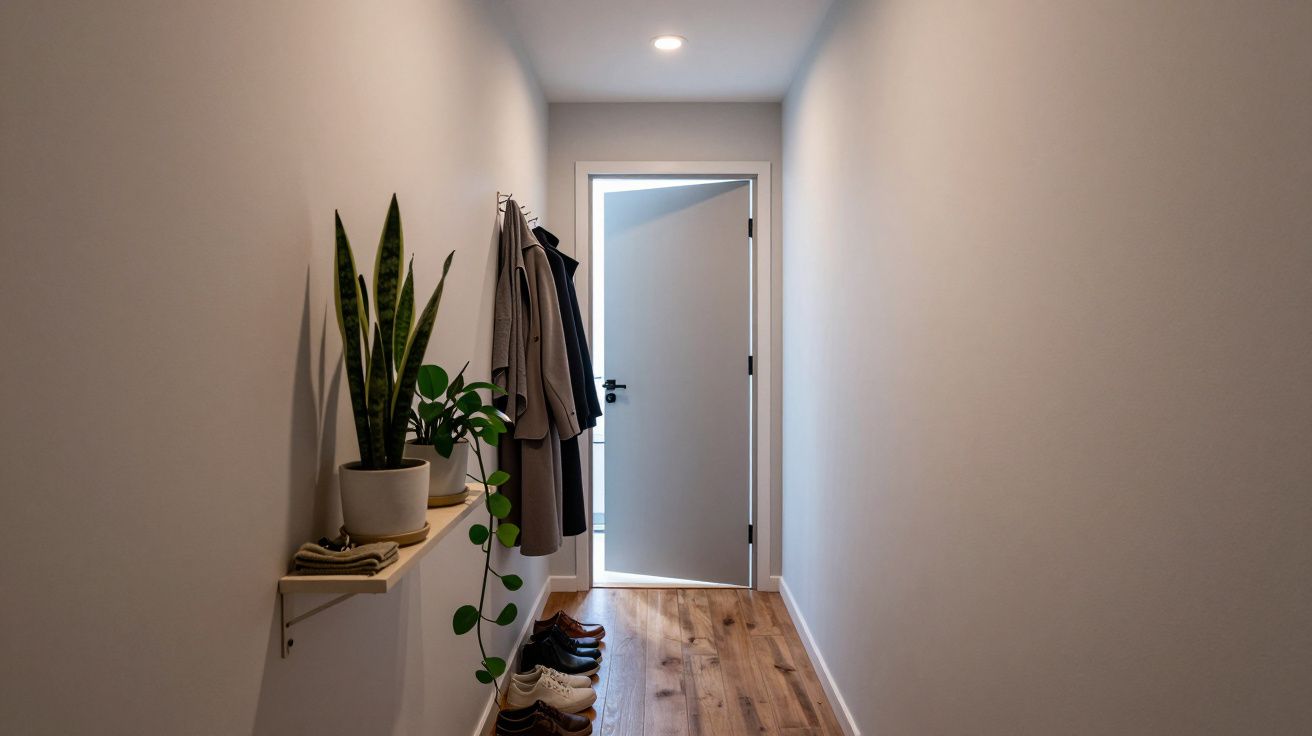
The simple plant arrangement that turns a dark hallway into a healthier breathing zone, say indoor air experts
You dump your keys, shrug off your coat – and the hallway hits you first. Close air, a faint whiff of shoes and damp coats, that flat, stale feeling you stop noticing until you come back from outside. No window you can fling open for an hour. No space for a jungle. Just a narrow strip of floor and a ceiling light that feels more interrogation than welcome. Indoor air specialists will tell you: this is exactly the kind of space where air stagnates and pollutants linger. The good news is that a very small, very deliberate plant set‑up can quietly change that background air, day in, day out.
We are not talking about lining the corridor with monsteras or spending hundreds on exotic “oxygen bombs”. Think one or two tough, shade‑tolerant plants, raised off the floor, teamed with a simple airflow trick and a wipe‑down habit. It looks like a decor tweak, behaves like a slow, steady air filter, and it is robust enough that you keep doing it beyond the first burst of enthusiasm.
Why a gloomy hallway is often your home’s dirtiest lung
Hallways have three things in common: poor light, little natural ventilation and a lot of traffic. Every coat, shoe, parcel and bag drags in fine dust, pollen and tiny particles from outside. Inside, cleaning sprays, shoe polish, scented candles and perfumes add volatile organic compounds (VOCs). With the door shut and no window, those particles and gases simply … stay.
Air in a narrow corridor tends to stratify. Warm air rises, cooler air pools low down, and without a cross‑breeze there is very little mixing. In practice, this means a band of “old” air sitting at breathing height. Experts sometimes call hallways and landings “pollutant corridors”: they link all the rooms where smells, moisture and chemicals are produced, yet rarely get the direct airing a kitchen or bathroom does. You walk through, inhale, and move on – but your lungs notice more than you think.
The other problem is psychological. Because the hallway is “just for passing through”, it is the last place people bother with plants, fabrics or proper lighting. Bare walls, hard floors and a single ceiling fitting make it echoey and unforgiving. That combination of stale air plus hard surfaces increases the perception of stuffiness. The space feels colder, harsher and slightly more stressful than it needs to.
This is where plants behave differently from gadgets. A small, carefully chosen cluster does not just tweak humidity and bind a fraction of pollutants; it also changes how you experience the corridor. Green softens edges, signals “freshness” to the brain and slows you down half a beat. The trick is choosing species and positions that actually work in low light, instead of slowly suffering in a corner.
How plants can help – without magical thinking
You may have heard big claims about plants “purifying” indoor air. Laboratory studies, including the well‑known NASA work, show that some species can absorb VOCs through their leaves and roots. In a real flat or house, one lonely fern is not going to cancel out traffic fumes or cigarette smoke. Air changes, building fabric and what you bring into the space matter far more.
Indoor air scientists tend to phrase it more modestly: think of plants as helpers, not as stand‑alone filters. They:
- trap some dust on their leaves, which you then remove when you wipe them;
- release a small amount of water vapour, which can make very dry, heated air feel less scratchy;
- may absorb trace amounts of certain VOCs through the soil–root–leaf system;
- nudge you into micro‑habits – opening the door a crack, wiping down shelves – that improve air quality as much as the foliage itself.
The “sweet spot” is a tiny green zone where air actually moves: not a pot on the floor behind a shoe rack, but leaves placed where the hallway’s natural draught passes. Combine that with hardy, low‑light species in breathable pots and you get a quiet, low‑maintenance boost that can run for years.
The hallway green-lung set‑up, step by step
Objective: turn a dead strip of corridor into a small, active breathing zone using 2–3 plants, a shelf and a simple airflow routine.
1. Map the air, not just the floor
Stand in your hallway with doors closed and again with doors open to the rooms you use most. Light a stick of incense or a match and watch how the smoke moves. You will usually see one or two “lanes” where air drifts when doors open and close.
These lanes, generally at chest to head height, are where your plants should live. A slim wall shelf, a narrow console table or high bracket on the side of that flow exposes leaves to the passing air without turning them into an obstacle course. Avoid placing pots right by the hinge side of the front door, where cold blasts and door knocks can stress them.
2. Choose plants bred for the shade life
You need species that tolerate low light, temperature swings and the occasional forgotten watering. Indoor air experts and horticulturists often point to the same shortlist:
- Snake plant (Sansevieria / Dracaena trifasciata) – tough as old boots, happy in shade, releases oxygen at night.
- ZZ plant (Zamioculcas zamiifolia) – waxy leaves that collect dust well, copes with very low light.
- Pothos / Devil’s ivy (Epipremnum aureum) – trailing, forgiving, ideal for shelves where it can hang down.
- Cast iron plant (Aspidistra elatior) – named for its resilience, slow‑growing and tolerant of draughts.
Two medium pots and one trailing plant are usually enough for a standard flat corridor. Use breathable containers (unsealed terracotta or ceramic with drainage) and a saucer to catch runoff. Plastic cachepots are fine if you slip a smaller, draining pot inside and empty any standing water after 15 minutes.
3. Build a slim, layered “leaf lane”
Think vertical, not wide. On a 20–25 cm deep shelf or console:
- put the tallest, toughest plant (snake plant, aspidistra) at the back, near the wall;
- place a mid‑height plant (ZZ, compact peace lily) to one side, not in the direct swing of coats;
- let a pothos or similar trail towards the edge or down the side of the shelf, away from foot traffic.
Leave gaps between pots so air can thread through the leaves rather than hitting a solid hedge. A small, matte tray under two of the pots contains soil crumbs and makes cleaning easier. Keep the whole arrangement out of the path of shoulder bags and school rucksacks; 5–10 cm of “air buffer” from the edge of the shelf can prevent daily knocks.
At floor level, resist the temptation to add a big statement tub unless your hallway is unusually wide. Anything you have to dodge will either be kicked or abandoned.
4. Add a micro‑ventilation routine
Plants cannot ventilate a home; they can only work with the air you give them. Two moves matter more than any particular species list:
- Door choreography: Once or twice a day, create a brief cross‑flow. For example, open the front door and a back window or balcony door for 3–4 minutes. Your hallway plants sit in that stream, with their leaves acting as a physical surface that dust and some gases brush past.
- Fan assist (optional): If your layout resists cross‑venting, a silent, low‑speed fan on a timer in the next room, angled towards the hallway, can keep air drifting past the leaves without feeling draughty.
This “air rinse” shifts humidity peaks and dilutes the pollutants that plants and surfaces then help capture. In practice, tying it to another habit works best: after you hang wet coats, after shower time in the evening, or while the kettle boils in the morning.
5. Keep the leaf surfaces doing their job
Dust‑laden leaves eventually stop interacting with the air effectively. Every week or two:
- wipe each broad leaf with a soft, slightly damp microfibre cloth;
- for small‑leafed or trailing plants, a quick shower under lukewarm water in the bath or sink works well – let them drain fully before returning them;
- check that saucers are dry after watering to avoid musty smells and mould growth.
This tiny cleaning ritual is where a measurable chunk of the “air quality” effect happens. You are physically removing the dust and particles that would otherwise be stirred up with every passing step. It also gives you a moment to spot yellowing leaves, pests or actual mould before they spread.
What this set-up can (and cannot) change
If you live above a busy road or share a stairwell that smells of cigarettes, plants alone will not rewrite the chemistry of your corridor. They sit within a much bigger picture of building airtightness, outdoor pollution and how you cook, clean and heat.
Where they do excel is in the marginal gains:
- hallways feel and smell less “stale” between full airing sessions;
- extremely dry winter air softens slightly around the plant zone;
- dust loading on rails, shelves and coat hooks tends to reduce when you regularly wipe leaves;
- the visual impact of greenery makes the space feel cared‑for and calmer, which subtly changes how long and how deeply you breathe there.
In tests, adding a small plant cluster plus a daily 3–5‑minute cross‑vent routine often drops measured CO₂ and VOC peaks faster than airing alone. The absolute numbers vary wildly between homes, but the direction of change is consistent: slightly cleaner, slightly more stable air in the space you pass through dozens of times a day.
Quick reference: the hallway “green lung” at a glance
| Element | What you do | Why it helps |
|---|---|---|
| Shade‑tolerant plants | 2–3 robust species on a shelf in the air path | Surfaces for dust capture, gentle humidity, visual freshness |
| Slim, raised layout | Vertical layering above shoe/hip height | Keeps the corridor passable while exposing leaves to airflow |
| Daily micro‑venting | Short cross‑flow once or twice a day | Dilutes pollutants so plants and surfaces can “reset” the air |
FAQ:
- Will plants actually clean all the pollution from my hallway? No. They can bind a small share of dust and some gases, but the big wins still come from ventilation, reducing sources of pollution and basic cleaning. Think of them as a helpful extra layer, not a substitute for opening a window.
- My hallway has no natural light – is this still possible? In a completely light‑less corridor, you will need a small, low‑energy grow light on a timer above the plant shelf. Without any light at all, even “shade” plants will eventually fail. A few hours of gentle, indirect light per day is usually enough.
- Isn’t extra humidity from plants bad for mould? In a typical heated flat or house, one or two medium plants add only a little moisture and often improve comfort in very dry air. Problems arise when you over‑water or block airflow. Keep soil just moist, not soggy, and maintain your short airing routine.
- Which plants should I avoid in a hallway? Highly scented species, anything very spiky at shoulder height, and very thirsty, light‑hungry tropicals that will sulk in shade. If you have pets or small children, avoid toxic species at grabbing height and stick to robust, non‑irritant options your local nursery recommends.
- What if I am terrible at keeping plants alive? Start with one snake plant in a good‑sized pot, on a shelf out of harm’s way. Water it lightly every 3–4 weeks, wipe the leaves occasionally, and see how it fares for three months before adding more. The goal is a resilient routine, not a perfect indoor jungle.



Comments (0)
No comments yet. Be the first to comment!
Leave a Comment