This forgotten breakfast from our grandparents stabilises morning blood sugar better than modern cereals
Packets crackle, flakes promise fibre, and “whole grain” shouts at you from every shelf.
Yet an old‑fashioned breakfast our grandparents relied on is quietly beating modern cereals on the one thing that matters at 8 a.m.: steady blood sugar that does not spike and crash by mid‑morning.
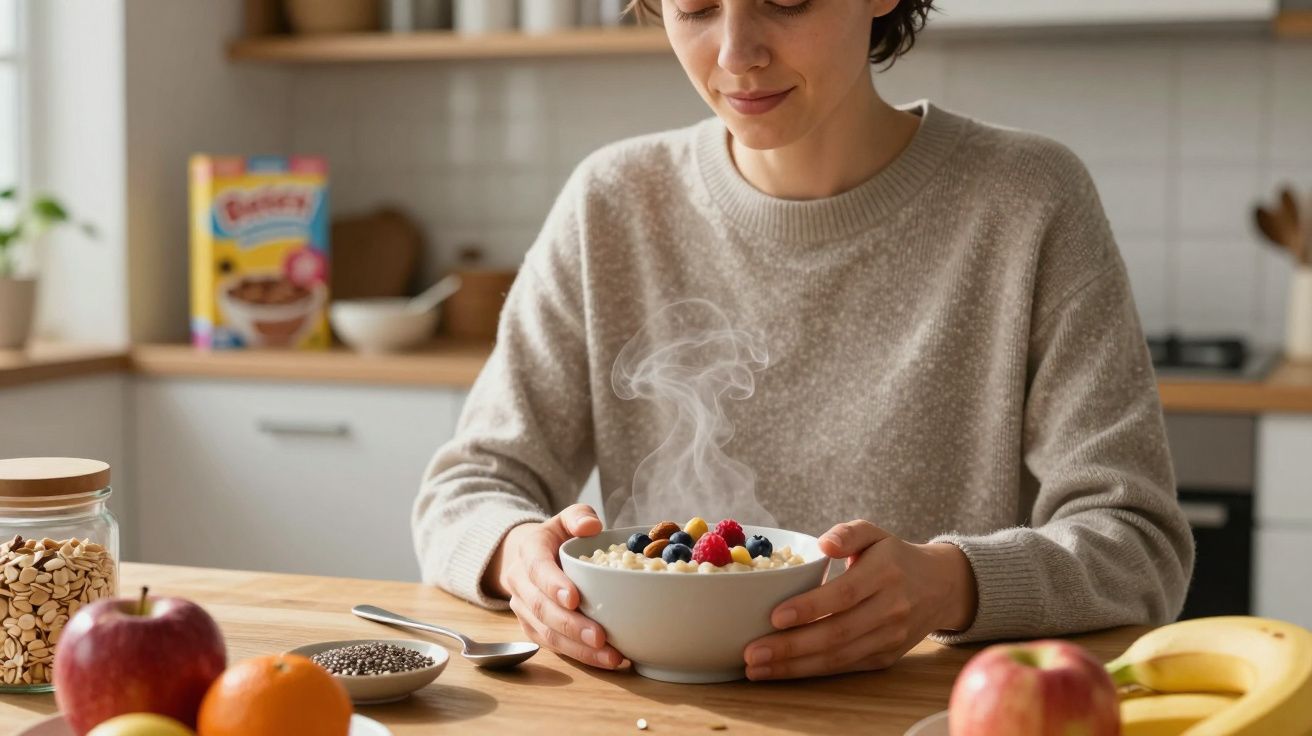
I first clocked the difference on a cold weekday when my neighbour slid a small enamel bowl across the table. Steam curled up from something that looked stubbornly plain. No cartoon mascots, no vanilla swirl, no “protein crunch” in sight. I ate it, added a few nuts and berries as instructed, and waited for the usual post‑cereal wobble. It never came. Two hours later I was still focused, still calm, and not rummaging for biscuits.
All it took was a bowl of proper porridge.
The slow, simple breakfast that flattens the sugar rollercoaster
Traditional porridge – whole rolled or steel‑cut oats slowly cooked in water or milk – behaves very differently from the puffed, flaked and sugared cereals that now dominate breakfast. Its starch is packed tighter, its fibre intact, and its chew forces you to slow down. That combination changes how your body handles the first carbohydrates of the day.
Where a sweetened cereal sends glucose racing into your bloodstream, porridge acts more like a drip than a flood. The soluble fibre in oats, especially beta‑glucan, forms a soft gel in your gut. That gel literally slows the passage of food, dragging out digestion and blunting the spike that usually leaves you jittery then tired. You feel full without feeling heavy, and the “I need something now” craving at 10:30 simply does not bite as hard.
There is also a psychological shift. A hot, spoon‑eaten breakfast signals “meal” rather than “snack in a bowl”. You sit down for it, even if only for five minutes. That short pause changes how fast you eat, how much you notice you have had enough, and how likely you are to throw in something useful like seeds, fruit or nuts instead of an extra scoop of sugar.
The logic is not nostalgic; it is physiological. When you eat intact grains cooked in liquid, you force your metabolism to work at the speed of a simmer, not a microwave. Blood sugar rises more gently, insulin can keep up, and the crash that has you staring at the office vending machine never quite lands.
Why our grandparents’ porridge still wins over boxed cereals
Think about what a cereal factory has to do to a grain to make it float, crunch on cue, and last for months in a box. It crushes, puffs, extrudes and often sugar‑coats it. Most of the fibre is broken up, and the starch is made easier to reach. Your body sees a lot of those cereals almost like finely ground flour.
Porridge dodges that whole process. The grain is rolled or cut, not pulverised. It keeps its bran, its germ and its slower, denser structure. That is why, gram for gram, it tends to have a lower glycaemic impact than many branded flakes billed as “healthy”, especially once sugar, honey or fruit juice concentrates are factored in.
There is also what you do not get. No frosting, no marshmallows, no syrup layer that guarantees a fast sugar hit before you have even reached the front door. If you want sweetness, you choose it deliberately: a sliced apple, a few raisins, half a teaspoon of honey. You are back in control instead of eating whatever the box designer decided.
In real kitchens this plays out very simply. On mornings when I grab a bright‑boxed cereal, I can feel my focus fray around 11. On porridge days, the gap between breakfast and lunch feels shorter, calmer and less defined by hunger. It is not discipline; it is chemistry.
Here is how the two typically stack up:
| Breakfast option | Blood sugar effect | Satiety (fullness) |
|---|---|---|
| Sugary boxed cereal + low‑fat milk | Fast spike, quick crash | 1–2 hours, often with cravings |
| Plain porridge with nuts + fruit | Gentle rise, slower fall | 3–4 hours, more stable energy |
The table is not a lab result, but it mirrors what countless people report when they swap bowls for a few weeks. The shape of the morning changes.
The porridge plan, step by step - and how to make it work fast
You do not need a cast‑iron pot or an open fire. You need a small pan, five spare minutes and a rough idea of what to throw in. Treat porridge like a base, not a full recipe, and you win on both blood sugar and time.
Start with the grain. Look for:
- Whole rolled oats (jumbo oats) or steel‑cut oats for the slowest release.
- Pinhead or coarse porridge oats if you want something between quick and slow.
- Avoid “instant” sachets loaded with flavourings and sugar; they behave more like the cereals you are trying to leave behind.
Then set a simple ratio. A common, forgiving one is:
- 1 part oats
- 3 parts liquid (water, milk, or a mix of both)
Pour oats and liquid into a pan, bring to a gentle simmer, then lower the heat. Stir occasionally. Within 4–8 minutes, depending on the cut of oat, you will have a creamy, spoonable base. You do not need to boil it hard; heat and time, not aggression, are doing the job.
Now comes the part that steers blood sugar even more: what you add.
Think “fibre, fat, protein” rather than “more sugar”:
- A handful of nuts or seeds (walnuts, almonds, pumpkin seeds, chia).
- A small scoop of plain yoghurt on top at the end.
- Fresh or frozen berries, sliced pear, grated apple or a few prunes.
- A pinch of cinnamon, which many people find pairs with sweetness without being sweet itself.
You are not aiming for perfection every day. On rushed mornings, even oats cooked in water with a sprinkle of seeds is streets ahead of a sugared cereal. The structure of the meal matters more than whether the banana slices are even.
Use this as a pocket checklist before the kettle boils:
- Whole or steel‑cut oats in the jar, not sugared sachets.
- 1:3 oats to liquid in the pan, gentle heat, a few stirs.
- One topping for fibre, one for protein or fat, optional small touch of sweetness.
- Taste first, then sweeten if you still want it.
Tiny tweaks that turn porridge into a blood sugar ally
Once the basic habit is there, you can lean into details that make porridge work even harder for you. None of these require a nutrition degree, just a bit of intention.
Swap some oats for seeds. Replacing two spoonfuls of oats with a mix of chia, flax or pumpkin seeds drops the overall carbohydrate load and adds more fibre and healthy fats. The bowl stays just as filling, but the blood sugar rise becomes even more gradual.
Cook ahead when you can. A batch of steel‑cut oats keeps in the fridge for three or four days. In the morning, you spoon some into a bowl with a splash of water or milk, microwave until warm, then add toppings. Five minutes of stirring on Sunday night can make weekday blood sugar much easier to manage.
Use toppings as tools, not decoration. Nuts, seeds and yoghurt slow digestion. Tangy fruit like berries, stewed rhubarb or a diced plum deliver flavour without the heavy sugar jolt of syrups and spreads. If you like jam, try a teaspoon swirled through instead of two spoonfuls on top. It is the difference between a hint and a hit.
There is also a satiety trick hidden in plain sight: salt. A tiny pinch in the pan (before sweeteners) brings out the oat flavour and can make you less likely to chase something else immediately after eating. It reads as “proper food” to your tongue, not “warm dessert”.
You do not have to change everything at once. Start by swapping just three cereal mornings a week for porridge and notice what happens to your mid‑morning mood, focus and snack habits. Small, repeatable moves beat heroic one‑offs every time.
“You are not chasing a ‘perfect’ breakfast,” says Dr Amrita K., a GP with a special interest in metabolic health. “You are choosing the version that keeps your blood sugar boring. Boring blood sugar is what protects your energy, your pancreas and, long‑term, your risk of type 2 diabetes.”
FAQ:
- Is porridge suitable if I already have diabetes or pre‑diabetes? Often yes, but portion size and toppings matter. Choose whole or steel‑cut oats, keep to a modest serving, add nuts or yoghurt, and limit added sugar. Always check your own readings and follow your clinician’s advice.
- Does it still work if I use plant‑based milk? Generally, yes. Unsweetened soy, oat, almond or pea milks can all work well. Avoid sweetened or flavoured versions that add extra sugar and watch creamier barista blends, which can be richer in fats.
- What if I do not like the texture of porridge? Try a looser version with more liquid, or bake oats into an “overnight” style mixture by soaking them in milk and yoghurt in the fridge. The goal is intact oats, not necessarily a thick, hot bowl.
- Are all oats the same for blood sugar? No. Instant oats and flavoured sachets are processed more and often contain added sugar, so they tend to raise blood sugar faster. Rolled, jumbo and steel‑cut oats are slower to digest and usually kinder on glucose levels.
- Can I sweeten porridge and still keep my blood sugar stable? A small amount of honey, maple syrup or jam can fit into a balanced bowl, especially if you pair it with fibre and fat from fruit and nuts. Add sweetness last, taste as you go, and aim for “lightly sweet” rather than dessert‑level.




Comments (0)
No comments yet. Be the first to comment!
Leave a Comment