This old gardener’s newspaper trick stops weeds coming back between patio slabs for months
The first weed always looks harmless. One cheeky dandelion between the slabs, a tuft of grass you can pinch out with two fingers, a bit of green that almost feels… pretty. Then a few weeks pass, the rain does its thing, and suddenly your patio looks like an abandoned car park – moss down the joins, plantain in the cracks, a full ecosystem humming along between the paving.
You bend, you pull, you scrape. Your knees complain, your back threatens mutiny, and by the time you’ve finished one corner, the other side is already thinking about sprouting again. It’s the gardening equivalent of drying up while someone keeps turning the tap back on.
Then an old neighbour – the sort who grows prize dahlias and never seems to have a weed in sight – quietly hands you yesterday’s paper and says, “Stop throwing this in the recycling. Put it under your feet instead.”
The bit between the slabs we pretend not to see
We love the idea of a patio: clean lines, easy chairs, pots neatly arranged like a magazine spread. What we actually get, most summers, is an uneven jigsaw of grey stone and green intruders. The gaps are tiny, awkward, and just deep enough to collect soil, seeds and the odd crisp crumb from last weekend’s barbecue.
You can blast them with a pressure washer and enjoy ten brief minutes of smugness before the joints crumble and the weeds come back even faster. You can buy a weed burner, crouch like a sci‑fi villain, and still end up with charred stubs that re-sprout the moment you turn your back. Sprays work, but many of us don’t really want to tip more chemicals into the ground where pets, children and rainwater all wander freely.
Let’s be honest: hardly anyone religiously re-points their patio every year. Most of us eye the cracks, feel a twinge of guilt, and then move the garden furniture a bit to hide the worst bits. The space between the slabs becomes this low-level annoyance – not quite bad enough to tackle properly, but irritating enough to catch your eye every time you carry a cuppa outside.
The day the newspaper went under the slabs
The newspaper trick sounds like something your gran might have mentioned on a wet bank holiday, somewhere between making tea and telling you to put a jumper on. I first heard it from a retired groundsman who’d spent decades looking after school playgrounds and village greens. He watched me on my knees with a hand fork, sighed, and disappeared into his shed.
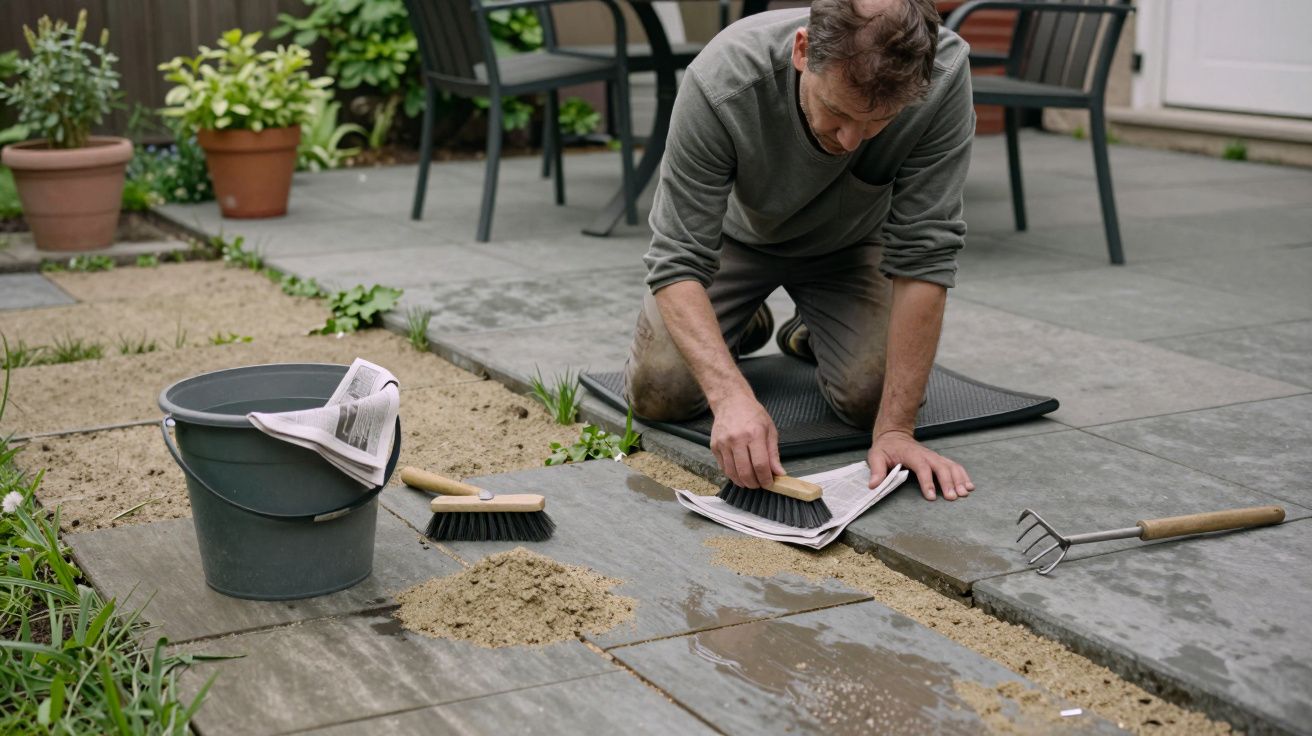
He came back with a stack of old papers, a stiff brush and a bag of sharp sand. No magic potions, no gadgets, just yesterday’s headlines and a bit of grit. “You’re doing the hard bit already,” he said, nodding at the cleared cracks. “You’re just not stopping the light from getting back in.”
We weeded the gaps properly once – roots and all – then brushed out the loose soil until the joins looked almost bare. He tore the newspaper into strip after strip, roughly the width of the gaps, and soaked them in a trug of water until they went soft and floppy. Then, working along the lines like he was rolling pastry, he tucked the strips into the gaps and pressed them down with the handle of the brush.
By the time we’d finished, the patio looked faintly ridiculous: soggy newsprint snaking between the stones, headlines about interest rates and local football peeking out from the joins. We brushed a thin layer of dry sharp sand over the top, swept until the paper disappeared, and left it alone. It felt too simple to work.
The magic that happens out of sight
A few weeks later, the only green between the slabs was in the pots.
What had looked like a slightly daft afternoon experiment turned out to be old-fashioned weed control at its quiet best. No flames, no fumes, no mysterious blue granules. Just paper doing what paper is good at: blocking light and soaking up moisture.
Here’s what really happens under your feet:
- The damp newspaper forms a dense, light-tight layer that stops weed seeds underneath from waking up.
- Any tiny roots you missed run into the paper, weaken, and give up instead of pushing through to daylight.
- As the paper slowly breaks down, it turns into a thin layer of organic matter that helps lock the sand in place.
The weeds don’t die in a dramatic, instant way. They simply… don’t come back. For months, sometimes the whole season, the gaps stay satisfyingly blank. You walk across the slabs and notice, with a small thrill, that there’s nothing to pick, scrape or swear at.
How to do the newspaper trick on your own patio
You don’t need special tools or a free weekend. What you do need is one focused session when the slabs are dry and you’re willing to get a bit mucky. Think of it as a reset rather than another round of emergency weeding.
Clear the existing weeds properly
Pull out as much as you can by hand or with a narrow tool, aiming to remove roots, not just tops. A slim patio weeder or old bread knife can help loosen stubborn clumps. Brush or scrape out loose soil so the gaps are as empty as you can reasonably manage.Prepare your newspaper strips
Use plain, black-and-white newsprint pages, not glossy magazines or heavily coloured supplements. Tear them into long strips roughly the width of your gaps. Two to three layers per gap is usually enough. Soak the strips in a bucket or trug of water until fully wet and pliable.Lay the paper into the joints
Press a wet strip down into each gap, folding or overlapping slightly where needed. Use the end of a brush handle or a blunt stick to push the paper just below the surface of the slabs. You want coverage from edge to edge so light can’t sneak in.Cover with sand or fine grit
Sprinkle kiln-dried or sharp sand over the joints and brush it back and forth until the gaps are filled and the paper has disappeared. The sand helps lock the paper in and gives you a neat, finished look.Let time and weather do the rest
Over the next few days, the paper settles, the sand beds in, and the barrier starts working. Rain will dampen the layers again, helping them mould around the tiny crevices. You just walk away and enjoy a patio that stays bare for much, much longer.
You don’t have to do the whole patio in one heroic push. Tackle one seating area, the main path, or that bit you always see from the kitchen door. Each strip of hidden newspaper is one less line of weeds you’ll be pulling every fortnight.
Why this simple trick feels different
Most weed battles feel adversarial: you against the roots, against the weather, against your own lack of free time. The newspaper trick is patient rather than aggressive. It doesn’t scorch or poison; it just quietly removes what weeds need most – light and space – and then holds that line while you get on with your life.
There’s also a quiet satisfaction in using something so ordinary. Yesterday’s paper, destined for the recycling bin, gets one more useful job keeping your patio calm and low-maintenance. It costs nothing, smells of nothing, and doesn’t leave you worrying where the runoff is going when it rains.
The emotional shift is small but real. Instead of feeling slightly defeated every time you carry lunch outside and spot another dandelion between the slabs, you get to breathe out. The surface under the table stays clear. The edges by the back door look cared for. Guests step out with a drink and sit down without clocking that tell-tale fuzz of green.
It won’t fix every problem in the garden, and it won’t turn a crumbling patio into Chelsea Flower Show. But it does remove one persistent little whisper of “you really should sort that” every time you slide the doors open.
Quick reference: where the newspaper trick shines
| Where to use it | Why it works well |
|---|---|
| Between patio slabs and paths | Narrow gaps, lots of light, constant seed drop – perfect for a light-blocking barrier. |
| Under stepping stones | Keeps the edges from sprouting grass and stops soil pumping up when you walk. |
| Around fixed posts in paved areas | Fills awkward rings where hand weeding is a pain and sprays feel risky. |
FAQ:
- Won’t the wet newspaper just attract more weeds?
No. Once buried and covered, it blocks light and forms a physical barrier that makes it harder for seeds to germinate and roots to push through. As it decomposes, it collapses into a thin, dark layer that still excludes light for quite some time.- How long does it last before I need to redo it?
In most UK gardens, you’ll get a good season out of it, often longer. Exposed, very wet or high-traffic joints may need topping up with fresh strips and sand after a year or so.- Is it safe for pets and wildlife?
Plain black-and-white newsprint is generally considered safe once buried, especially compared with chemical weedkillers. Avoid glossy pages or heavily inked advertising inserts, which can contain coatings you don’t really want in the soil.- Can I just lay newspaper on top of existing weeds?
You’ll get better, longer-lasting results if you clear the weeds and loose soil first. Laying paper over living plants in tight joints tends to create lumps and gaps where light can sneak in and growth can continue.- Will it make the slabs slippery or cause drainage issues?
Not if you keep the paper slightly below the surface and cover it with sand. Water still drains through the joints; the paper simply slows it a little as it passes, which is usually fine on patios with decent fall.


Comments (0)
No comments yet. Be the first to comment!
Leave a Comment