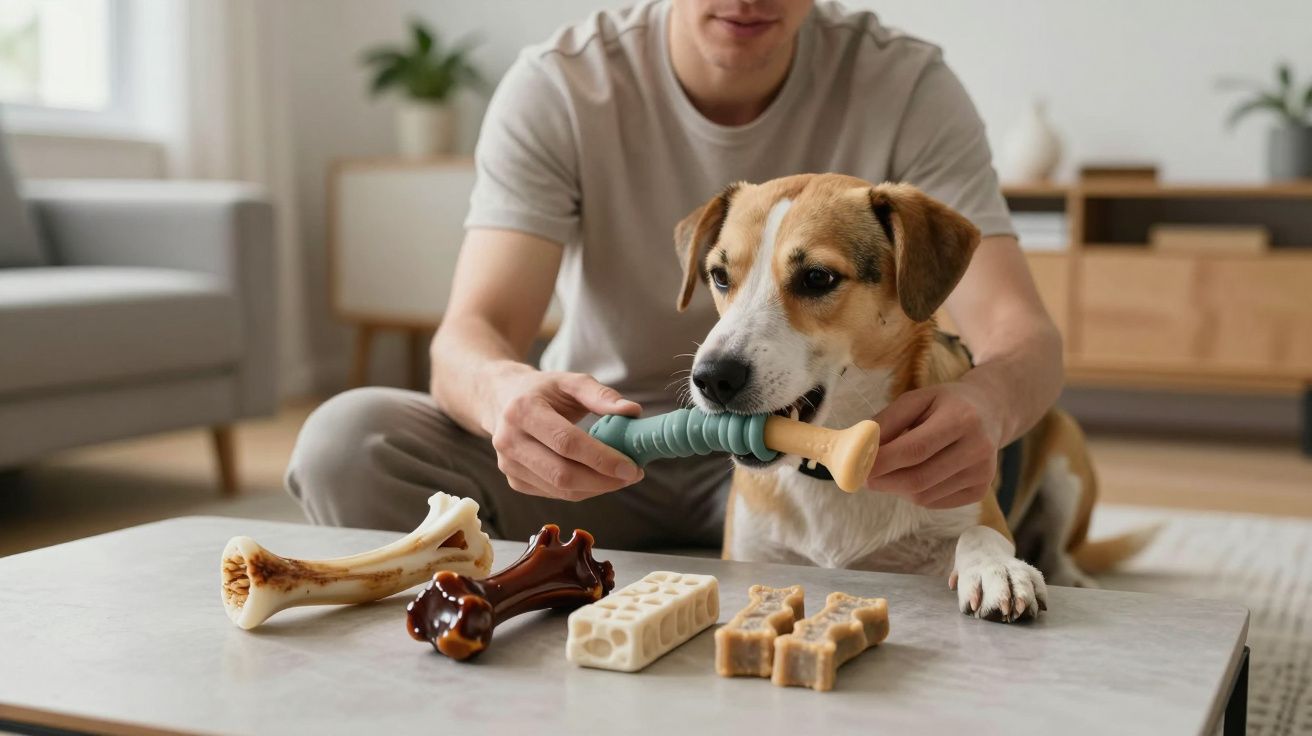
Vets warn against this popular dog treat trend on social media – and share a safer chew alternative
The video looks harmless enough. A dog crunches its way through a shiny, translucent chew the colour of honey, the caption promises “all-natural”, and the comments say things like “my picky eater finally loves treats again”. Scroll a little further and you’ll see more of the same: hard, glossy chews that last ages, keep dogs “busy”, and rack up millions of views.
Behind the scenes, vets are quietly seeing the fallout: cracked teeth, choking emergencies, and dogs in surgery because a “natural” chew has wedged itself in the gut. The trend isn’t harmless enrichment; it’s become a frequent flier in the X‑ray room.
Vets are not saying “no treats ever”. They are saying this: the internet has turned some of the hardest, riskiest chews into everyday snacks, and dogs are paying the price with pain you never see on camera.
What’s actually going wrong with these “viral” chews
Most of the trending chews in vet warning posts share two traits: they are very hard and slow to break down. Think pressed rawhide “bones”, ultra-dense yak milk bars, roasted weight-bearing bones, antlers, and smoked hooves. They look sturdy and “long-lasting”. That’s the problem.
Dog teeth are built for tearing and shearing, not crushing stone. When they hit something as hard as enamel-or harder-the tooth often loses. Vets have a simple rule of thumb: if you can’t make a dent in the chew with your fingernail, it’s quite likely too hard for your dog’s teeth. Dogs don’t chew more gently because it hurts; they bite harder to win.
In clinic, that “win” looks like fractured premolars and molars, bleeding gums, or a dog that suddenly starts dropping toys and favouring one side of the mouth. Owners often blame a random fall or rough play. X‑rays tell a different story: a slab fracture right where a dense chew sits when a dog corners it against the jaw.
The quiet dangers after the camera stops
Even if teeth survive, the same chews can cause a second, less photogenic problem: obstruction. Many “long-lasting” treats soften just enough for dogs to gnaw off large, rubbery chunks. Those pieces can lodge in the oesophagus, stomach or intestines. Some dissolve over time. Others don’t.
On social media you see the first five minutes of joy. In surgery, vets see the next 48 hours: vomiting, abdominal pain, dehydration, and a stretch of bowel so inflamed it has to be opened or removed. Recovery is not a cosy, “tired after a big chew” nap. It’s days of hospital care and a risk that never needed to exist.
Rawhide is a repeat offender here. Marketed as “natural”, it is processed animal skin that doesn’t break down like regular food. In some dogs it swells as it absorbs fluid, turning a swallowed strip into a tight plug. Smoked hooves and roasted weight-bearing bones can splinter into shards that cut as they travel.
“If it takes your dog three weeks to finish and you nearly break your own tooth on it, it’s not enrichment, it’s an orthopaedic hazard,” one small-animal vet told me.
Why this trend exploded online
The appeal is obvious. People are busy. A chew that keeps a dog occupied for an hour feels like a blessing. The word “natural” is reassuring. A sparkle of marketing about “dental benefits” and “boredom busting” makes it sound like a health product rather than a risk.
Social platforms reward spectacle, not nuance. A dog delicately licking a soft chew doesn’t go viral; a dog savagely crunching a massive bone does. No one films the follow-up consultation where a vet explains why that back tooth now needs a root canal or extraction.
There’s also a gap in expectations. Owners often assume that if a product is sold in a pet shop, especially a big brand, it must be safe for daily use. In reality, many treats and chews are regulated as food, not medical devices. They are not tested against tooth fracture rates in the real world.
Once you understand that, the landscape shifts. You stop asking, “Do dogs like this?” and start asking, “Can a dog safely chew this twice a week for years?”
A safer chew alternative vets actually recommend
Different vets have slightly different favourites, but there’s one category that gets mentioned again and again in clinics and dental guidelines: properly sized, vet-approved dental chews with tested digestibility.
These are not just any “dental” sticks from the bargain bin. The safer end of the spectrum tends to:
- Carry accreditation from an independent body (for example, VOHC in North America) showing they reduce plaque or tartar.
- Soften as the dog chews, rather than staying rock-hard.
- Break down readily in the gut, instead of sitting there like compressed leather.
Think of them as the towel in the washing machine: not a miracle, just the right kind of texture doing slow, steady work. The chew’s surface scrubs along the tooth, the dog’s saliva and chewing motion do the rest, and nothing inside the mouth is harder than the tooth doing the job.
Vets also emphasise that the safest “chew” is often the right toy. Rubber or silicone toys with a slight “give” (you can bend them; you can mark them with a thumbnail) satisfy chewing urges without the rock-on-enamel contact. Stuffable toys turned into frozen food puzzles can keep a dog busy longer than most hard chews ever will.
How to pick a chew your vet is more likely to approve
You don’t need a lab to make better choices. A few quick checks at home can dramatically reduce the risk.
- Do the thumbnail test. Try to press your nail into the chew. If it will not indent at all, it’s probably too hard for regular use.
- Avoid “forever” chews. Anything sold as “nearly indestructible” or “takes months to get through” is asking a lot of your dog’s teeth.
- Size for safety. The chew should be large enough that your dog cannot swallow it whole and small enough that they can hold it without levering it into the back of the jaw like a crowbar.
- Check for independent approval. Look for recognised dental health endorsements rather than vague claims like “helps clean teeth”.
- Watch your dog. If they chomp with the back teeth, “crack” pieces off, or seem obsessed with gnawing in one spot, that chew may be too hard or risky.
A genuinely safer chew session is shorter than the internet suggests. Many vets recommend around 10–15 minutes, a few times a week, rather than hours of relentless grinding.
What changes in daily life when you ditch the risky stuff
At first, swapping out beloved chews can feel like taking away a favourite toy. There may be a day or two of confused looks when the antler doesn’t appear or the smoked bone stays on the shelf. Then something quieter happens: your dog chews just as happily on a softer, safer option, and the background hum of worry drops.
You stop side‑eyeing every crunch. You stop wondering, “Is tonight the night something splinters?” The budget conversation also changes. Money once earmarked for “big treat bundles” can instead go to routine dental checks or a couple of higher-quality, vet-endorsed options.
The home routine gets simpler, not stricter. Instead of a cupboard full of different “busy bones”, you keep a small rotation:
- One or two vet-approved dental chews, sized for your dog.
- A couple of sturdy but flexible rubber or silicone toys.
- Food-based enrichment: stuffed and frozen Kongs, lick mats, scatter feeding.
Your dog still gets the satisfaction of chewing and licking. You get a calmer, safer rhythm-and a lower chance of a midnight dash to the out-of-hours vet because a social media trend met real teeth.
Quick reference: common risky chews vs safer options
| Often-risky chews | Why vets worry |
|---|---|
| Antlers, hooves, roasted weight‑bearing bones | Extremely hard; high fracture risk; splintering |
| Compressed rawhide bones, twists, “chips” | Poor digestibility; swelling and blockage risk |
| Ultra-dense yak milk bars and similar “rock” chews | Very hard; dogs “work at them” with back teeth |
| Safer-style options | Why they’re preferred |
|---|---|
| Vet-endorsed dental chews (correctly sized) | Designed to soften, tested for digestibility |
| Flexible rubber chews and stuffable toys | Gentle on teeth; satisfy chewing instinct |
| Food puzzles and lick-based enrichment | Mental effort without hard crunching |
Simple rules vets wish every dog owner knew
You do not need a degree in veterinary dentistry to keep your dog’s mouth safer. A few habits go a long way.
- Soft enough to bend, big enough not to swallow. That single line eliminates a surprising number of high-risk items.
- Chews are enrichment, not babysitters. Supervise sessions, especially with new products or greedy chewers.
- Pain is quiet. Dogs rarely scream with a fractured tooth; they just chew on the other side or go off harder food. Any change deserves a check.
- Dental chews do not replace brushing. They help, but a soft brush and dog-safe toothpaste remain the gold standard.
- When in doubt, ask your vet, not your feed. A quick photo and message to your practice about a chew is cheaper than surgery later.
“If you’d be nervous about a toddler playing with it unsupervised, don’t hand it to your dog and walk away,” another vet said. “Their jaws are stronger, but their luck isn’t.”
FAQ:
- Are all bones bad for dogs now? Cooked, smoked, and roasted bones, especially weight‑bearing bones, are widely discouraged due to splintering and fracture risk. Some vets may allow certain raw, soft, non–weight‑bearing bones for specific dogs, but only under guidance and supervision. For most families, safer manufactured options are simpler and less risky.
- My dog has had antlers for years with no problem. Do I really need to stop? Past luck does not change the physics. Tooth fractures often happen suddenly after many uneventful chews. Switching now lowers the chance of an expensive, painful injury later.
- What if my dog swallows a chunk of chew? If it’s large, rigid, or your dog starts vomiting, straining, or seems in pain, contact a vet immediately. Do not wait “to see if it passes” if your gut says something is wrong.
- Are pigs’ ears and similar treats safe? They are softer than many hard chews but still fatty and sometimes contaminated. Occasional use may be fine for healthy dogs, but they are not ideal as a daily dental tool and can upset sensitive stomachs.
- What is the single safest option for a dog that destroys everything? Talk to your vet about tough but flexible rubber toys chosen for your dog’s size and bite style, and focus more on food puzzles and training games. Redirecting that drive into thinking, not smashing, is often the real solution.



Comments (0)
No comments yet. Be the first to comment!
Leave a Comment