What a sudden smell of the sea inland can signal about incoming weather, according to meteorologists
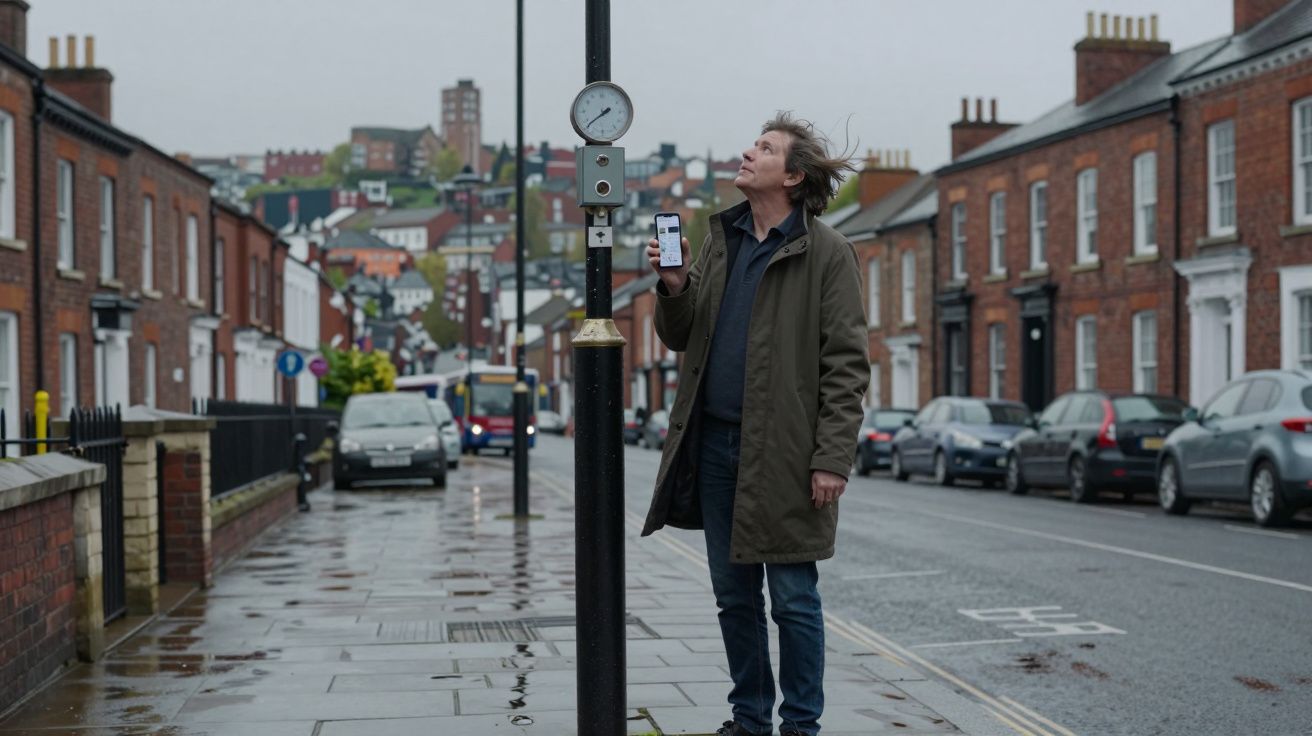
You’re halfway up a hill in Sheffield, miles from the nearest wave, when it hits you. That sharp, saline tang that belongs to gull cries and wet sand, not buses and brick terraces. It’s gone again in a few minutes, like someone opened and shut an invisible door. You look up, notice the sky has flattened to one sheet of grey, and wonder: am I imagining this, or is the weather about to turn?
Across the UK, people quietly clock these moments - on a Fenland footpath, in a London park, outside a supermarket in Cardiff. The sea, they say, has come to visit. For meteorologists, that surprise smell is often a clue. Not magic, not myth. A nudge that the air above you has changed gear.
Why you can suddenly smell the sea far from the coast
Air is never just “air”. It’s a moving parcel of stories: where it formed, what it passed over, how fast it travelled. When a marine airmass sweeps inland, it carries microscopic salt particles, organic compounds from plankton, and a particular humidity signature. Your nose is astonishingly good at picking that up for a few fleeting minutes when the wind first swings round.
Picture a cold front pushing across the Irish Sea and up the Severn, or a moist south-westerly flowing in ahead of a low. Coastal gusts strip spray from wave tops; evaporation lifts a cocktail of salt and sea-life chemicals into the boundary layer. As that air marches inland, the heavier particles slowly drop out, but enough remain - especially after recent storms - to trigger that beach-on-a-Tuesday-morning sensation. The clearer and cooler the preceding air, the sharper the contrast you’ll notice when the marine flow arrives.
It isn’t only distance that matters, it’s direction. A town 100 kilometres from the nearest beach can smell briny if it happens to sit downwind of an estuary, while a village 20 kilometres from a calm, enclosed bay might smell nothing at all on a still day. Your local topography - valleys, ridges, river corridors - can act like discreet conveyor belts, funnelling sea air into pockets of the country that feel far from any tide table.
What that sea smell often means for the next 6–24 hours
The key thing the smell tells you is not “rain in 10 minutes” but “marine air has arrived”. That shift, on UK turf, stacks the odds towards a particular set of outcomes.
In winter, a fresh sea tang inland usually means milder, damper conditions are pushing aside drier continental or Arctic air. Temperatures may jump a couple of degrees overnight, frost risks drop, and low cloud or drizzle become more likely. You might not get a dramatic downpour, but pavements turn dark and the day takes on that familiar Atlantic grey.
In summer, incoming marine air can do the opposite of what your nostrils suggest. That salty note ahead of a front often signals a cool-down after a hot, stagnant spell. Moist air over cooler seas picks up low cloud and mists; when it sweeps inland, it can cap daytime highs and bring stubborn overcast, coastal drizzle, or sea-fret that creeps up estuaries and into city edges. A barbecue day becomes a jumper-and-light-jacket day without a dramatic storm ever appearing.
Then there are the unsettled days when the sea smell is the first scout for proper weather. A sudden shift to a gusty, briny breeze, especially if paired with rising wind and thickening mid-level cloud, is a strong hint that a front is approaching. In that 6–12 hour window, you’re more likely to see:
- Bands of rain or showers, often arriving from the same direction as the new smell.
- Visibility dropping slightly as moisture and aerosols build.
- A change in pressure trend - the barometer sliding down if a low is advancing.
The smell itself is not the forecast. It’s a flag that the airmass you were in this morning is no longer the one you’re breathing now.
How forecasters actually use “sea air” - and how you can, too
Professional meteorologists do not stand on cliffs sniffing the breeze to write the shipping forecast. They lean on satellite data, radar, models, and dense networks of instruments. Yet “marine influence” is a very real technical idea in their charts, and it behaves in ways your senses can sometimes catch before your app updates.
Forecasters track:
- Wind direction and speed at the surface and aloft, to see when air starts crossing long stretches of water before it reaches you.
- Dew point and humidity, which often jump as moist Atlantic air replaces dry continental flows.
- Aerosol and salt measurements from coastal stations, which spike when sea spray is lofted and then decay as it travels inland.
You can borrow a cut-down version of that toolkit. When you think you smell the sea:
- Check the wind. Has it swung round to a direction that points towards the nearest coastline or estuary? A north-easterly in Norfolk or a south-westerly in Bristol are classic culprits.
- Feel the air. Does it suddenly feel clammy on the skin, with glasses fogging or hair frizzing just a touch more?
- Look up. Are clouds thickening from the same quarter as the breeze, flattening into sheets rather than fluffy fair-weather shapes?
If all three line up with that sea-tinged moment, you’re probably standing in the first edge of a marine airmass. Over the next half-day, expect temperatures and cloud to follow that script rather than yesterday’s.
“Your nose is a surprisingly decent boundary-layer sensor,” one Met Office forecaster put it to me. “It just needs context - wind, cloud, and time of year - to make sense.”
When a sea smell is misleading - and what not to assume
Not every whiff of “ocean” heralds an Atlantic front. Modern life has its own imitations. Fish processing plants, sewage treatment works, salt depots, even certain industrial solvents can mimic that briny tang, especially on warm, still days when odours pool in low-lying streets. If the smell is hyper-local - strong at one corner, gone the next - you’re more likely sniffing infrastructure than airmass.
Distance also blurs the picture. Inland cities over 150–200 kilometres from open water will rarely get a truly marine chemical mix strong enough to detect at street level. In those cases, what you notice might be wet pavement, algae from canals, or even decomposing leaves after rain - all of which can evoke “harbour” without any oceanic origin.
A few useful cautions:
- Do not use smell alone to decide on safety-critical actions, like whether to launch a small boat trip tomorrow or ignore a flood warning today.
- Do not assume “smells of sea” means “storm incoming”. Many stable, harmless airmasses over the North Sea and English Channel smell mildly saline with no dramatic weather attached.
- Do not discount pollution. In busy shipping lanes and ports, marine air can carry exhaust traces and industrial odours alongside natural sea salt.
Think of the smell as a nudge to check an actual forecast, not a replacement for one.
Reading the inland sea smell: a quick guide
Here’s a compact frame to keep in your head when that beach-memory breeze finds you in the supermarket car park:
| Clue | Likely meaning |
|---|---|
| Sudden briny smell, wind swings to onshore direction, humidity rises | Marine airmass arriving; expect more cloud, possible drizzle or bands of rain |
| Sea tang on a hot, hazy summer afternoon, with low cloud thickening from coast | Incoming cooler, moist air; potential temperature drop and stubborn grey |
| Strong “fishy” odour only near one road or plant, no wind change | Local source, not a weather signal |
Use it as a rule of thumb, then cross-check with radar or an app. The weather does not care about our noses, but our noses can sometimes whisper what the charts already know.
The quiet pleasure of learning your local weather cues
Part of the unease around “weird” inland sea smells comes from how detached daily life can feel from the sky above it. Most of us live by icon - sun, cloud, raindrop - on a phone screen. The result is that when the atmosphere taps us on the shoulder with something as visceral as a seaside smell in a landlocked street, we’re not sure whether to be curious or concerned.
You don’t have to turn into an amateur forecaster with a home weather station to make use of these moments. Pick one or two cues - the first sea tang you notice, the feel of the air on your arms, the shape of incoming cloud - and pair them with what actually happens over the next day. Jot it down once a week, not every hour. Over a single autumn and winter, you’ll start to see patterns that apps alone won’t teach you.
The sea has always shaped British weather, whether you live on a Cornish cliff or a Midlands cul-de-sac. When it sneaks into your nose on an otherwise ordinary afternoon, it’s not a ghost or a glitch in the matrix. It’s the edge of an airmass, arriving on time, whether you were expecting it or not.
FAQ:
- Does smelling the sea inland always mean rain is coming? No. It usually means marine air has reached you, which often brings higher humidity and more cloud, but not guaranteed rain. Check wind direction and forecasts before making plans.
- How far from the coast can you realistically smell sea air? Under the right wind and humidity, faint marine odours can travel 50–100 kilometres inland, occasionally more along river valleys, but beyond that it’s rare for most noses to detect.
- Can this smell warn me about storms or severe weather? It can hint at an approaching front or airmass change, which sometimes precedes storms, but it is not a reliable early-warning system. Use official forecasts and alerts for anything safety-related.
- Why do I sometimes smell the sea in cities with no coast nearby? Industrial sites, sewage works, canals, and fish markets can all create sea-like odours. If the smell is very localised or does not match a wind change, it’s likely a man-made source.
- Is sea air actually good for you when it arrives inland? The salt and marine compounds are present at extremely low concentrations by the time they reach far inland, so any health effect is negligible. The main benefit is awareness - it nudges you to look up and notice the weather changing.






Comments (0)
No comments yet. Be the first to comment!
Leave a Comment