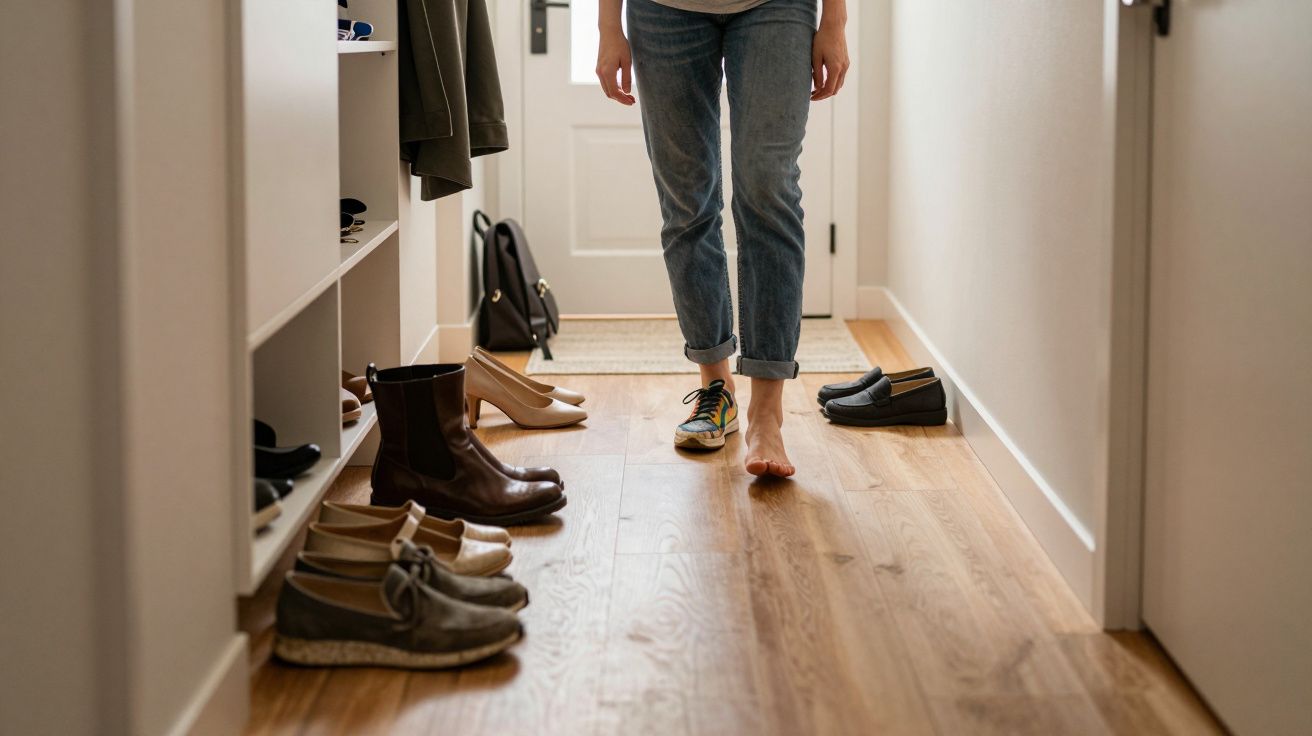
What your favourite pair of shoes says about your personality, according to psychologists
On paper, they are just shoes. In real life, they’re the thing you reach for without thinking when you’re tired, late, or nervous about who you’re about to meet. We tell ourselves we choose them for comfort or practicality. Psychologists will quietly add another line: your favourite pair is also a running commentary on who you are, how you want to be seen, and what you believe about the world.
Open any hallway cupboard and you’ll see it: the battered trainers that still get pride of place, the polished brogues lined up like a small army, the boots that look ready to cross a moor or a nightclub floor. You probably have several options, yet there’s one default pair you wear until the soles give up. That “reach-for-them-without-thinking” choice is what researchers pay attention to.
Your shoes can’t read your mind. But the patterns behind what you wear, and keep wearing, are surprisingly consistent.
Why psychologists care about your shoes
A small but growing body of research suggests that people really do read personalities from footwear. In one study, strangers looked at anonymous photos of shoes and guessed traits like age, income, and even anxiety levels with more accuracy than chance. They weren’t doing magic. They were reading cues: scuffs, colours, heel height, brand signals, how hard a pair had been lived in.
Shoes sit at an odd crossroads of function and performance. You need them to walk to the bus; you also use them to wordlessly answer questions about status, taste, and how much effort you’re willing to spend on either. They are portable billboards that move with you through streets, offices, and family kitchens.
Psychologists talk about three layers:
- Expression – what you want others to notice (or miss).
- Comfort zone – the conditions in which you feel most like yourself.
- Story – the life you think you’re living, or wish you were.
Your favourite pair usually satisfies all three at once.
The trainer person: comfort, curiosity, and quiet optimism
If your default shoes are trainers, even when you’re not “exercising”, you’re in big company. People who live in trainers often score higher on traits linked to openness and adaptability. You like to move, or at least like to feel you could. You dress for the unplanned detour: the last-minute walk, the sudden race for the train, the invitation that keeps you out longer than expected.
The psychology here isn’t just about sportiness. It’s about low friction living. Trainer people tend to value ease over spectacle. You’re probably the friend who says “shall we just walk?” rather than booking a taxi, who’d rather stay a bit flexible than commit to a rigid schedule that might box you in. There’s a quiet optimism in always wearing shoes that could carry you further than you strictly need to go.
Condition matters. If your favourite trainers are immaculately white, you’re signalling something slightly different from someone who loves a pair that’s frayed but faithful. Pristine trainers often point to impression management and attention to detail: you care that things look intentional. Worn-in trainers lean more towards sentimentality and loyalty. You believe in sticking with what works, even when newer, shinier options sit in the wardrobe.
The boot wearer: boundaries, grit, and a taste for control
Pull on a pair of boots and you instantly feel more… sorted. People who favour boots-Chelsea, combat, hiking or heeled-often show higher levels of conscientiousness and what psychologists call “hardiness”: the sense that you can cope with rough patches. Boots are armour that also happen to keep your feet dry. They say, “I’m ready for whatever this day thinks it’s bringing.”
Boot fans usually have clear boundaries. You may be warm and funny, but there is a line you won’t let others cross. Structured footwear mirrors that. Laces, zips and solid soles echo a mind that likes plans and dislikes flakiness. When life feels uncertain, boots can be a small, everyday way of choosing stability. You quite literally ground yourself.
Style shifts the story. Well-conditioned leather ankle boots point to traditionalism and investment in longevity: you’d rather maintain one good thing than constantly replace three cheap ones. Chunky or combat styles lean more rebellious, suggesting you like a bit of edge and resist being told what to do for the sake of it. Hiking boots worn far from any hill hint that practicality often beats appearances in your private ranking of priorities.
The heels devotee: visibility, ambition, and social performance
If your “I feel most like myself” shoes involve a heel of any height, you’re playing with visibility on purpose. Heels, wedges and elevated soles literally change how you move through space. They alter posture, stride, and how often people look down, then back up at you. Psychologically, they are about performance and presence.
People who favour heeled shoes, especially in social or professional settings, often score higher on measures of extraversion or social assertiveness. You may not see yourself as the loudest person in the room, but you understand the power of first impressions and are willing to tolerate some physical discomfort to shape them. You are keenly aware of audience and context. You enjoy the ritual of getting ready, the feeling of “putting your game face on” that starts at your feet.
Again, the details matter. Sleek, classic heels in neutral shades suggest goal orientation and status awareness: these are tools in your career or social toolkit. Statement heels-bright colours, unusual shapes-tilt more towards creativity and play. They hint at someone who uses style as a form of self-expression and doesn’t mind being read as “a bit extra”.
There is a flip side. Research links very high, very uncomfortable footwear worn daily with higher levels of self-monitoring and sometimes anxiety about appearance. If your favourite heels are also the ones that hurt, it may say less about vanity and more about a deep-rooted belief that you must earn your right to take up space.
The sandal and slip-on loyalist: ease, openness, and emotional breeziness
If you’d live in sandals, slides or loafers all year if the climate allowed it, psychologists notice a few patterns. People who love open or slip-on footwear tend to value psychological ventilation: fewer rules, more airflow, literal and metaphorical. You like things to be straightforward and hate feeling trapped-by schedules, by heavy clothing, by expectations you didn’t agree to.
Sandal people often show higher agreeableness and a go-with-the-flow approach. You prefer spontaneity to ceremony and would rather things were “good enough and happening” than “perfect and endlessly postponed”. There’s usually a thread of sociability here too; open shoes are common at gatherings, beaches, barbecues and long afternoons that blur into evenings. Wearing them day to day can be a quiet vote for that kind of life.
Slides and backless loafers add a hint of nonchalance. They suggest you’re comfortable letting some details go. Not everything has to be fastened, checked or double-knotted. To others, this can read as relaxed confidence or mild chaos, depending on what the rest of your outfit is doing. To you, it feels like room to breathe.
The minimalist neutral shoe person: control, calm, and careful curation
Perhaps your favourite pair is quietly expensive, discreetly branded, and in a shade best described as “walked past without noticing”. Minimalist shoe wearers often lean towards restraint. You enjoy design, but hate shouting about it. Psychologically, this lines up with higher self-control, lower impulsivity, and a preference for understatement as a strategy.
Neutral, simple shoes also reduce cognitive load. You don’t have to think about matching, clashing or standing out. They go with everything, freeing mental energy for other choices. People who habitually lower the number of daily decisions (what to wear, what to eat, where to sit) often do so because their brains are busy elsewhere. You may have a lot going on and use your shoes to simplify at least one corner of life.
Scuffs and polish tell their own story. Minimalist shoes kept in excellent condition suggest perfectionism and a concern with being “put together”. The same style, worn to softness and never quite taken in for repair, hints at someone who hates waste and struggles to let go of a favourite once it’s earned that title.
The colourful, patterned or “loud shoe” lover: creativity, play, and strategic signalling
If your favourite pair is the one that makes strangers comment-bright trainers, glittery boots, animal prints, unexpected colour combinations-you’re using your feet as an ice-breaker. People drawn to bold shoes reliably rank higher on openness to experience and aesthetic sensitivity. You notice textures and shades; you care about how things look and feel in ways that go beyond function.
Loud shoes do a job in social psychology terms: they are conversation anchors. They give people an easy point of entry (“I love your shoes!”) which eases you into interaction without you having to thrust yourself forward. For some wearers, that’s a playground. For others, it’s camouflage: if people are busy commenting on your shoes, they’re not staring at your face while you search for words.
There is often a streak of defiance here too. By choosing footwear that doesn’t blend in, you’re quietly rejecting the idea that adults should fade to beige after a certain age or stage of life. That refusal to disappear is a personality trait in itself.
What scuffs, age and repetition reveal
You can tell a lot not just from what your favourite pair is, but from what you’ve allowed to happen to them. Psychologists talk about “behavioural residue”: the physical traces your habits leave behind. Shoes are covered in it.
- Well-worn but carefully cleaned shoes suggest responsibility and reliability. You use things hard, but you also look after them.
- Newer shoes in heavy rotation can point to novelty-seeking. You like chasing upgrades and may bore quickly once the shine wears off.
- Old, damaged favourites kept in play long past their sensible life often signal sentimentality and difficulty with endings. You can feel loyal to objects as if they were people.
Patterns across pairs matter most. One pair of muddy boots doesn’t make you a daredevil. A decade-long habit of buying nearly identical sturdy boots, then wearing them into the ground, says more about a deep preference for consistency and predictability.
When the shoes don’t match the person (on purpose)
Sometimes your favourite pair isn’t your “true self” at all. It’s who you’re practicing being. Someone shy might love sharply polished loafers because they create a character they can step into for work. A messy, creative soul may keep one immaculate pair of oxfords for weddings, interviews and days when they want to borrow the authority of tradition.
Psychologists call this impression management, and it isn’t inherently fake. Most of us have slightly different selves for home, office and Friday night. Shoes are a cheap, tactile way to flick between them. The key question is how you feel when they’re on. Empowered? Trapped? Playful? Exhausted?
If the shoes you “have” to wear feel like a costume that drains you by lunchtime, that’s worth listening to. Your body is giving feedback your brain might be brushing aside.
Using the insight without overthinking it
It can be tempting to treat this like a party trick: spot the boots, diagnose the personality. Reality is messier. Your favourite shoes are one clue among hundreds-useful, but not definitive. They sit alongside your music, your emails, your fridge contents and your browser tabs as little windows into how you live.
A more helpful move is to turn the lens inward:
- Which pair do you reach for on a stressful day?
- Which pair do you wear when you need courage?
- Which pair feels most like “holiday you”, even on a Tuesday?
Noticing the answers can nudge you towards small, kind choices. If you’re calmer in trainers, perhaps that big conversation doesn’t need your least comfortable heels. If a certain pair makes you feel playful and safe, maybe they deserve more than reserved-for-holidays status.
You don’t need to reinvent yourself from the ankle down. You might simply rotate in shoes that support the traits you want more of: grounded boots on wobbly days, soft slip-ons when you need gentleness, something bright when life feels grey.
FAQ:
- Can you really judge personality from shoes alone? Not accurately on an individual level. Research shows trends in groups, but any one person may be using shoes to hide, perform, or temporarily borrow a different self. Shoes are a helpful clue, not a verdict.
- What if I don’t have a single favourite pair? That often suggests flexibility. You may shift identities with context and feel comfortable doing so. Look instead at the two or three pairs you wear most and what they have in common.
- Does preferring practical shoes mean I’m boring? No. It usually points to valuing comfort, control and reliability. Many highly creative or adventurous people wear very practical shoes so they can focus their energy elsewhere.
- Can changing my shoes change how I feel? To a degree, yes. Footwear alters posture, movement and how others respond to you, which feeds back into mood and confidence. Treat shoes as one small lever among many, not a magic switch.

Comments (0)
No comments yet. Be the first to comment!
Leave a Comment