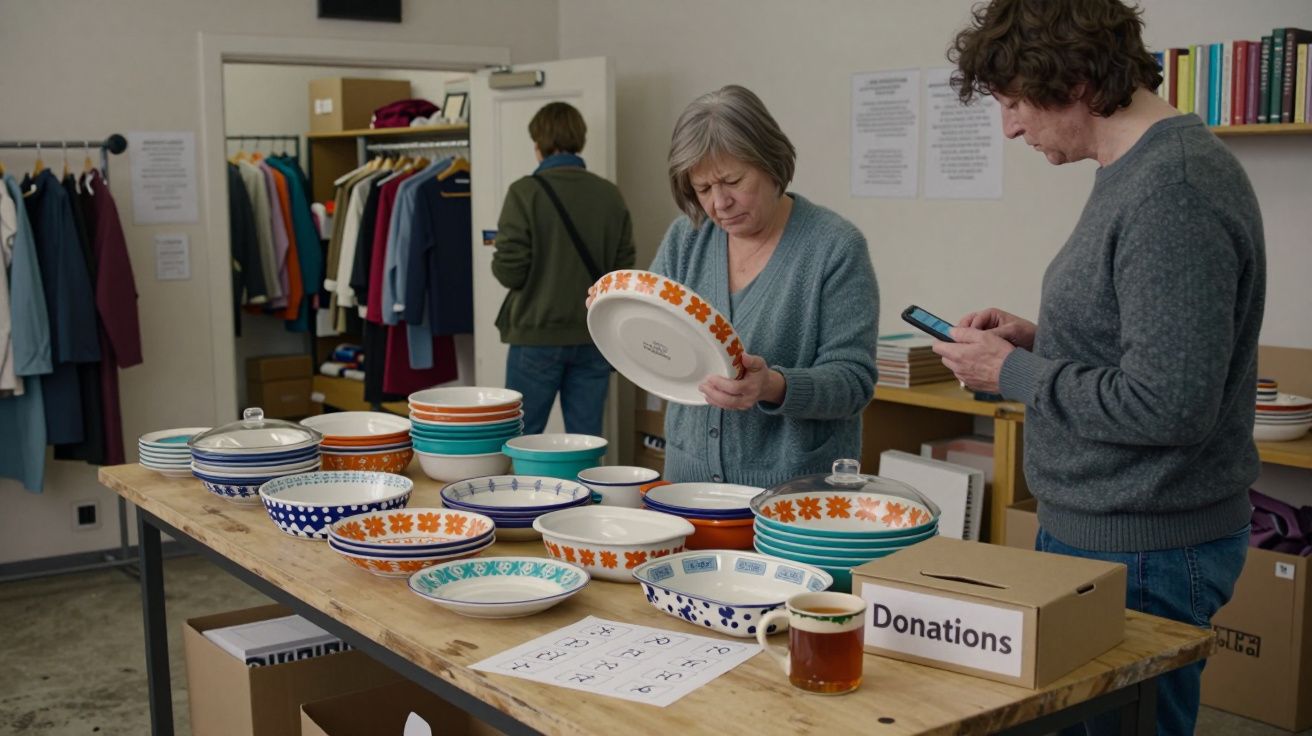
Why charity shops are suddenly fighting over old Pyrex dishes – and which patterns fetch the most online
On a damp Thursday in Sheffield, a volunteer priced a squat glass casserole at £2.50, the way she’d always done. By Saturday, it was back on the shelf with a new sticker: £18. Someone had checked eBay in the tea break and watched identical flowers whirl past at £40 a pop. The dish hadn’t changed. The market had.
Behind the rails of polyester blouses and dog‑eared thrillers, there is now a quiet arms race over chunky glassware your nan used to bake rice pudding in. Charity shop managers are swapping screenshots, WhatsApp groups buzz with pattern names, and the “bric‑a‑brac” table is suddenly a glass‑fronted arena. The humble Pyrex casserole has become a collectible, and the people who rely on second‑hand prices to fund hospice beds and youth clubs are trying not to miss the moment.
We’ve all had that flicker of regret: the thing you donated for a clear‑out that now seems to be funding somebody else’s side hustle. This time, charity shops are trying to stay one step ahead.
How we got from £1.50 casseroles to bidding wars
Pyrex never stopped working; we just stopped noticing it. For decades, UK cupboards quietly held stacks of heatproof glass stamped “JAJ England” or “Pyrex France”: wedding presents, Green Shield stamp rewards, supermarket giveaways. They survived casseroles, microwaves and three house moves. When open shelving and minimalism came in, many of those dishes walked straight to the donation bin.
Two things changed. Lockdowns pushed people back into the kitchen, and social media turned cupboards into content. TikTok and Instagram creators began “thrifting hauls” and “retro kitchen tours”, zooming in on daisy borders and snowflake ovals. A pattern name dropped in a comments section and overnight, a 1970s lasagne dish went from invisible to iconic. The nostalgia hit twice: memories of grandparents, and a quiet rebellion against anonymous flat‑pack.
At the same time, supply shrank. Pyrex stopped making many of the bold printed lines years ago. Breakages, dishwashers and loft clear‑outs did the rest. What’s left is a finite pool of specific patterns and sizes. Once collectors realise that the orange “Carnaby Tempo” tray is actually harder to find than a smart watch, the graph starts to tilt.
“We used to send boxes of this stuff to the rag merchant,” a Midlands charity retail manager told me. “Now my team WhatsApps me photos from the sorting room asking, ‘Is this one of the good flowers?’”
What makes one old Pyrex dish worth more than another
Not every bit of glass with a flower on it is a goldmine. Some patterns and marks matter in ways that aren’t obvious when you’re pricing in a hurry between donations.
Three forces combine: design, scarcity and condition. Bold mid‑century motifs, especially in strong oranges, turquoises and olives, tend to attract more buyers than plain clear glass. Early British‑made pieces have a certain charm for UK collectors, especially when they carry the “JAJ” mark or the later “Pyrex England” stamp. Sets complete with lids, and nestable mixing bowls in graduated sizes, climb fastest.
Then there’s the online effect. Once a named pattern builds a following on Pinterest or in Facebook collector groups, the prices on resale sites follow. A snowflake‑bordered oval that sat for months at £4 in a high street shop can sell in a weekend to a buyer in another county who has an alert set for that exact design. That’s where charity shops are feeling the tug: do they price for the regular who bakes shepherd’s pie, or the unseen bidder three towns away?
Condition still speaks the loudest. Scratched interiors, clouded glass from dishwasher wear, and chipped rims drive prices down sharply. A pristine, glossy bowl with its original lid and no oven scorch marks can fetch three or four times more than a tired twin.
Patterns charity shops are quietly hunting – and why
There isn’t one official league table, but walk through the back rooms of UK charity shops right now and you’ll hear the same names over and over.
Snowflake and starburst borders
Think white or turquoise motifs on clear or opaque glass, usually on oval casseroles with side handles. They photograph well, scream “retro winter kitchen” and are heavily shared on social media. Clean examples with lids often land in the £20–£40 range online.Bold florals and “Carnaby‑era” abstracts
Orange, mustard, avocado and brown designs, often in repeating petal or geometric panels. These sit neatly in the current love affair with 60s and 70s interiors. Stacking mixing bowls and rectangular roasters in these designs can outrun plainer dishes by a factor of five.Early British “JAJ” Pyrex
Pieces marked “JAJ” (for James A Jobling, the Sunderland maker) have a local history twist. Some collectors specifically hunt pre‑metric, pre‑Pyrex‑logo items. The price bump isn’t always huge, but the interest is steady, especially for rarer shapes.Odd sizes and serving pieces
Gravy boats, divided dishes and tiny lidded butter keepers didn’t survive daily life as well as big casseroles did. When they appear in a desirable pattern, competition online nudges them upwards, partly because they help people finish sets.
Charity shop teams are beginning to keep informal lists taped above the sorting tables: snowflakes, orange flowers, turquoise bands, stars. The goal isn’t to turn every casserole into an auction lot; it’s to catch the dozen a year that would otherwise walk out for small change.
A quick pattern sense‑check for shop volunteers
You don’t need to become obsessed. A 20‑second routine at the donation table is usually enough:
- Flip the dish and check the base.
- Any “Pyrex” stamp?
- “JAJ”, “England”, or just “France/USA”?
- Any “Pyrex” stamp?
- Scan the sides.
- Strong, repeating graphics or plain glass?
- Colours still bright or faded and patchy?
- Strong, repeating graphics or plain glass?
- Check the lid.
- Present, matching and chip‑free?
- Clouding, cracks or missing knobs?
- Present, matching and chip‑free?
If the answers cluster around “yes, bright, matching, no chips”, it’s worth a quick look on your phone during the next tea break. If it’s plain, scratched glass with a missing lid, price it as a useful kitchen basic and move on.
Why the scramble matters for charities – and for regular shoppers
On one level, this is just glassware. On another, it’s the difference between a £3 sale and a £30 one. For charities running on slim margins, that gap buys bereavement counselling hours, youth mentoring sessions or extra days of hospice care. The “Pyrex boom” is part of a larger story: second‑hand shops trying to balance affordability for local communities with the reality that some donations now function as stock for an online business.
That tension shows up on the shop floor. Regular customers notice when the “good” vintage moves to a glass cabinet or eBay page, leaving only everyday basics on the shelves. Some feel priced out of the very nostalgia they donated. Others are happy to know their nan’s lasagne dish is paying for something tangible, not just cluttering another cupboard.
The savvier shops are being transparent. Small signs explain that certain high‑value items go online to maximise income, while plenty of standard Pyrex is kept cheap for everyday cooking. It’s a tightrope: catching the collectors without freezing out the casserole bakers.
A crib sheet to spotting value – whether you sell or buy
If you’re sorting donations, or rummaging the shelves as a buyer, a few quick rules of thumb help separate “nice to have” from “list this tonight”:
- Strong graphic pattern + complete lid + no chips = investigate.
- Plain clear glass, heavily scratched = useful but low value.
- Sets and stacks (three mixing bowls, matching sizes) beat single orphans.
- Early British marks and unusual shapes deserve a second look.
- Dishwasher haze and burnt‑on stains knock prices back sharply.
It’s not a perfect science. Prices swing with trends, payday weekends and the whims of a single enthusiastic influencer. But a little pattern literacy goes a long way.
| Clue | What it often means | Why it matters |
|---|---|---|
| Bright, bold pattern | Later‑mid‑century collectible line | Higher online interest and prices |
| Matching lid, no chips | Complete, display‑worthy piece | Easier to sell; better feedback |
| “JAJ” / “Pyrex England” | UK production with local history | Steady niche of domestic collectors |
The future of the “good casserole”
Fads fade, even for glass. At some point the algorithm will swerve to a new obsession and a shelf of orange flowers will look suspiciously like your parents’ loft again. But the deeper shift may last longer: a new respect for objects that can do 200°C in an oven and 50 years in a family.
For charity shops, the lesson is less about chasing every trend and more about building quiet expertise. A simple pattern guide, a habit of checking bases, a shared staff note about recent online sales – these are small systems that protect value without turning every shop into a boutique.
For the rest of us, it’s a prompt to look twice at the things we’re about to drop in the donation bin. Somewhere between the chipped mugs and novelty fondue sets sits a casserole that could underwrite a counselling session. The trick isn’t hoarding it. It’s letting it go with its true worth attached.
FAQ:
- Are all old Pyrex dishes now worth a lot of money? No. Most standard, clear or heavily used pieces still sell for just a few pounds. It’s specific patterns, good condition and complete lids that push prices up.
- How can a small charity shop keep up without spending hours online? A short pattern crib sheet, a routine base check and checking only the brightest, best‑condition pieces against recent sold listings is usually enough.
- Is it unfair when charities sell the best Pyrex online instead of in the shop? Opinions vary. Many charities explain that higher‑value items go online to fund services, while everyday kitchenware remains affordable locally. Transparency tends to ease frustration.
- I’ve found a patterned Pyrex dish at home – should I donate or sell it myself? Either is valid. If you donate, consider mentioning to the shop that it may be a collectible pattern so they can price it fairly. If you sell, check recent sold prices rather than current listings.
- How do I stop myself overpaying as a buyer? Look for chips, scratches and clouding, and compare with “sold” filters on resale sites, not asking prices. If the condition is poor, it’s a workhorse, not an investment.




Comments (0)
No comments yet. Be the first to comment!
Leave a Comment