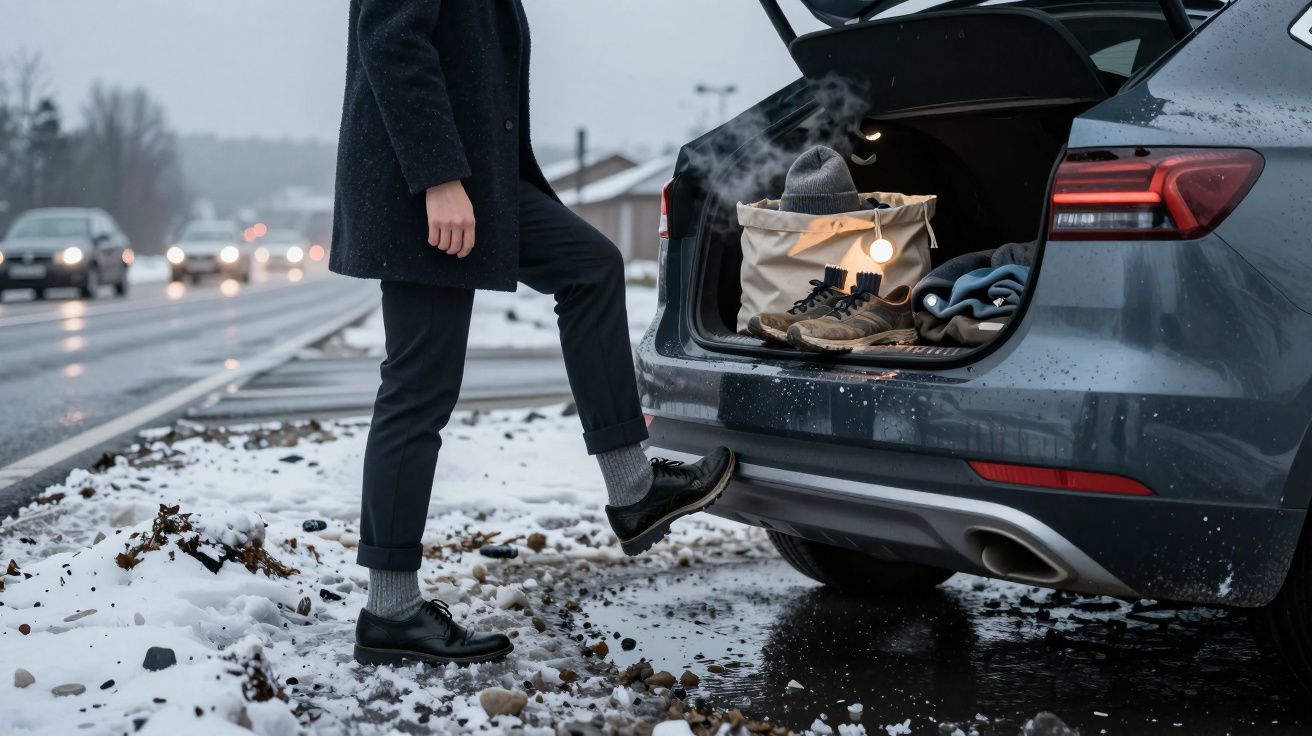
Why keeping a pair of old trainers in the car boot can be a genuine lifesaver in winter
The first time I understood the value of “just-in-case” shoes, it was already too late. A sleety Tuesday, the sort where the sky can’t decide between rain and shards of glass, and the A-road outside town turned into a slow‑motion car park. One driver nudged the verge, wheels spun, and the queue became an hour. I watched a woman step out in smooth-soled ankle boots that looked brilliant in an office and suicidal on black ice. She slipped twice in twenty metres. The man behind her opened his boot, pulled out a scruffy pair of running trainers and handed them over with a shrug. She laughed, swapped shoes, and walked the rest of the way steady as a metronome.
We tend to think of winter car prep as big, obvious kit: de-icer, scraper, maybe jump leads if you’re organised. Footwear feels personal, almost vain – what difference can a pair of old trainers make when there’s snow on the ground? More than you think. When things go wrong in winter, it’s not the five miles of road that beat you. It’s the last fifty metres on an icy hard shoulder, a slushy lay-by, or a dark lane with hidden puddles that soak your socks and numb your judgement. That’s where the “useless” pair at the back of the wardrobe becomes the smartest thing you ever forgot to throw away.
Why winter breaks our normal shoes
Most shoes we wear day to day in the UK are built for dry pavements, office carpets and the odd wet dash from train to door. They look sharp, they feel fine, and they’re terrible the moment road grit and freezing rain join the conversation. Smooth leather, chunky fashion soles, high heels and flat, plastic bottoms all share one flaw: no real bite on ice or packed snow. They’re fine until you need to climb an embankment, cross a verge, or stand at the side of the road for longer than five minutes.
The problem isn’t just slipping. Cold flows into your feet through wet fabric and thin soles, faster than you think. Step into one sludgy puddle in trainers with worn-through soles or porous mesh, and within minutes your toes stiffen, balance goes, and every movement feels clumsier. You don’t have to be deep in the Highlands for this to matter. A breakdown on a dual carriageway lay‑by, a minor bump on a frosty B-road, or leaving your car to walk the last half a mile home through uncleared side streets can all leave you wetter, colder and more vulnerable than you’d planned.
Grit, salt and slush add another twist. They turn pavements into rough sandpaper for delicate uppers and slicks of mud for anything too smooth. The shoes you don’t want to ruin are the ones most likely to suffer in an unplanned roadside trudge. That’s when having a pair you don’t mind abusing – already scuffed, slightly tired, but still solid underfoot – changes the equation. You’re no longer tiptoeing to protect them; you’re using them as they should be used.
The scruffy‑trainer trick that buys you time, grip and warmth
The simple habit is this: retire your next pair of worn-but-intact trainers to the car boot instead of the bin. Think of them as emergency kit, not fashion. They should be comfortable, broken‑in, with a bit of life left in the tread and a sole that still flexes. Ideally they’re not your prettiest pair. The kind you’d happily lend a stranger on a hard shoulder.
Here’s how they help. First, grip. Running or walking trainers usually have more texture and rubber than work shoes or heels. Even when a bit worn, they’ll often bite better into compacted snow, gravel and wet grass. Second, stability. A lower profile and laces across the foot give you a closer feel for the ground than a clunky boot with a hard, shallow tread. Third, they dry faster than heavy leather if they do get damp, especially if you partner them with spare socks.
The key is to treat them as part of a tiny winter system, not a lone hero. Fold a pair of thick socks and tuck them inside each shoe to keep the shape and keep them together. If you can, add a cheap microfibre towel or old tea towel in a bag: something to stand on while changing on a wet verge or to wipe slush off before you get back behind the wheel. It looks almost comically low‑tech compared with high‑vis vests and warning triangles. It’s also the bit that actually touches the ground when you have to get out.
“I’d packed jump leads and a torch,” a commuter from Leeds told me. “In the end it was the old trainers that got me the last kilometre home when the estate roads turned into a rink.”
When those old trainers really matter
The obvious picture is a spectacular snow day, the ones that lead the news. But most of the time, your backup shoes earn their place on quieter, messier evenings.
You hit standing water at speed, the car coughs and rolls to a stop in a shallow flood. The road edge is invisible, and your nice boots aren’t waterproof. With emergency trainers and dry socks, you can step out, wade carefully to firmer ground, and wait somewhere safer without soaking the only shoes you own. Or it’s a minor bump on a freezing night, blue lights coming, and you’re asked to stand off the carriageway. Thin soles and cold tarmac are a grim pairing over twenty minutes. Cushioned trainers and warm socks won’t make it pleasant, but they do keep sensation in your toes and your footing sure.
Then there are the quiet breakdowns. A dead battery on a back lane where the nearest house is a fifteen‑minute walk; an estate road so icy that cars spin but shoes, if chosen well, can pick a steadier line along the verge. In heavy snow, you may not be able to drive the last stretch home at all. Parking on a main road and walking in becomes the only logical choice. In each case, the question isn’t “could I walk this in theory?” It’s “can I walk this safely, without freezing or falling, in what I’m actually wearing?”
The trainers help in less dramatic ways too. Helping push a stuck car, including your own, is far easier when you’re not terrified of your feet sliding out from under you. Checking a flat tyre in slush is less miserable when your everyday shoes stay dry inside the car. And if you ever have to carry a child or assist someone more vulnerable across a slippery patch, you’ll be glad your own footing feels dull and secure rather than stylish and risky.
Turning your boot into a tiny winter survival corner
The trainers are the headline, but they work best as part of a small, deliberate winter kit. You don’t need to fill the boot like an expedition truck. A single reusable bag can hold more usefulness than you’d expect without hogging the weekly shop.
Here’s a simple set‑up that pairs well with that old pair of shoes:
- Old trainers with some tread left, laces intact.
- One warm pair of socks (wool or hiking socks beat thin cotton).
- A hat and gloves you won’t miss at home.
- A small torch or headtorch with working batteries.
- A compact foil blanket or cheap fleece throw.
- A hi‑vis vest if you ever drive on faster roads.
Pack them once at the start of winter and forget them until needed. Check sizes and condition at the first cold snap each year; children’s feet, especially, outgrow last year’s boots faster than we remember. If you share a car, choose neutral colours and generic sizes so any adult in the household can use them in a pinch. Label the bag if you’re the sort who tidies their boot so thoroughly that “emergency kit” vanishes under shopping.
The philosophy is the same as the flour trick for syrup or the paper‑towel hack for bathroom mould: don’t fight the problem at its most dramatic point. Change the conditions so the risk shrinks before you even start. On winter roads, that often starts with what’s on your feet, not what’s under your tyres.
| What to stash | Why it helps | When you’ll thank yourself |
|---|---|---|
| Old trainers + warm socks | Better grip, warmer feet, less fear of ruin | Breakdowns, short walks on ice or slush |
| Hat, gloves, small blanket | Slows down how quickly you get cold | Waiting for recovery, helping others |
| Torch + hi‑vis | Lets others see you and you see the ground | Dark verges, changing a wheel, directing help |
FAQ:
- Do trainers really work in snow, or do I need proper boots? Good walking boots are best, but a solid pair of trainers with decent tread is miles better than office shoes, heels or slick-soled boots if you have to walk short distances in winter conditions.
- Won’t the cold damage shoes left in the boot? Repeated freezing can stiffen some materials, but for an already‑retired pair used only occasionally, it’s rarely an issue. Let them warm up and flex them a little before walking far.
- What if I drive very rarely or only in a city? Winter surprises happen in cities too: flooded underpasses, icy pavements by parked cars, steep untreated side streets. A small shoe-and-socks kit still earns its space.
- Can I use old gym trainers with worn soles? Light wear is fine, but if the tread is almost smooth or the sole is cracked, they won’t help much on ice or wet grass. Think “second‑best”, not “nearly dead”.
- Isn’t this overkill for UK winters? Most winters pass with only a few bad days, which is exactly why we tend to be underprepared. The point is not constant use; it’s having a cheap, simple backup ready on the one day you truly need it.





Comments (0)
No comments yet. Be the first to comment!
Leave a Comment