Why keeping olive oil by the hob quietly ruins both flavour and health benefits, according to food chemists
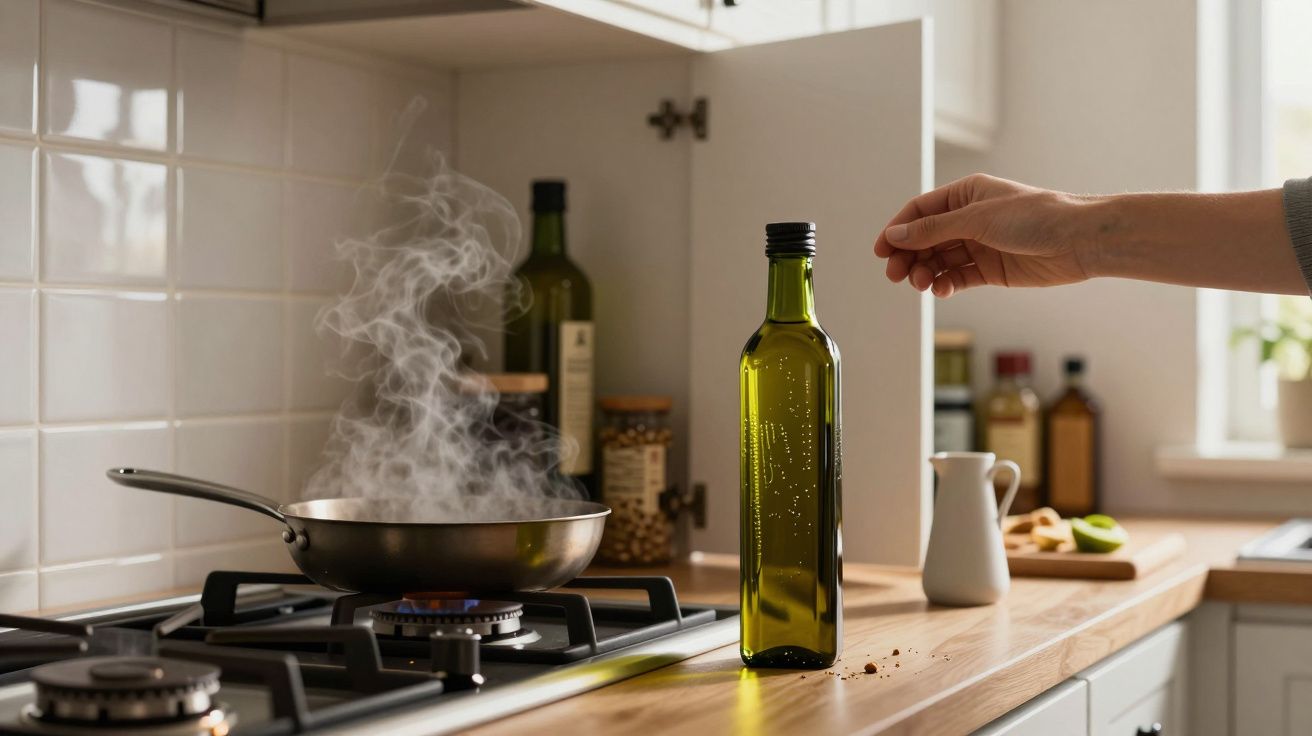
On a slow Sunday morning, the kitchen feels half-asleep. The kettle sighs, someone shuffles for coffee, and a slim green bottle waits loyally by the hob, haloed in a smudge of steam. You reach for it without looking; a splash in the pan, the soft crackle that means dinner is on its way. That bottle has probably lived there for months. It feels like home. It’s also the quietest way to flatten its flavour and strip out much of what you bought it for in the first place.
We’ve all known the old rule of thumb: keep olive oil in a cool, dark place. Then life happened. Worktops got crowded, cupboards filled up, and the spot next to the hob became the most convenient parking space. Food chemists wince at that choice. Heat, light and oxygen are the three slow vandals of good oil, and a hob-side perch offers them season tickets.
The science of a ruined drizzle
Olive oil’s charm is chemistry in motion. The green, peppery notes in a fresh extra-virgin oil come from volatile aroma compounds and delicate polyphenols that do double duty as flavour and antioxidants. Those same molecules are, unfortunately, fragile. They break down under repeated exposure to high temperatures, light and air, long before the “best before” date on the label runs out.
Put the bottle by the hob and you create a microclimate of abuse. Every time a pan smokes or the oven door opens, a wave of heat licks the glass. The oil near the surface warms, cools, warms again. Over weeks, those gentle swings are enough to accelerate oxidation, the slow reaction with oxygen that turns fresh fat rancid. You don’t always get a dramatic off smell - more often it’s a quiet slide from bright and grassy to flat, greasy and vaguely dusty.
Chemists talk about peroxide values and anisidine numbers; most home cooks talk about disappointment. That moment when your favourite salad dressing suddenly tastes dull, or the finishing drizzle on tomatoes feels oddly heavy. Technically, the polyphenol content that once helped support heart health has leached away. Practically, the oil just doesn’t make you want to tear off bread and mop the plate. The health loss arrives disguised as boredom.
How your hob quietly sabotages your bottle
Kitchens are full of small, invisible habits that add up. Keeping olive oil by the hob turns three of them into a perfect storm.
First comes heat. Even if the bottle never gets hot to the touch, regular exposure to 30–40°C air around an active cooker speeds up oxidative reactions inside. One food chemist described it as “ageing the oil in dog years”. That golden liquid you bought in June can taste like last year’s harvest by September if it lives in a warm glow of steam.
Then comes light. Many quality oils now hide in dark green glass for a reason: visible light nudges fats towards photo-oxidation, a faster, more aggressive form of spoilage. Park that dark glass under intense overhead LEDs or a sunny splashback and you undo half the bottle’s built-in sun cream. The surface layer of oil, in constant contact with the neck of the bottle, takes the brunt.
Finally, there’s oxygen. Each pour draws in a small bubble of air. When the bottle is cool and stored upright, the reaction is slow. Put the same bottle somewhere warm, tip it often, leave the cap loose because your hands are slick with batter, and you’ve effectively set up a low, continuous trickle of oxygen into a heated fat. The result is a bigger crop of peroxides and aldehydes - the compounds behind that faintly cardboard, stale-nut aroma you can’t quite name.
“Rancidity is rarely a cliff,” one researcher told me. “It’s a slope you only notice halfway down.”
In other words: the first sign your hob is in the wrong relationship with your oil is usually when you’ve already learned to accept second-best.
Simple switches that protect flavour and benefits
The good news is that the fix isn’t an expensive decanter or a lab-grade storage protocol. It’s two or three small shifts that restore what you’ve already paid for.
Start by changing the bottle’s “address”. Move your main olive oil to a cupboard away from the oven, dishwasher and any south-facing window. Aim for somewhere consistently cool - not fridge-cold, which clouds and can stress the emulsion, but closer to pantry temperature than radiator-top. If your kitchen runs hot, even the lower shelf of a hallway cupboard works better than a permanent sun lounger by the hob.
Next, rethink access. Convenience is why the oil crept next to the cooker in the first place, so give yourself a new ritual. Decant a week’s worth into a small, opaque cruet you can keep closer to hand, and top it up from the main bottle stored in the dark. Finish that smaller supply before refilling, rather than topping little and often. Every reduction in open-air contact slows oxidation and protects those precious polyphenols.
A few more low-effort habits matter more than you’d think:
- Always screw caps on firmly; a half-closed pourer is a full-time oxygen leak.
- Avoid transparent decorative bottles for long-term storage; they’re for the table, not the cupboard.
- Buy sizes you can finish within three to four months once opened, especially for extra-virgin grades.
- Reserve your freshest, pepperiest oil for drizzling and dressings, and use a cheaper, more robust olive oil (or another neutral oil) for high-heat frying.
Let’s be honest: nobody will measure the exact lux or degrees around their hob. But shifting the bottle, closing the cap and downsizing the volume you keep open are three moves that collectively slow the slide from vibrant to tired.
What changes on your plate when you move the bottle
This is not just lab talk; storage choices turn up at the table. A well-kept extra-virgin olive oil brings a small storm of green, fruity, bitter and spicy notes that lift simple food. Drizzled over beans, whisked into a lemony dressing, spooned onto grilled fish, it behaves like a seasoning in its own right rather than a background gloss.
When you protect those aromatics, you also keep more of the compounds linked with olive oil’s reputation in Mediterranean-style diets: hydroxytyrosol, oleocanthal and friends that have shown anti-inflammatory and antioxidant effects in studies. No one is promising a miracle in a bottle, but chemists will tell you that an oil stored cold and dark has a measurably higher protective profile than the same oil baked from the outside in all summer.
There is also a quieter psychological effect. Once you’ve tasted a truly fresh, well-stored oil next to a tired, hob-weary one, your sense of “normal” shifts. Tomato salads need less salt. Toast feels more luxurious. That everyday act of pouring becomes a little moment of discernment rather than autopilot. You start noticing when the bottle’s been open too long, or when a bargain brand tastes oddly muted. Storage turns into part of how you cook, not just where you put things.
The trick is accepting that a tiny inconvenience - one extra step to a cupboard door - repays you every time you eat.
| Key point | Detail | Why it matters for you |
|---|---|---|
| Heat, light, oxygen | Hobside storage speeds rancidity and flattens flavour | Explains why oil “suddenly” tastes dull |
| Small decant, big bottle | Keep bulk in the dark; only a little near the hob | Preserves both aroma and healthful polyphenols |
| Use by role, not just date | Freshest oil for finishing, sturdier oil for frying | Maximises pleasure and value from each bottle |
FAQ:
- Is it dangerous to use olive oil that’s gone a bit rancid? In ordinary home use, slightly oxidised oil is more a quality problem than an acute safety risk, but regular consumption of heavily rancid fats is not advised. If it smells like crayons, old nuts or cardboard, it’s time to bin it.
- Can I store olive oil in the fridge to be safe? You can, and many do. It will go cloudy and thicken, but that doesn’t harm it. Let it return to room temperature before using if you care about texture. For most UK homes, a cool cupboard is enough.
- Does cooking with olive oil destroy all its health benefits anyway? No. Moderate-heat cooking, especially in moist dishes, preserves a useful share of its beneficial compounds. What storage affects is the “starting point” - how rich in polyphenols and flavour the oil is before it ever hits the pan.
- Are metal tins better than glass bottles? For long-term protection from light and oxygen, good-quality tins or bag-in-box containers are excellent. At home, dark glass stored properly performs well; what you do with it matters more than the perfect packaging.




Comments (0)
No comments yet. Be the first to comment!
Leave a Comment