Why neighbours are falling out over artificial grass – and what environmental reports now show about its impact
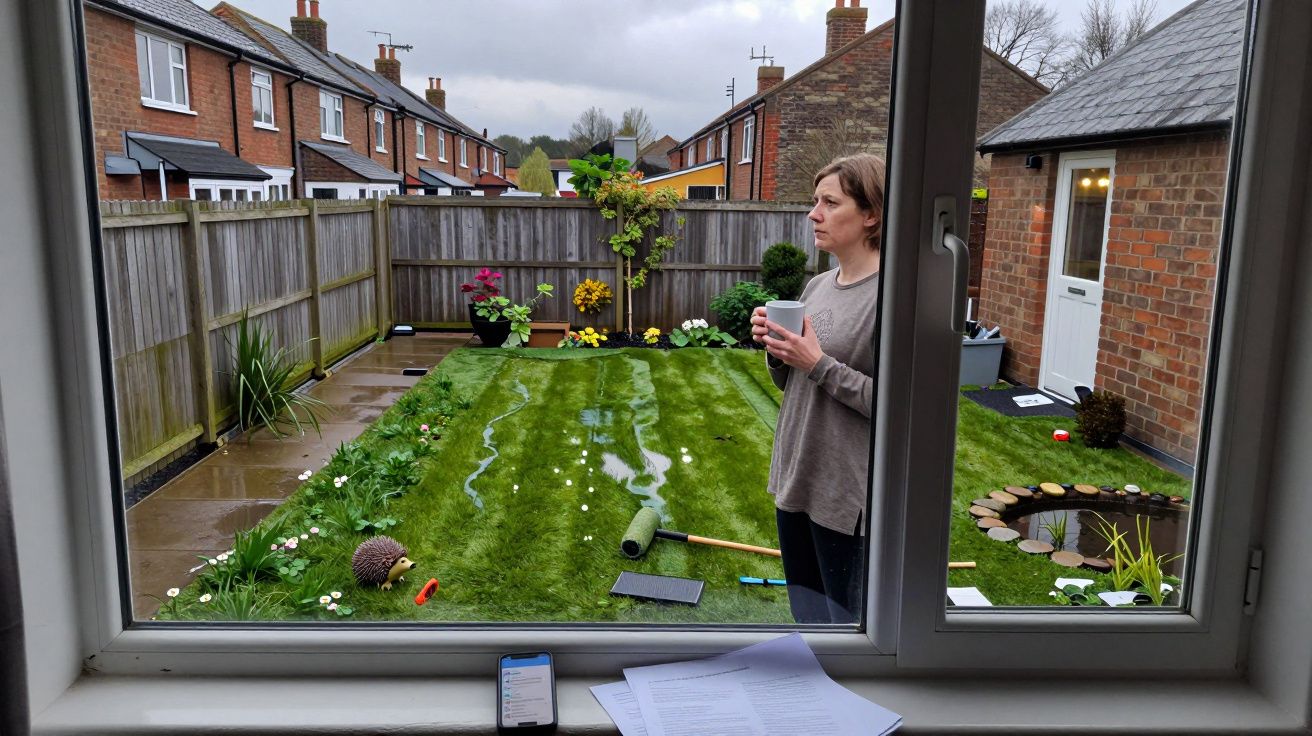
The rows don’t start with planning notices or noisy extensions. They begin with something that looks tidy: a roll of bright green, unblinking lawn. One weekend the mower hums over patchy grass; the next, a contractor’s van is out front and a skip fills with soil. By Sunday evening the garden has become a flat, flawless strip of plastic. A few doors down, someone watching from their upstairs window feels their jaw tighten.
They think about summer barbecues and children’s bare feet. They also think about the frog that used to sit by the back fence and the blackbirds that dug for worms. When the first heavy rain arrives and water sheets across the new surface straight into the shared alley, the WhatsApp messages begin. Behind the arguments about “taste” and “property values” sits a sharper question: what does this artificial turf actually do to the place we live?
The quiet spread of plastic lawns
Artificial grass has slipped from football pitches into front gardens with barely a pause. Estate-agent photos love it: no weeds, no bald patches, no brown circles from dogs. For busy households, the pitch is simple-no mowing, no mud, no mess. Garden centres stack rolls by the entrance, installers promise “pet‑friendly” finishes, and Instagram is full of before‑and‑after shots where disorder gives way to a uniform green.
Talk to neighbours on streets where it has taken off and a different chorus emerges. A couple in Leeds describe the smell of hot rubber on still days. A parent in Croydon notices their toddler’s scraped knees take longer to heal after a fall on plastic than on real turf. On terraced streets in Manchester, several homes now drain towards the same low point after back‑to‑back gardens were sealed with artificial grass and composite decking. It is not just an aesthetic shift. It is a slow change in how a neighbourhood soaks up heat, rain and noise.
Local WhatsApp groups and community forums capture the friction. One side calls objections “snobbery” and insists they are only “tidying up”. The other worries about drains, microplastics and the loss of somewhere for bees to land. When councils step in with new guidance or bans on council‑owned land, the debate hardens. Underneath the neighbourly tetchiness, environmental reports have begun to catch up with the marketing claims-and the picture is mixed at best.
What the environmental reports actually say
Recent assessments from UK councils, water companies and independent researchers describe artificial turf as what it is: a petroleum‑based outdoor carpet laid over a compacted base. Life‑cycle analyses compare it with natural grass over 10–15 years, looking at carbon, waste, chemicals and local effects such as flooding and temperature.
Several themes repeat:
- The carbon footprint of manufacturing and transporting synthetic turf is significantly higher than laying or re‑seeding a natural lawn, even when mower fuel is included.
- Most products are difficult, and currently uneconomical, to recycle. At the end of their 8–15 year lifespan, they typically become bulky, contaminated landfill.
- Run-off from plastic lawns can carry microplastics, infill particles and any cleaning chemicals into drains and, eventually, rivers and seas.
Then there is heat. Measurements on sunny days show that artificial grass can reach temperatures 20–30°C higher than real turf, sometimes approaching levels uncomfortable to walk on barefoot. For pets, small children and anyone without shade, that matters. In already hard‑surfaced neighbourhoods, swapping the last strips of living lawn for plastic intensifies the urban heat island effect just when cities are looking for ways to cool down.
The biodiversity story is equally stark. A natural lawn-especially one left a little longer or sprinkled with clover and daisies-offers food and shelter for insects, worms, birds and hedgehogs. A plastic surface offers none. Reports from wildlife trusts are blunt: every square metre of artificial grass is a square metre where almost nothing lives.
Why it’s causing arguments on otherwise quiet streets
On paper, this looks like a simple environmental choice. In practice, it cuts across how people use and value their homes. For some, artificial grass feels like an accessibility tool. A wheelchair user in Bristol explains that a firm, even surface finally lets them reach the back fence without battling mud. A family whose child has severe grass allergies can suddenly play outside without hives. Time‑poor carers see hours saved on mowing and edging as the only way to keep any outdoor space at all.
Neighbours do not always see that context. They see a growing patchwork of plastic and worry about:
- Surface water: heavy rain running off sealed gardens into shared alleys and already‑stressed drains.
- Property knock‑on effects: damp in basement flats or garages that sit downhill.
- Heat and glare: upstairs rooms and balconies exposed to reflected light and higher temperatures.
- Wildlife corridors: small, cumulative breaks in the routes hedgehogs, insects and birds use through urban gardens.
Because these effects cross boundaries, they feel less like a private choice and more like a joint problem. One neighbour’s low‑maintenance shortcut becomes another’s flooding risk. A line of plastic lawns can turn a once‑cool terrace into a baking courtyard. Without a shared sense of the trade‑offs, resentment builds fast.
Planning rules rarely cover back gardens in detail, so much of the negotiation happens late and informally-over the fence, on social media, or in complaints to councillors. The science gives these worries weight, yet the real flashpoints come from how abruptly a shared environment changes.
The real trade‑offs: convenience, cost and climate
To understand why the decision is thorny even with the data on the table, it helps to lay out what artificial grass does well-and what it undeniably costs.
On the plus side:
- It cuts mowing, edging and many weeding tasks almost to zero.
- It stays visually green through droughts and hosepipe bans.
- It can make uneven or hard‑to‑grow areas usable, especially in shade or on very small plots.
- For some disabilities and allergies, it genuinely unlocks outdoor space.
Against that, reports highlight:
- Higher carbon and resource use in production than maintaining a lawn, especially when lawns are left a little wilder or cut less often.
- End‑of‑life waste that current recycling routes struggle to handle.
- Loss of ecosystem services: cooling, carbon storage in soil, water infiltration and support for local wildlife.
- Ongoing maintenance of a different kind: brushing, disinfecting, occasional repair, and disposal of pet waste that cannot simply be hosed into soil.
Cost complicates the picture. A full installation can run into the thousands for a typical UK garden, much of which pays for groundwork and labour. Spreading that over a decade makes the annual figure less shocking, yet it still works out more expensive than a bag of seed, a decent mower and some clover. For landlords chasing “set‑and‑forget” kerb appeal, that extra spend can feel like a business decision; for a neighbour watching biodiversity shrink, it looks like money poured into the wrong future.
Let’s be honest: almost no one sits down with a life‑cycle carbon calculator before calling an installer. They react to mud, mess and time pressure. The environmental reports act as a delayed mirror, showing costs that were invisible on the day the roll went down.
How to cool the conflict and still keep your sanity
If synthetic turf is appearing on your street-or you are considering laying some yourself-the next moves can ease both relationships and impact.
Start with conversation, not confrontation. Before work begins, a quick chat over the fence about drainage plans and boundaries can surface issues early. You might agree on small things that make a big difference, such as a gravel strip along the fence line, a soakaway, or keeping planting beds around the edges. When people understand that you are thinking about water flow and wildlife, the temperature drops.
If you already have artificial grass, you can still soften its footprint:
- Add pots, raised beds or a strip of real soil for pollinator‑friendly plants.
- Create shade with umbrellas, pergolas or trees to limit heat build‑up.
- Sweep rather than hose where possible to minimise run‑off into drains.
- Check your cleaners: use pet‑ and river‑safe products, and avoid harsh biocides.
If you are the neighbour who is worried, pick your moment and your words. Focusing on shared problems-flooding in the alley, heat in the courtyard, the hedgehog that used to visit-lands better than accusing someone of “ruining nature”. Point to local guidance or council advice rather than acting as the self‑appointed environmental police. Offer practical suggestions, such as rain barrels, extra planting or permeable paths, instead of just saying “don’t”.
There is also a bigger opportunity. Streets and residents’ groups are starting to talk collectively about “greening back” spaces: front gardens, tree pits, even small shared plots. If one home has gone plastic, another can go wilder. Wildflower corners, mini‑ponds in half‑barrels and fruit trees in tubs all add back some of what is lost. No single garden carries the whole burden.
“Every patch either absorbs or reflects,” a climate‑adaptation planner in Birmingham said to me. “You don’t need perfection. You need enough neighbours pulling in the same direction.”
Simple swaps that cut impact without banning everything
Not every solution is “rip it all up”. Environmental reports suggest several middle paths:
- Limit artificial grass to small, high‑use areas (a play strip, balcony, roof terrace) rather than the entire garden.
- Choose permeable bases and ensure water can soak into soil nearby.
- Pair any new plastic lawn with new planting: hedges, trees or flower beds.
- Consider alternatives like low‑mow native lawns, clover mixes, bark, gravel or decking from certified, durable timber.
Before any big change, ask three short questions:
- Where will the water go?
- How hot will this get in summer?
- What will live here afterwards?
If you can answer those honestly-with a drain plan, shade, and some living habitat-you are already ahead of most installations.
The bigger picture for UK streets
Once you notice artificial grass, you start to see a pattern. The same pressures that push households towards plastic lawns-long hours, tight budgets, fear of mess-also shape how we think about our shared outdoors. It becomes another surface to manage, not a living system to work with. The environmental reports do not say “never”. They say: this is a choice with wider costs, especially if it spreads quietly, garden by garden, until a whole street tips.
For UK communities juggling climate targets, flood risk and urban heat, the question is less “is your neighbour wrong?” and more “what do we want this street to feel like in ten years?” Cool, green and a bit scruffy is one answer. Hot, hard and easy to hose is another. When seconds of summer rainfall matter and small patches of shade decide whether a heatwave is survivable for some residents, those answers stop being abstract.
The next time you see a roll of artificial turf being unloaded, that is the moment to think about conversations, compromises and alternatives-not the moment to shout over the fence. Neighbours will keep falling out over plastic lawns. The quiet win is when the row turns into a plan for more trees, more soil and more life, rather than just more blame.
| Key point | Detail | Why it matters to you |
|---|---|---|
| Artificial grass has a high hidden footprint | More carbon to make, hard to recycle, hotter and less permeable than real turf | Helps you judge whether “low maintenance” is worth the long‑term cost |
| Neighbour impacts are real | Run‑off, heat and wildlife loss cross garden boundaries | Explains why rows start and how to address them constructively |
| Small design choices soften the damage | Permeable bases, planting, shade and shared plans | Lets you cut conflict and impact without giving up your whole garden idea |
FAQ:
- Is artificial grass ever a good idea? It can be useful in small, specific spots-balconies, roof terraces, tiny shaded yards, or where disability or severe allergies make real grass unworkable. Keeping the area limited and pairing it with planting elsewhere reduces the wider harm.
- Does it really cause flooding? On its own, one lawn rarely floods a street. Combined with other hard surfaces and heavy rain, sealed gardens can overwhelm older drains and push water into low‑lying properties. Permeable bases and nearby soil help.
- What about “eco” or recyclable artificial turf? Some newer products claim improved recyclability or bio‑based backing. Independent data is still thin, and recycling facilities are limited, so for now they are better than standard turf, not impact‑free.
- Will councils ban artificial grass? A few UK councils have stopped using it on their own land and discourage it in new developments, especially in front gardens. A full private‑garden ban is unlikely soon, but guidance and drainage rules may tighten.
- What’s the best alternative if I hate mowing? Low‑mow or “no‑mow” lawns, clover mixes, groundcover plants, gravel paths with planting pockets, and bark areas under trees all cut maintenance while staying permeable and wildlife‑friendly.

Comments (0)
No comments yet. Be the first to comment!
Leave a Comment