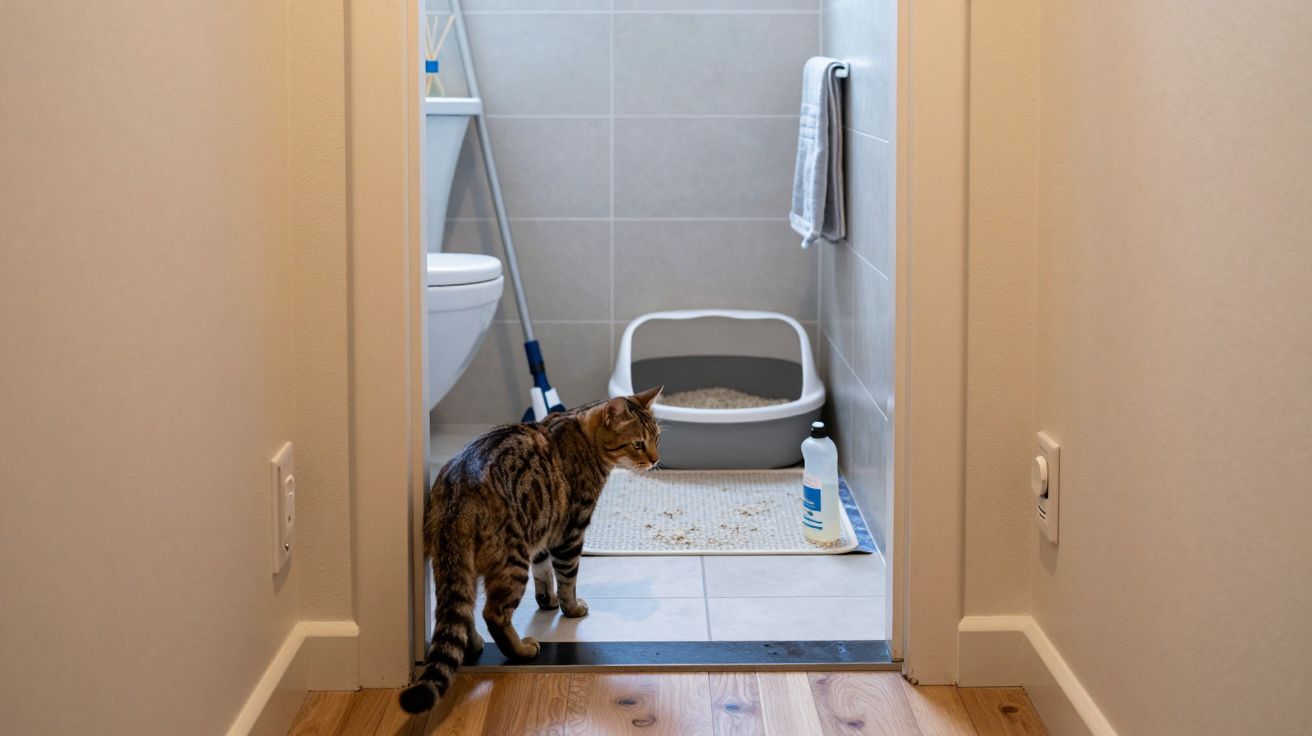
Why some cats suddenly reject their litter tray – and the quiet household change often to blame
You think you’ve cracked it. The new sofa has survived, your favourite rug is still innocent, the cat is using the tray like a pro. Then, overnight, something shifts. The same cat who has dutifully dug and buried for years suddenly squats in the hallway or behind the TV. You scrub, you mutter, you Google. The tray is still there, the litter looks the same. What on earth changed?
We tend to talk about litter problems as if cats wake up one day and become “naughty”. In reality, they’re closer to small, furry health-and-safety officers. When they stop using the tray, it’s usually because something in their world has stopped feeling safe, private or familiar. The twist is that one of the most disruptive changes is often one we barely register ourselves.
The invisible trigger living in your bathroom cupboard
Most people know the obvious culprits. A new baby, a second cat, a move to a different flat. We brace for those. What many owners never consider is that the quiet, well-meant tweaks to how our home smells can matter just as much as a house move to a cat.
Plug‑in air freshener in the hallway? New, “extra fresh” clumping litter with built‑in fragrance? Scented bleach in the downstairs loo because you were on a cleaning spree? To a feline nose that can out‑smell a dog’s dinner from two streets away, that’s not background. That’s a chemical fog layered exactly where they are supposed to relax, dig, wee and walk away.
Cats build a mental map of their territory using scent as the backbone. They rub their cheeks on door frames, furniture and even you to lay down familiar markers. When we drench those areas in powerful artificial fragrances, we don’t just “freshen up”. We erase their map. The litter tray, which used to smell faintly of them, now smells like a pine‑scented car wash.
It’s not a moral failing when a cat decides to reroute to the quiet spare room carpet instead.
When “clean” feels hostile to your cat
Owners often respond to the first accident in the most human way possible: clean harder, spray more, scrub with the strongest product in the cupboard. The house smells reassuringly like disinfectant; we feel we’ve taken back control. For the cat, each deep clean with citrus, chlorine or floral scents turns one more corner of the flat into a no‑go zone.
Behaviour vets talk about “scent stress”. It isn’t a diagnosis you’ll find on a lab form, but you can see it in living rooms across the country. A cat hesitates before stepping into a recently bleached bathroom. It sniffs the tray, backs away, and starts grooming instead – a displacement behaviour, the animal equivalent of scrolling on your phone to avoid an awkward conversation.
The paradox is brutal. We’re trying to keep the tray immaculate, to be a responsible owner. The cat sees the same efforts as an escalating threat. Their instinct says: find somewhere neutral, somewhere that doesn’t scream of chemicals, to do something as vulnerable as weeing. Carpets, laundry piles and the guest bed suddenly become very attractive real estate.
Once you see that your notion of “clean” can collide with their notion of “safe”, a lot of puzzling accidents start to make more sense.
Small change, big protest: how litter tweaks backfire
The litter itself can be a quiet saboteur. Manufacturers promise better clumping, less odour, “fresh breeze” pellets that lock in smells. Shelves glitter with options. It’s tempting to swap brands as soon as you see a discount or a new label. To a cat, that’s like moving the bathroom and changing the flooring overnight, with no warning.
Cats rely on texture and scent to recognise the right toilet spot. A sudden shift from fine, sandy clay to sharp, woody pellets can feel like walking on gravel with bare feet. Adding perfume is worse. What we call “fresh”, their far more sensitive system reads as harsh, overpowering and impossible to ignore. Some simply grit their teeth and use it. Others quietly opt out and head for whatever soft surface matches what they remember: bedding, towels, your favourite jumper.
The most common pattern behaviourists see is this:
- New litter or “deodoriser” is introduced.
- Cat sniffs, maybe uses it once, then stops going near it.
- Owner assumes a medical issue or “spite”.
- Accidents appear in quiet corners that smell of… nothing much at all.
The trigger isn’t drama. It’s a ten‑second pour from a bag or bottle.
Reading the first warning signs before the carpet suffers
Cats rarely go from “perfect tray habits” to “full household revolt” in one leap. They leave smaller clues that their relationship with the litter area is souring. We just don’t recognise them as a negotiation until the puddles appear.
Common early hints include:
- Perching with all four paws on the edge of the tray, as if the litter itself is lava.
- Digging and circling for longer than usual, then leaving without toileting.
- Using the tray for wee but choosing a different place for poo, or vice versa.
- Visiting the tray more often but producing very little, then going elsewhere later.
If these changes appear right after you’ve deep‑cleaned with a new product, moved a plug‑in near the tray, changed litter brand, or shifted the tray closer to the washing machine, treat that timing as a neon sign. The cat is quietly telling you the set‑up no longer feels right.
Many owners only seek advice once it has turned into a months‑long stand‑off. Rewinding the last few weeks and being honest about what you altered in your cleaning routine or “home fragrance” habits is often the missing piece in the puzzle.
Resetting the bathroom: how to undo the damage
Fixing litter problems caused by scent and cleaning habits is less glamorous than buying a fancy new covered box, but it’s usually where the real progress lies. Think of it as stripping the set back to something your cat recognises as normal.
Start with the products:
- Drop strong, scented cleaners in rooms with trays. Use unscented enzyme cleaners for odour removal instead.
- Move plug‑ins, reed diffusers and scented candles well away from litter areas and favourite resting spots.
- Skip the “litter fresheners” that promise to mask smells. If you can smell them, your cat is overwhelmed by them.
Then, look at the litter itself:
- If you recently changed brand, go back to the old one for a while, even if it felt inferior to you.
- If you don’t remember which one you had, choose an unscented, fine‑grained clumping litter and change gradually, mixing old and new over several days.
- Keep the depth generous – many cats like 5–7cm – so they can dig and bury without scraping plastic.
Next, adjust the physical set‑up:
- Offer at least one more tray than you have cats, in different, quiet locations.
- Avoid putting trays next to noisy appliances or doors that people constantly walk through.
- Skip tight, hooded trays for now; they trap smells and make unpleasant scents more intense.
Most households see a change within days of removing the overwhelming smells and textures. Some cats need a slower desensitisation: scattering a little of their used litter in the new tray, or even putting a soiled tissue from a previous accident in there, helps them understand “this is the toilet, not an ambush”.
When it’s not just the cleaning spray
There is one important caveat. Sudden litter tray avoidance can also be a red flag for pain or illness. A cat with cystitis, kidney disease or arthritis may start associating the tray with discomfort and hunt for softer, closer or warmer spots instead. Anxiety from neighbours’ cats at the window, building work, or family upheaval can all play a role too.
The tricky bit is that physical pain and scent stress often tangle together. A cat with a sore bladder becomes picky about anything that makes the toilet experience worse – harsh smells, slippery textures, noisy corners. We remove the scent barriers and half the problem lifts; the other half still needs a vet.
So, if:
- Your cat strains, cries or passes blood in urine.
- You see them going to the tray repeatedly with little result.
- They’re older, stiff or suddenly drinking more.
then changing cleaning products is not enough. They need a health check, urine tests, possibly blood work. Fixing the environment and the medical issue together is what gets you back to dry floors and a relaxed, digging cat.
Using your nose differently
Living with cats means accepting that your idea of a nicely scented home and their idea of a secure, predictable territory will not always match. The household “freshening” that makes you feel in control can quietly convince them that their bathroom has become enemy territory.
The aim is not to give up on hygiene, or to tolerate a permanently musty hallway. It is to use the powerful tools we have – cleaners, deodorisers, laundry fragrances – with a bit more strategy. Neutralise odour where it matters to you, leave litter zones boring and familiar, and let your cat’s own scent do some of the work.
Once you stop asking your cat to choose between their bladder and your new plug‑in, the litter tray stops being a battleground. It goes back to what you wanted all along: a dull, unremarkable corner of the house that quietly does its job.
FAQ:
- Is fragrance‑free cleaning really that important for cats? For many cats, yes. Their sense of smell is far more sensitive than ours, and strong, lingering scents around the litter area can be enough to push them to find alternative spots, even if the products are technically “pet safe”.
- Can I ever change litter brands without causing problems? You can, but change slowly. Mix a small amount of the new litter into the old over a week or two, increasing the proportion gradually. Watch your cat’s behaviour; if they hesitate or avoid the tray, slow down or revert.
- Do covered litter trays help with smell and accidents? They can help you smell less, but they often intensify odours for the cat and trap cleaning product fumes. If you’re dealing with avoidance, start with open trays in quiet spots and only reintroduce covers once your cat is consistently using them.
- What’s the quickest way to clean accidents so the cat doesn’t return there? Blot up as much as possible, then use an unscented enzyme‑based cleaner specifically designed to break down urine. Avoid bleach and strong fragrances, which can either attract some cats back or make them mark nearby instead.
- How do I tell if the problem is scent stress or a medical issue? Timing and context help: if accidents start right after a change in cleaning routine or litter and your cat otherwise seems well, environment is a strong suspect. Any signs of pain, straining, blood, increased drinking or general behaviour change should trigger a prompt vet visit alongside environmental tweaks.

Comments (0)
No comments yet. Be the first to comment!
Leave a Comment