Why some EV owners now plug cars into their homes during blackouts – and what grid experts think
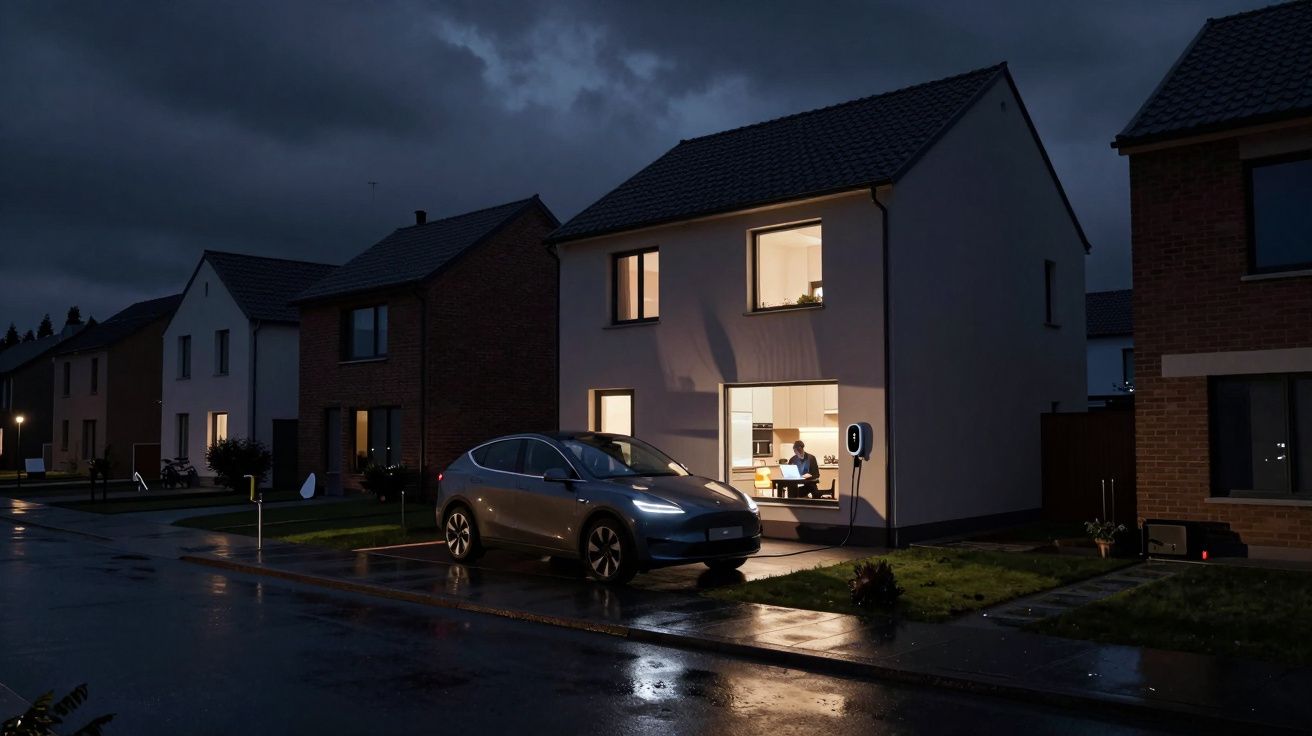
The house is dark except for the blue glow in the driveway.
Outside, an electric SUV sits quietly, cable running not from wall to car, but from car back into the house. In the kitchen, the fridge hums. A single lamp is on. Wi‑Fi, surprisingly, still works. The rest of the street is out. The neighbours peer through curtains, wondering how number 14 still has lights.
The owner taps an app: remaining range 210 miles, estimated “home backup” time 9 hours. For now, it’s not a car. It’s a battery.
This scene, once a niche demo from tech shows in Japan or California, has started to appear in corners of the UK and Europe. Early adopters are quietly using their electric vehicles not only to charge at home, but to keep homes running when the grid blinks. Grid planners are watching carefully, somewhere between curiosity and caution.
From “car that charges” to “car that powers”
Most people know the classic direction of travel: electricity flows from grid to home, then on to the car. Plug in at night, wake up to a full battery. Neat, contained, predictable.
Bidirectional charging flips that logic. Certain EVs and certain chargers now allow energy to move both ways. On a normal day, that means you might charge when power is cheap and feed some back when it’s expensive. During a blackout, it means your car can become the biggest power bank you own.
Two technologies matter here:
- Vehicle‑to‑Home (V2H): the car powers your own home circuits.
- Vehicle‑to‑Grid (V2G): the car feeds electricity back into the wider grid when asked.
Car makers like Nissan, Hyundai and Kia have models with some form of bidirectional capability. Several home charger brands now ship “V2X‑ready” units. Yet the number of households actually using their cars as back‑up power is still tiny.
So why do those who can, do it?
For many owners, the car is less a gadget and more a quiet insurance policy: if the lights go out, they don’t lose the freezer, the work call, or the boiler controls.
Why some drivers now rely on their EVs in blackouts
Motivations tend to cluster around a handful of themes. None involve sci‑fi fantasies. Most are painfully practical.
1. Keeping essentials alive, not running a festival
When people talk about “powering my home from the car”, they rarely mean the whole house at full blast. Grid engineers cringe at that image anyway. What they actually do is pick essentials and design for them.
Typical priorities:
- Fridge and freezer, to avoid food loss.
- A few LED lights in main rooms.
- Wi‑Fi router and phone chargers.
- Gas boiler controls or heat pump electronics.
- Possibly one laptop or TV.
A mid‑size EV battery holds around 60–80 kWh of energy. Used frugally, that can cover a typical UK home’s essential loads for one or two days, sometimes longer. The emotional impact is outsized. Cooking by normal light, keeping children entertained, being able to work – all feel different when the rest of the street is dark.
Owners describe it less as luxury, more as “not being thrown back twenty years every time the power trips”.
2. Filling the gap left by a shaky grid
In some rural areas, and increasingly in coastal regions facing more frequent storms, blackouts are not abstract. They happen a few times a year, sometimes for hours. Diesel generators used to be the go‑to backup. They are loud, smelly, and depend on fuel deliveries that may arrive precisely when roads are blocked.
An EV parked outside is a ready‑made alternative. It is already there. It is already charged for daily use. Paired with a compatible home system, it becomes a silent generator that does not need to be pulled from the shed and coaxed into life in the rain.
For households with medical equipment, remote work commitments, or simply low tolerance for spoiled food and cold evenings, that shift feels obvious. They did not buy the EV solely for resilience, but once they have it, not using the battery for this seems wasteful.
3. Squeezing more value from an expensive asset
From a financial perspective, the car is the second‑largest purchase in most families, after the home itself. For EVs, much of that cost sits in the battery. Letting that energy sit idle on the drive while you pay peak rates from the grid feels increasingly odd to some owners.
With smart tariffs, a pattern appears:
- Charge the EV at night when prices are low.
- Use some of that stored energy to run the home in early evening peaks.
- In a blackout, use it as an emergency source without the need for a separate home battery.
It is not free money – there are losses, tariff swings and hardware costs – but for certain households, especially those with solar panels, the numbers begin to make sense. The car is no longer just a vehicle; it’s part of the household energy system.
How the technology actually works at home
The videos you see online of extension leads dangling out of boots tell only part of the story. Grid engineers will tell you they also show what not to do.
There are three main ways EV owners currently power “the home”:
Simple vehicle power outlet (V2L)
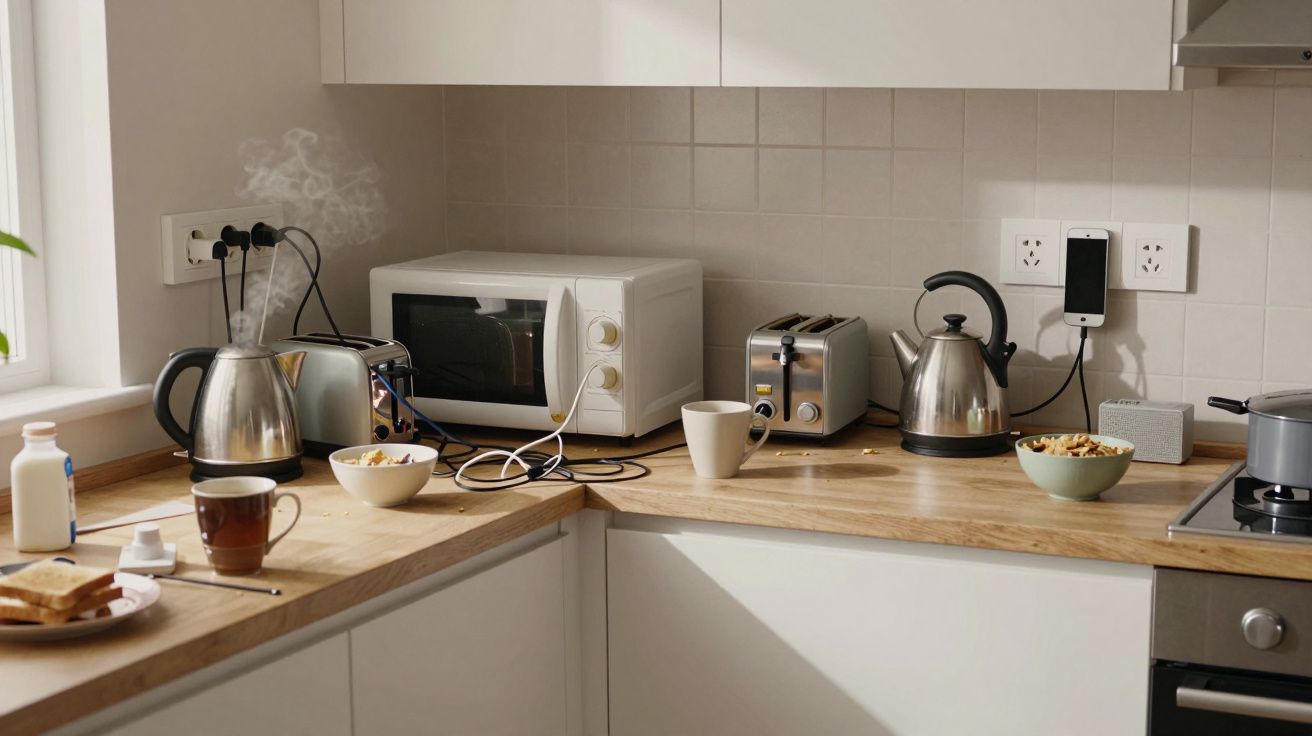
Some EVs come with a standard 230V socket or an adaptor. You can plug in individual devices – a kettle, a laptop, a small heater. This is the easiest option and doesn’t touch the house wiring at all. It’s also the least powerful and most hands‑on.Dedicated backup socket on a home charger
Certain bidirectional chargers include an isolated backup outlet that only becomes live during an outage. Essential devices can be plugged in or connected through a small sub‑panel. This keeps things relatively simple for electricians while staying safe.Full Vehicle‑to‑Home integration
Here, the EV connects through a certified bidirectional charger into the home’s consumer unit. In a blackout, an automatic switch isolates the house from the grid and lets the car supply selected circuits. This is the most seamless and most expensive option, requiring careful design and sign‑off.
In all three cases, one principle is non‑negotiable: the home must be securely disconnected from the wider grid during a blackout.
Back‑feeding power into a dead line where engineers are working is not just illegal. It is lethal.
Proper V2H systems include hardware that prevents this. The “DIY cable from car to random socket” approach does not, and grid experts are clear about where they stand on that.
What grid experts like – and fear – about EVs feeding homes
At first glance, millions of flexible, mobile batteries look like a planner’s dream. They could soak up excess wind at night, feed homes during peak TV hours, and generally smooth lumps in the system. That is why so many pilot projects exist.
Yet when you speak to grid operators and energy modellers, the enthusiasm comes with caveats. Their thoughts tend to fall into three broad buckets.
1. Flexibility and resilience, if used with discipline
From a system perspective, every kilowatt not demanded at the exact moment of peak stress is a tiny victory. If households routinely use their EVs to avoid drawing heavily at those times, network strain falls. Local transformers breathe easier. Expensive peaking plants run less.
During storms or major faults, cars able to power homes can also reduce the human impact of outages. Fewer emergency calls, less need for vulnerable people to be relocated, more room for engineers to fix big issues first.
Grid planners like that. But they stress the word “routine”. For the benefits to show up at scale, behaviour must be predictable enough to plan around, not just the occasional blackout trick.
2. New patterns of demand that could cut both ways
If tariffs and apps nudge everyone to charge and discharge at the same times, new peaks can appear. Imagine millions of EVs starting to recharge at 11 p.m. sharp because that is when the cheap window opens, or all deciding to sell power at 6 p.m. because that is when prices spike.
Without smart staggering and clear signals, the system could end up with sharper edges, not smoother ones. Distribution networks – the local cables and substations in your area – were not built with such synchronised swings in mind.
Experts advocate for:
- Dynamic tariffs that spread behaviour over time.
- Charger controls that can respond to grid‑wide requests.
- Clear rules so cars do not all act as tiny, uncoordinated traders.
The dream is orchestration, not chaos.
3. Battery wear, standards and who holds the risk
One of the more persistent worries is what all this in‑and‑out flow does to the car battery. Every cycle takes a microscopic bite out of battery life. Use the car as a second home battery every day, and those bites add up.
Manufacturers are split. Some explicitly warranty V2H and V2G use within set limits. Others warn that unsupported bidirectional use could void parts of the guarantee. Grid experts point out that if policy wants cars to stabilise the system, then warranties and incentives need to align.
Standards are still maturing. Different cars and chargers use different communication protocols. Emergency cut‑off behaviour varies. Installers must navigate not just electrical safety, but data and control rules. It is workable today for motivated households, but not yet plug‑and‑play for everyone.
Everyday trade‑offs for households
Beyond the technical charm, EV owners considering V2H face very human questions. Grid planners quietly ask the same, just with bigger numbers.
The main dilemmas
How much range are you willing to “spend” on your house?
If the car powers the home overnight and you need to drive 150 miles early next morning, you must trust the system – or wake up early to recharge.What happens if a blackout coincides with an already low battery?
The comfort of backup power depends heavily on keeping the car reasonably charged most of the time. That nudges daily habits.Is the cost of the hardware worth the peace of mind and tariff gains?
Bidirectional chargers and installation remain pricier than standard units. For some, they pay back through smart use and avoided generator costs. For others, a few candles and a power bank remain the rational choice.
Grid experts frame it this way: not every home needs to become a micro‑grid. The priority is that those who do connect in this way do it safely and in a way that supports, rather than complicates, the wider system.
What this could mean for the future of the grid
Step back, and EVs that feed homes during blackouts are one piece of a broader shift. Power is no longer something that only flows downhill from a few big plants. It is starting to slosh sideways between rooftops, batteries, cars and neighbourhoods.
If managed well, this brings three quiet advantages:
Resilience spread out, not concentrated
Instead of relying purely on central backup, each street hosts hundreds of small buffers. No single failure collapses everything.A gentler, more “breathable” grid
Flexible demand and storage take the sharpness out of peaks. That eases the path to more wind and solar, which arrive when they choose, not when we flip a switch.New roles for homes and drivers
Households move from passive consumers to active participants. That carries responsibility, but also potential rewards in lower bills and greater control.
The risks are real: poorly controlled back‑feeding, brittle software, unfair access if only wealthier homes can afford the hardware. Grid experts return to the same trio: standards, incentives, and education. Get those right, and the idea of your car quietly keeping the lights on during the next storm may feel less like a party trick and more like the new normal.
The EV on the drive is no longer just a way to get you from A to B. For a growing number of households, it is also Plan B when the grid says no.
Snapshot: where things stand now
| Topic | Today | Direction of travel |
|---|---|---|
| Availability | Limited to certain EVs and chargers | More models and V2H‑ready units each year |
| Cost | Higher upfront than standard smart chargers | Expected to fall as volumes grow |
| Rules & standards | Patchwork, evolving across regions | Towards clearer safety and grid codes |
FAQ:
- Can any electric car power a home during a blackout? No. Only EVs with bidirectional capability (and suitable chargers) can safely supply home circuits. Many current models are charge‑only.
- Does using my EV for home backup ruin the battery? Occasional V2H use at moderate depths of discharge is unlikely to be dramatic, but frequent cycling will add wear. Check your car’s warranty and aim for shallow, not full, cycles.
- Is it legal to feed power back into the grid from my car? In the UK and many European countries, V2G is allowed but tightly regulated. You typically need approved equipment, registration with your network operator, and sometimes participation through an aggregator.
- What about simple extension leads from the car’s socket? Using a built‑in vehicle outlet to run a few devices is generally fine if you respect the power limits. Back‑feeding the house via improvised cables is unsafe and can endanger grid workers.
- Will my street become unstable if everyone does this? If managed through smart tariffs and proper standards, widespread V2H and V2G can actually help stabilise local networks. The risk comes from unmanaged, synchronous behaviour, which is why planners focus on coordination.

Comments (0)
No comments yet. Be the first to comment!
Leave a Comment