Why some UK towns are quietly restricting Sunday lawn mowing – and how residents are reacting
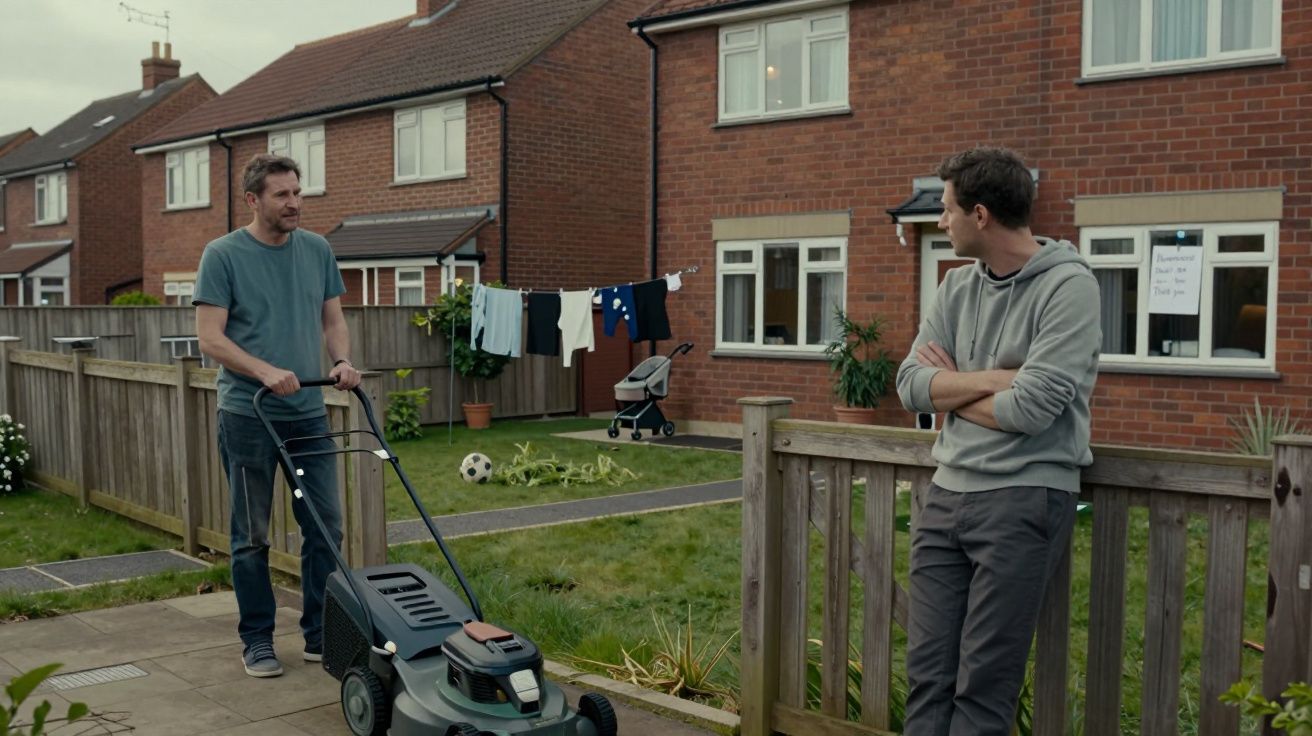
The mower coughs into life, a bright red dot on a strip of semi-detached green. It’s barely gone three on a Sunday afternoon and already a curtain twitches two doors down. Somewhere behind double glazing, a baby half-wakes. A football match on TV is nudged aside by that high, insistent whine.
A decade ago this would have been background noise, part of the weekend soundtrack between church bells and the smell of burnt sausages. Now, in a growing number of UK streets, it’s being treated more like a minor breach of the peace. Not always by the council, and rarely by the police – but by notices in communal hallways, clauses in leases, and fresh lines in parish newsletters that sound oddly stern for something involving grass.
The result is a patchwork of quiet rules that stop short of national law yet change how people use their gardens. And they’re starting to test what “a peaceful Sunday” really means in a country where DIY and a clipped lawn are still stitched into the culture.
The slow spread of “quiet hours” for gardens
The UK doesn’t have a nationwide ban on Sunday mowing. What it has instead is a tangle of softer controls: local “good neighbour” codes, housing association policies, management-company rules on new-build estates and, in a few cases, church-adjacent bylaws that ask for silence at set times.
On a new estate outside Peterborough, residents in a managed development received a letter last spring. No power tools, including petrol mowers and strimmers, between 1pm and 4pm on Sundays, it said. The managing agent cited “amenity” and “noise expectations” from the original planning consent. Fines were mentioned, delicately.
In parts of Surrey and Cheshire, some residents’ associations have gone further, asking neighbours to keep powered garden tools off entirely on Sunday mornings. They’re not quoting the Bible. They’re quoting a mix of local noise guidance and what they call “modern rest needs” in homes where shift workers, young children and carers are playing schedule Tetris just to cope.
Here’s the underlying logic. Councils already have powers to act on statutory noise nuisance – repetitive, intrusive sound at unreasonable times. But that’s a blunt tool, used mainly for all-night parties and drilling at dawn. The quieter wave is contractual: clauses in leases and covenants that treat loud mowers like any other disturbance, baked into the small print before you even pick up the keys.
Why Sunday mowing suddenly feels like a battle line
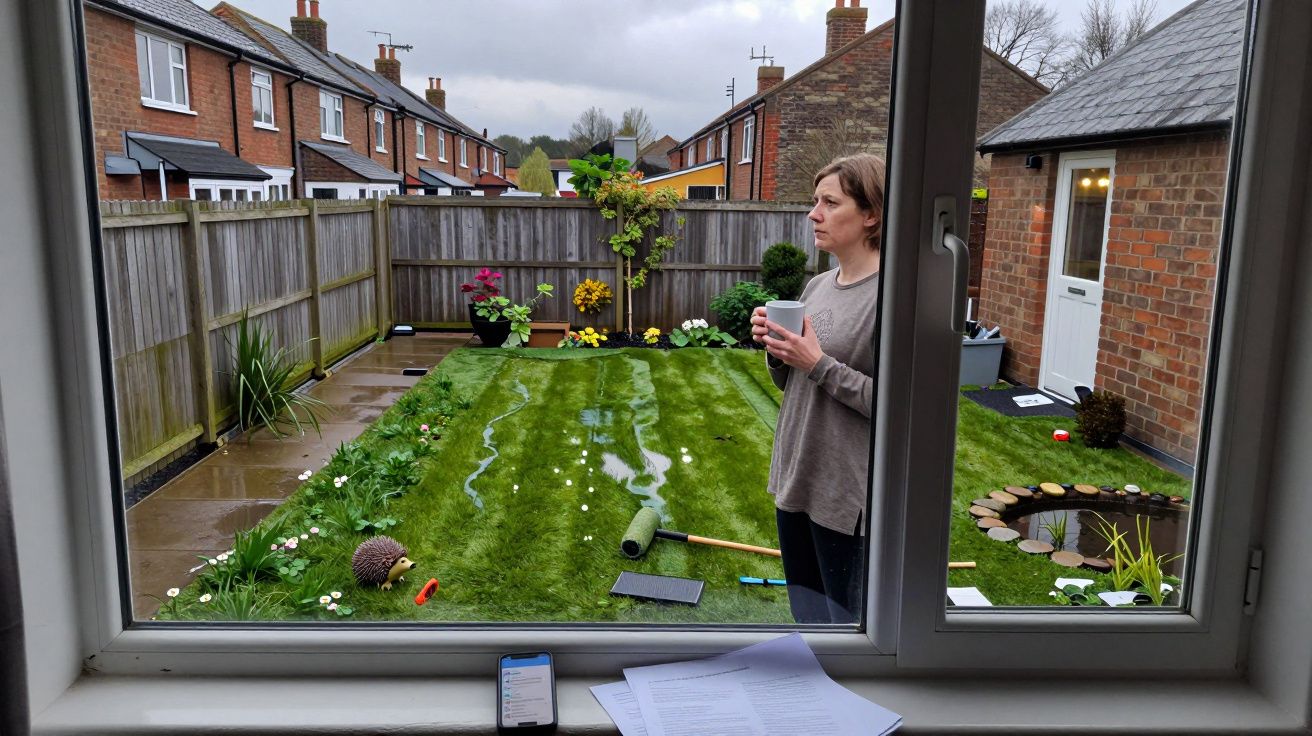
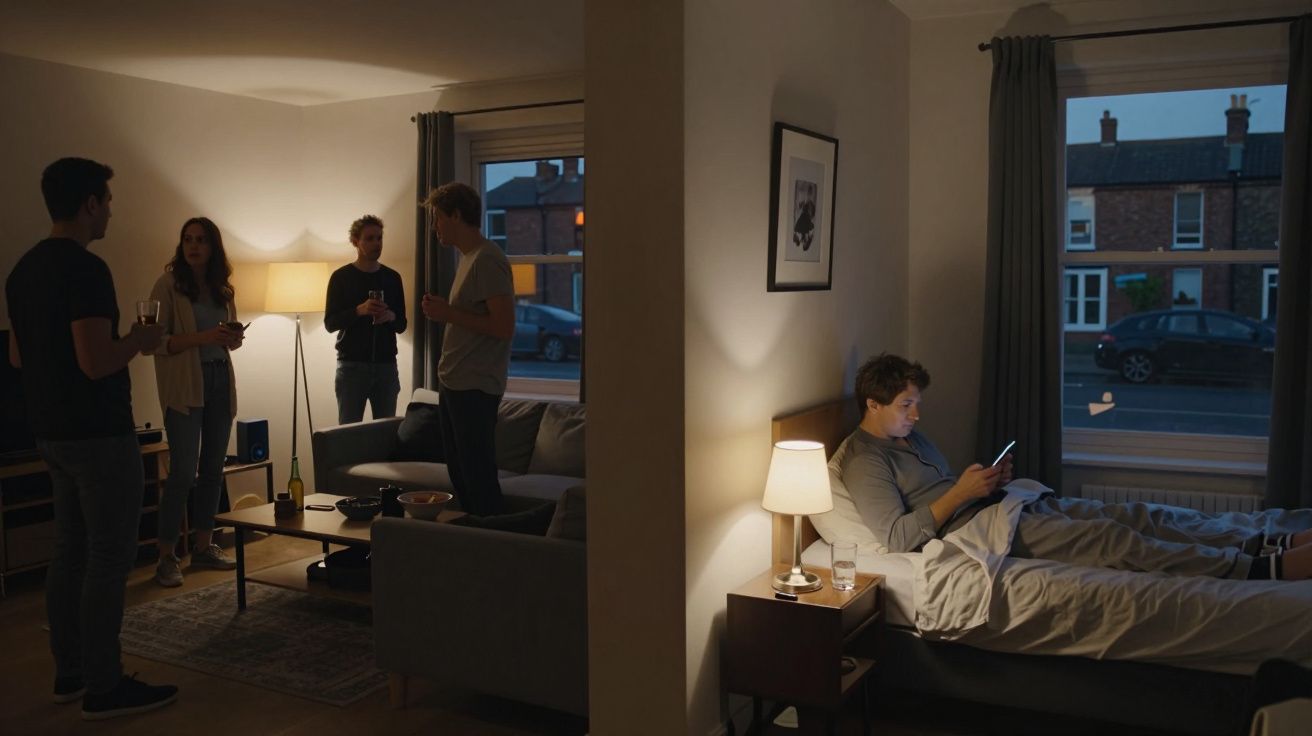
Listen long enough at a residents’ meeting and you’ll hear the same two stories tugging at each other. On one side is the person whose only free window is Sunday. They work six days, juggle the school run, and mow when they can. On the other is the neighbour who’s on nights, or caring, or simply craving a small pocket of guaranteed quiet in a week that never seems to stop.
In a cul-de-sac in Leeds, a nurse named Aaron found a note slid under his door: “Please respect Sunday quiet hours: no mower use after 1pm.” The phrase “quiet hours” wasn’t in his tenancy, just in a later “community charter” circulated by the landlord. He’d just done a back-to-back of late shifts and was trying to beat the rain. “I felt like I’d broken a rule I’d never agreed to,” he said, half-amused, half-angry.
Why now? Partly it’s density: more people sharing thinner walls, smaller gardens and closer fences. Partly it’s tech: cheap cordless kit has made weekday-evening mowing more feasible, so Sunday noise feels less “necessary”. And partly it’s culture. The old Sunday hush, once linked to church, has morphed into something more secular – a craving for one reliably gentler day in the week.
Overlay that with rising awareness of noise as a health issue – links to stress, sleep disruption, blood pressure – and you get a new language. Lawn care starts to appear in the same sentences as leaf blowers, motorbikes and late-night deliveries. It’s not that people suddenly hate lawns. It’s that they’re renegotiating the deal.
How local rules actually work – and where they overreach
The confusing bit is where these norms harden into written rules. In most of the UK, the council does not have a specific “no mowing on Sunday” ordinance. What you’ll find instead are three main levers:
- Planning conditions on new developments that refer to “residential amenity” and restricted construction hours, sometimes extended informally to garden machinery.
- Leases and covenants that ban “excessive noise” or “use of power tools” at specified times, interpreted by management companies or social landlords.
- Voluntary codes from residents’ associations or parish councils that ask for restraint during certain hours.
On one estate near Bristol, a managing agent tried to lump domestic mowing in with building works, emailing residents to say petrol mowers couldn’t be used on Sundays “as per construction noise guidelines”. Several homeowners quietly asked to see the clause. It wasn’t there. Within a month, the wording softened to a “polite request”.
That’s the crucial distinction. A politely worded leaflet asking you to avoid hedge trimmers during Sunday lunch is one thing. A threat of penalties for breaking a rule that never existed on paper is another. Yet in the fog between law, policy and custom, many people assume any firm-sounding statement must be binding.
If you’re told Sunday mowing is “not allowed”, it’s worth asking – calmly – for the exact source: tenancy clause, covenant, or council guidance. Sometimes there is one. Sometimes there’s just habit dressed up as law.
“We see the same pattern again and again,” says one community mediator in the Midlands. “A generic ‘no nuisance’ clause gets stretched to cover anything a neighbour finds annoying. The word ‘ban’ appears long before any actual legal basis does.”
How to keep your lawn – and your neighbours – on side
There’s a quiet middle ground between “I’ll mow whenever I like” and “I’d better let the grass go wild forever”. It starts with timing, kit, and a small dose of diplomacy.
First, the kit. Older petrol mowers and two-stroke strimmers are noticeably louder than newer, well-maintained machines or cordless electrics. A mid-range battery mower purrs rather than roars; for a flat lawn, a manual cylinder mower is almost meditative. Switching isn’t cheap, but it’s often the single biggest noise drop you can control.
Second, the clock. Most people who object aren’t bothered by a quick mid-afternoon pass on a summer Sunday. They’re bothered by a 9am start or an hour-long stop–start session right as they sit down for a rare nap. As a rule of thumb:
- Avoid early mornings and late evenings, especially at weekends.
- Keep Sunday mowing sessions short and predictable where you can.
- Rotate the “big jobs” – hedge trimming, strimming – to Saturdays, leaving Sundays for a quick tidy if needed.
Third, the conversation. Nobody really wants to knock on a stranger’s door and negotiate lawn habits. Yet a two-minute chat can blunt a lot of resentment. A simple “I’m on shifts, Sundays are often my only slot – I’ll keep it to half an hour after lunch, is that all right?” shifts you from faceless noise source to human being juggling life.
Common pitfalls are small but potent. Starting a full garden overhaul at 8.30am on a bank holiday. Leaving the mower running while you answer your phone. Treating headphones as a solution – they protect your ears, not anyone else’s. These are the moments neighbours remember when a letter about “quiet enjoyment” comes through the door.
We’ve all had that flash of irritation when the one hour of stillness we’d carved out gets chewed up by a motor. We’ve also all had a weekend where the grass was getting out of hand and the weather app showed one dry window: Sunday morning or nothing.
A compact checklist for low-conflict mowing
- Check your lease, covenant or estate handbook for any explicit time rules.
- If you can, pick a battery or manual mower to cut noise at the source.
- Avoid early and late slots; aim for mid-morning to late afternoon.
- Keep Sunday sessions short and let neighbours know if you’re doing a big job.
- If challenged, ask for the specific rule and propose a reasonable compromise.
When a simple lawn becomes a symbol
What’s striking about these small spats is how quickly they become about more than grass. For some, being told when they can mow feels like one more erosion of control over their own home, layered on top of parking rules, bin schedules and service charges that always seem to rise. For others, the refusal to shift even a little feels like yet another example of individual convenience trumping everyone else’s sanity.
In a terraced street in south London, a retired couple who loved a bowling-green lawn found themselves the focus of a tense WhatsApp thread after a neighbour posted a video of their 8.45am Sunday mow. “Some of us work nights,” one message read. “Could you just wait until 11?” The couple, who’d never been asked directly, only saw the screenshots weeks later. By then the story had hardened: “they don’t care”.
What’s at stake isn’t just noise. It’s the idea of Sunday as a pressure valve in a week where work seeps into evenings and phones never fully switch off. It’s the right to shape your own routine in a small square of liberty behind the house. It’s also, quietly, about class – whose schedules are seen as flexible, whose aren’t, whose idea of “normal” hours gets to set the baseline.
Local rules around mowing are, in that sense, a rehearsal for bigger questions about how we share close quarters without sharing the same lives. They ask whether freedom is “anything goes on my land” or “a bit of give each way so everyone gets some rest”. There’s no one script that fits every street.
What you can do, on your patch, is keep the gap between myth and reality small. Know what’s guidance and what’s enforceable. Invest in quieter tools if you can. Treat a neighbour’s request as data, not a declaration of war. And if you’re on the other side of the fence, remember that the person behind the mower might be squeezing their life into edges you can’t see.
| Issue | What’s really going on | Why it matters |
|---|---|---|
| “Sunday mowing is illegal” claims | Usually based on leases, covenants or local codes, not criminal law | Helps you separate polite requests from rules with teeth |
| Growing “quiet hours” talk | Mix of noise-health concerns and denser living, not just nostalgia | Explains why this is flaring up now, not in 1993 |
| Neighbour tensions | Clashing schedules and unclear rules more than malice | Points to conversations and small kit changes as fixes |
FAQ:
- Can my council actually ban Sunday mowing? Councils rarely issue blanket bans on domestic mowing. They can act on noise nuisance at unreasonable times, but most Sunday restrictions come from private leases, covenants or estate rules rather than direct council byelaws.
- What if my lease mentions “no power tools” at certain times? That clause can cover mowers and strimmers. If hours are clearly stated, they’re usually enforceable by the landlord or management company. You can still ask whether quiet electric tools outside those windows are acceptable.
- Are battery mowers really that much quieter? Typically yes. They lose the engine roar and often have better vibration control. Neighbours will still hear them, but the sound is less harsh and carries less, especially through closed windows.
- How should I respond to a neighbour’s complaint? Stay calm, listen, and explain your constraints. Offer a practical change – shifting your usual time, shortening sessions, or avoiding certain days. Ask if that would help; many people just want to feel heard.
- What if someone claims there’s a “ban” but won’t show it? Ask, politely, for the exact clause or document. If none appears, treat it as a request, not a rule. You might still choose to compromise for the sake of peace, but you’ll be doing so with clear eyes rather than under imagined legal threat.



Comments (0)
No comments yet. Be the first to comment!
Leave a Comment