Why UK winters may feel damper but not colder – and what this means for your heating habits
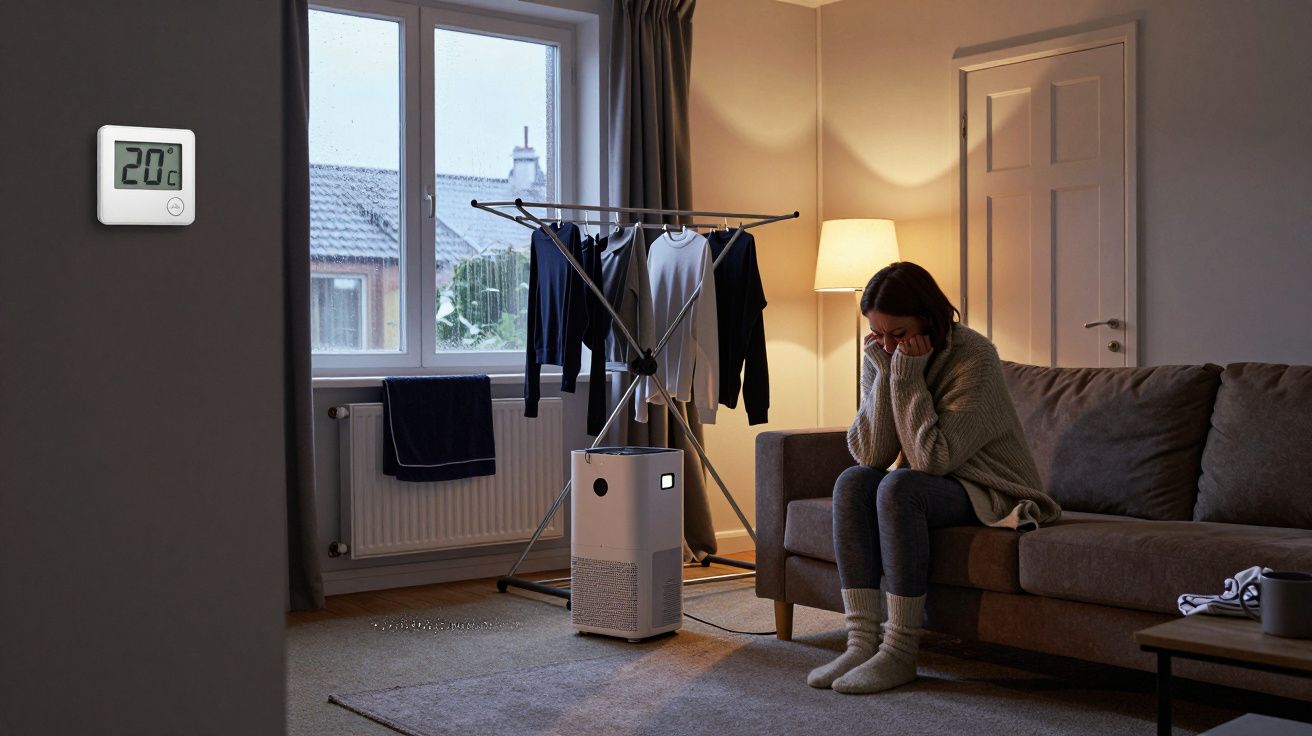
The forecast says “mild”, the thermometer agrees, and yet you sit on the sofa with numb toes, sleeves pulled over your hands. The air in the room is not icy, but it seeps into you in a way a crisp, sunny frost never does. Your windows are misted, your towel never quite dries, and your boiler is working harder than you planned.
Something feels off.
It is not just the temperature.
Behind that “damp cold” feeling sits a different kind of winter – one shaped as much by humidity, wind and insulation as by the number on the thermostat. And those details quietly dictate how high you turn the heating, how long you leave it on, and how much you end up paying for comfort that never quite lands.
When 8 °C does not feel like 8 °C
Meteorologists will tell you: UK winters have warmed over recent decades. The averages inch up. Frost days shrink. Statistically, many of our winters are milder than the ones people remember from childhood.
Yet lived experience does not care about annual means. It cares about today: the wet pavement, the wind that slices through your coat, the way your socks feel clammy even indoors. Two ingredients twist perception here – moisture and movement.
Humidity makes temperatures feel different because evaporating sweat is how your body self‑cools. In cold, damp air, nothing dries properly. Your clothes hold on to moisture. Your skin loses heat faster through conduction and convection. Add wind leaking through old windows, and 8 °C plus a breeze can feel sharper than a still 3 °C on a dry, bright day.
From a heating point of view, that mismatch matters. You may be heating to the same thermostat setting your parents used, but in a draughty, lightly insulated flat with higher background humidity. The room hits 19 °C on paper. Your body registers “bone‑deep chill”.
So you go up a degree. Then another.
The hidden role of damp in “never quite warm” homes
Walk into a house that is kept at 18–19 °C but feels cosy, and another at the same reading that feels miserable, and you are feeling damp more than heat. Moisture clings to surfaces, fabrics, and air. It steals warmth and mood in slow motion.
Common culprits are:
- Bathrooms with weak extraction.
- Drying clothes indoors on radiators.
- Single‑glazed or poorly sealed windows.
- Old solid walls without insulation.
- Under‑heated corners and box rooms that stay cold and clammy.
The physics is simple. Cold surfaces meet moist air, vapour condenses, and those cold, wet patches then pull more heat out of the room. You are effectively paying to heat the water you did not mean to store in the walls, windows and fabrics.
That is why “just whack the heating up” often disappoints. You are treating temperature, not moisture. Until the damp is managed, the house will keep swallowing warmth and giving you very little comfort back.
Why our heating habits have not caught up with the weather
Most people’s idea of “normal” winter heating was set in childhood. The background script might sound like:
- “We put the heating on in October and off at Easter.”
- “We only heat in the morning and evening.”
- “The house should be 21 °C in winter, otherwise it is cold.”
- “Electric heaters are always a waste of money.”
Those rules were written in a different building stock, a different energy market, and often in a different climate. Yet they stick. When bills spike or the weather shifts, we tweak around the edges – one extra jumper, ten minutes less in the shower – but keep the skeleton of the same routine.
Psychologists would call this a “mental model”. It feels safe because it is familiar, not because it works. In practice, a 1930s semi in the North East, a new‑build flat in Manchester and a Victorian conversion in London all behave differently in damp, windy, mild‑ish winters. Keeping one rigid heating script across all of them is like wearing the same coat for a drizzle in Brighton and a blizzard in Dundee.
What the last few winters have exposed, especially with high energy prices, is how many UK households are running their homes on autopilot settings that no longer make sense for the mix of dampness, insulation, and cost they are actually living in.
Three typical “damp winter” patterns – and what they cost you
Across housing surveys and energy advice lines, three broad behaviours repeat. None of them is foolish. All of them have side‑effects you can quietly adjust.
1. The “blast and freeze” household
Heat goes on full blast once or twice a day, often morning and evening, then off completely. Radiators run hot, rooms feel pleasant for an hour, then the chill creeps back with a vengeance. Clothes never quite dry. Black mould lurks behind furniture.
What sits underneath is usually a fear of “wasting heat” by keeping it on in the background. In older, leaky homes that drop several degrees between heating periods, this stop‑start pattern can use more energy than a gentler, longer, lower setting because you are constantly reheating cold walls and floors.
A small shift: slightly longer heating windows at a lower thermostat setting, plus closing doors to keep warmth where you are, can leave the house more stable and less damp for the same or less gas used.
2. The “always on, always low” approach
The boiler hums at 17–18 °C 24/7 “to keep the chill off”. It feels civilised, and in very well‑insulated homes it can be efficient. In many UK properties, though, the reality is different: under‑heated corners, unused rooms, and steady background energy use for spaces nobody is in.
What drives this pattern is often the story that if you let a house get cold, it takes “ages and loads of money” to warm up again, so you must never let it drift down. That can be true in some cases, but is not universal. In a typical semi or terrace with modest insulation and modern controls, zoning and time‑programming usually beat constant low for cost.
A small tweak: using programmable thermostats and thermostatic radiator valves to focus that gentle background warmth only on the rooms you actually occupy, and allow other spaces to drop safely to 14–16 °C.
3. The “jumper martyr” with the cold, damp flat
At the other end are people who hold out as long as possible, driven by bill anxiety or eco‑guilt. They push through with hot water bottles and thick socks while the indoor temperature dips well under 16 °C, especially in bedrooms and bathrooms. Air gets damp, windows drip, towels smell musty, and everyone feels constantly tired.
This is not resilience; it is self‑protection backfiring. Very cold, damp air increases the risk of respiratory issues and can worsen arthritis, low mood and sleep quality. A house that never gets warm enough for long enough also never properly dries out.
The humane adjustment is not “turn everything up to 22 °C”. It is making sure key rooms – living room, main bedroom, bathroom – get to and stay at roughly 18–20 °C for parts of the day, and tackling moisture so the heat you do pay for goes somewhere useful.
Rethinking comfort: temperature, humidity, and where you are in the house
Instead of treating “cosy” as a single number, it helps to think in three layers: actual temperature, humidity, and how you use your rooms.
Layer 1: Aim for ranges, not perfection
Public health guidance in the UK still points to around 18 °C as a safe minimum for most healthy adults when dressed for the season, with warmer targets for babies, older people and those with certain health conditions. Above roughly 21–22 °C, heating costs tend to climb sharply.
A practical, damp‑aware range:
- Living spaces: 18–21 °C when in use.
- Bedrooms: 16–19 °C, depending on preference and bedding.
- Unused rooms: 14–16 °C to avoid deep chill and condensation.
The key is consistency. Rooms that swing wildly between 13 °C and 21 °C invite condensation each time they cool and the moist air hits cold surfaces.
Layer 2: Keep an eye on humidity, not just heat
Most homes feel comfortable with relative humidity between about 40% and 60%. Above that, fabrics stay clammy, dust mites and mould thrive, and your perception of cold sharpens.
You do not need gadgets to start. Look for:
- Persistent condensation on windows several hours after waking.
- Mould spots on external walls or behind wardrobes.
- Musty smells in corners and cupboards.
- Towels still damp the next day.
If these show up, treating damp is as important as nudging up the thermostat. Extractor fans that actually get used, short “shock” ventilation (opening windows wide for 5–10 minutes), lids on pans, and using a clothes airer in one heated, ventilated room rather than radiators all reduce the moisture load.
In stubborn cases, a small dehumidifier can make a cold‑feeling room tolerable at a lower temperature, because dry air simply feels warmer on the skin.
Layer 3: Put heat where your body actually is
Open‑plan ideals collide badly with UK winters. Heating the whole downstairs to 21 °C because you are sitting still in one corner is expensive and often unnecessary.
Small behavioural tweaks help:
- Closing doors to create “winter zones” – a warmed core of the home.
- Moving reading chairs or desks away from external walls and big windows.
- Using heavier curtains at night, pulled fully across.
- Setting different radiator levels room by room rather than “one size fits all”.
You are not trying to win an Architectural Digest photoshoot. You are trying to feel human in February.
Tiny experiments to reset your winter script
Lectures about “turning your thermostat down” rarely change habits. What does is noticing how your current routine actually feels and what it costs you, then trying small, low‑risk experiments.
Over one week, you could:
- Track two numbers once a day: the thermostat reading in your main room and how you would rate your comfort out of 10. No judgement, just data.
- Pick one damp hotspot – bathroom, drying rack corner, or a mould‑prone wall – and focus on moisture there: better extraction, shorter showers, or trialling a dehumidifier.
- Test one heating tweak: later start but longer run in the morning, or a slightly lower set‑point plus closed doors, or turning off radiators in genuinely unused rooms.
The goal is not a perfect spreadsheet. It is discovering that comfort is more flexible – and more under your control – than the old family rules suggest.
You may find that 19 °C in a drier, less draughty living room feels better than 21 °C did last year. Or that running the heating a little longer on very wet days but easing off on bright, still ones leaves both your body and your bill calmer.
Turning “damp and miserable” into “mild and manageable”
UK winters are changing. They are, on average, less icy than the memory‑rich stories suggest, but often wetter, windier and more unpredictable. Our buildings are a patchwork of eras. Our habits are stitched from inherited rules, fear of bills, and simple guesswork.
You do not have to rebuild your house or become obsessed with hygrometers. You can start smaller.
- Treat damp as a comfort problem, not just a cosmetic one.
- Let go of rigid heating scripts that belonged to a different decade.
- Aim for steady, adequate warmth in the rooms you live in, instead of bursts of heat across the whole house.
- Use doors, curtains, ventilation and, where needed, dehumidifiers to make the most of every kilowatt you pay for.
In a mild, damp winter, the question quietly shifts from “How cold is it?” to “Where is the cold coming from, and what am I really heating?” Once you start listening to that difference, your thermostat setting becomes less of a fight and more of a choice.
FAQ:
- Why do I feel colder at home than outside on some winter days?
Outside, you are moving, often dressed better for the weather, and your skin is in drier air. Indoors, sitting still in slightly damp, draughty rooms, your body loses heat faster even at higher temperatures. Humidity and air movement, not just the number on the thermostat, shape that sensation.- Is it cheaper to keep the heating on low all day or to turn it on and off?
It depends on your insulation and controls. In many typical UK homes, using programmable timers and only heating rooms when needed is more efficient than 24/7 low‑level heating. Very well‑insulated homes may benefit from “always on, always low”. The building, not the myth, should decide.- What indoor temperature should I aim for in winter?
For most healthy adults, 18–20 °C in living spaces is a sensible target, with slightly cooler bedrooms if you prefer. Older people, babies and those with some health conditions may need warmer rooms. Consistency and managing damp matter as much as hitting a precise figure.- Will ventilating not just let all the heat out?
Brief, wide‑open ventilation (5–10 minutes) dumps moist air and brings in drier air that is easier and cheaper to heat. Trickle vents or windows left on the latch for hours in a cold spell can waste heat without giving the same fresh‑air benefit.- Are dehumidifiers really worth it in a damp UK winter?
In very damp homes, a modest dehumidifier can make rooms feel warmer at a lower thermostat setting and reduce mould risk. It is not a substitute for fixing leaks or improving extraction, but it can be a practical tool in the mix, especially in bathrooms, drying areas and north‑facing rooms.





Comments (0)
No comments yet. Be the first to comment!
Leave a Comment