Why you wake up at 3am and stare at the ceiling – and the counter‑intuitive tactic sleep psychologists recommend
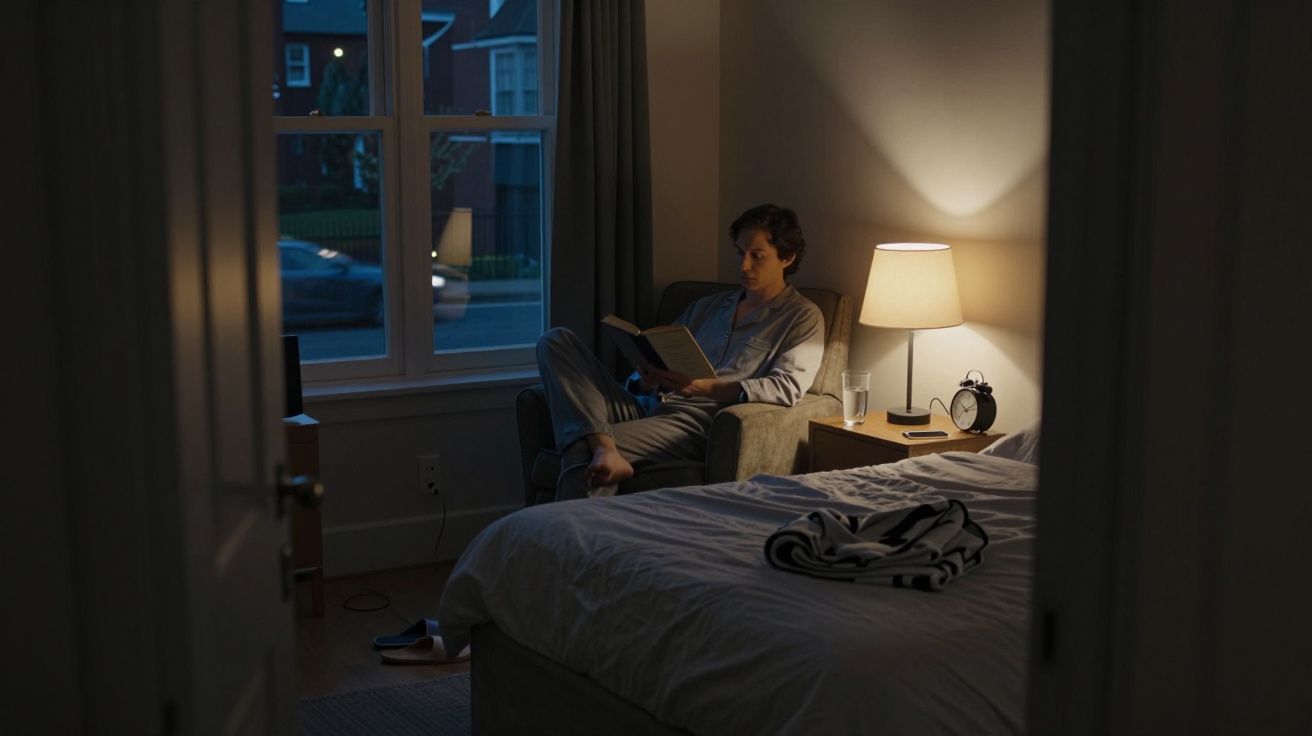
03:07, your phone face down on the bedside table, the room washed in that grey-blue darkness that makes everything feel slightly unreal. The heating has clicked off. A car passes outside and the light moves briefly across the ceiling. Your eyes are wide open, again. You know the script: a glance at the clock, a quick calculation of “if I fall asleep now, I’ll get…”, and the quiet rise of dread in your chest.
This is the 3am club. Nobody asked to join. And yet so many of us lie there, stock‑still, bargaining with our own brains as if they were toddlers mid‑tantrum. You do not feel dramatic. You feel tired and slightly trapped in your own skull. Something has to give.
Sleep psychologists have a name for this pattern: middle‑of‑the‑night insomnia. And the tactic they recommend to break it feels all wrong on first reading. It asks you to stop trying so hard to sleep.
What is really happening at 3am
Let’s pull the curtain back on that strange, wired wake‑up. Around the early hours, your body dips into its lowest temperature and your sleep pressure has eased a little. Cortisol, the alerting hormone, begins its slow climb ready for morning. It is a biologically “wobblier” time, even if you have never seen a sleep study in your life.
Layer modern life on top and the wobble sharpens. Alcohol from the evening finally wears off, leaving a rebound in alertness. You roll onto a sore shoulder. A half‑processed argument or money worry chooses that quiet slot to spool itself back up. With no daytime distractions, your mind has the stage to itself. It rarely uses the time kindly.
The wake‑up itself is not the problem. It’s the fight with being awake that locks you there.
Healthy sleepers also wake through the night; they just drift back without noticing or mind‑mapping tomorrow’s to‑do list. Insomnia turns those natural pauses into long, bright‑lit intervals, because your brain starts to link “bed” with “trying desperately to sleep and failing”.
The paradox at the heart of insomnia
Sleep is one of the few things you cannot force. You can force yourself to get out of bed, to answer emails, to clean the kitchen when you would rather not. But you cannot “push” yourself into unconsciousness. The harder you strain, the more alert your nervous system becomes.
This is the paradox. The more you try to sleep at 3am - grip the pillow, reorder your thoughts, rehearse relaxation as if it were an exam - the less likely sleep is to arrive. Performance mode and sleep mode do not run on the same circuit.
The technical name for the tactic that turns this around is “paradoxical intention”. In plain terms: you stop chasing sleep and, instead, genuinely allow yourself to stay awake. You drop the fight.
A counter‑intuitive instruction: “Do not try to fall asleep. Try to stay awake, calmly, in the dark.”
On paper, it looks like madness. Practically, it takes the pressure cooker off.
The counter‑intuitive tactic, step by step
Step 1: Call time on the ceiling
If you have been awake and clearly not drifting off for around 15–20 minutes, that is your cue. You do not need to clock‑watch; your body’s sense of “I’ve been here a while” is usually enough. Lying there building frustration only wires your brain to see bed as a thinking studio.
Gently admit: “Sleep’s not happening right now.” This is not a failure; it is a signal to change gear.
Step 2: Get up – but keep the lights low
Swing your legs out of bed. Yes, really. This is the part almost everyone resists. “If I get up, I’ll wake myself up more,” you think. Yet the opposite tends to happen over a few nights, because you are removing the link between bed and struggle.
Go into another room if you can, or a different corner if you cannot. Keep lighting very dim - warm, low lamps, not overheads or screens glowing like a small sun. You are not “starting the day”; you are waiting for sleep pressure to rebuild.
Step 3: Do something gently dull on purpose
Here is where paradoxical intention lives. You are awake, and instead of launching a rescue mission for lost sleep, you calmly accept that you are awake. Choose an activity that is:
- Quiet and low‑light
- Mildly engaging but not emotional or exciting
- Physically still
You might:
- Read a plain, slightly boring book or magazine
- Do a simple puzzle on paper
- Knit, fold laundry slowly, or tidy a drawer in soft light
- Listen to a low‑key audio story with your eyes open
The internal script shifts from “I must sleep, I’ll be ruined tomorrow” to “I’m allowed to be up right now; I’ll go back to bed when I’m sleepier.”
Step 4: Drop the safety behaviours
This part stings a little. Many of the things you do “to help” - checking the clock, scrolling half‑heartedly, rehearsing tomorrow while you lie there - keep your brain on high alert. Sleep psychologists call them safety behaviours because they relieve anxiety in the moment but feed the insomnia over time.
For this experiment, park them. That means:
- No clock‑checking “just to see”
- No sleep apps timing your every move
- No midnight emails or doom‑scrolling, even if you use dark mode
- No mental maths of “how many hours left”
Your only job is to be calmly, boringly awake until drowsiness returns.
Step 5: Return to bed only when truly sleepy
Sleepiness has a texture: heavy eyes, little micro‑yawns, that floaty sense of being pulled towards the pillow. When you feel this, slip back into bed. If you lie down and the ceiling‑stare resumes, repeat the cycle. It may feel tedious. It is also you teaching your brain that bed is only for sleep, not for wrestling with wakefulness.
Over a week or two, that new association - bed equals sleep - becomes stronger than the old one.
Why this weird‑sounding trick works
It helps to see what this approach is training, underneath the surface frustration.
Rewiring the bed–brain link
Right now, your nervous system may treat your bedroom as a small theatre of stress: “This is where we try to sleep and fail; get ready to fight.” By getting up when you are clearly awake, you protect the bed as a “sleep only” space. That classical conditioning - the dog and bell of insomnia - begins to soften.
Lowering arousal instead of forcing relaxation
Typical “try harder” strategies spike arousal: measuring your breathing, judging whether you are relaxed “enough”, flipping when you are not. Paradoxical intention sidesteps this by making wakefulness acceptable. When you stop resisting being awake, your sympathetic nervous system has less to push against. The body naturally tilts back towards sleepiness.
Defusing catastrophic thinking
Middle‑of‑the‑night thoughts rarely stay neutral. They spiral towards if and always: “If I don’t sleep, I’ll mess up the presentation, they’ll think I’m incompetent, I’ll never catch up.” Allowing yourself to sit up, read a dull book, and function in a low‑key way on little sleep quietly proves another story: “I can feel rough and still survive tomorrow.”
That evidence takes the drama out of future wake‑ups.
What you can tweak before midnight
None of this lives in a vacuum. The 3am window is easier if you are not running on fumes already. You do not need a perfect routine, but a few small, stubborn tweaks make paradoxical intention more effective.
Think about three dials you can nudge, not overhaul:
| Dial | Small move | Why it helps |
|---|---|---|
| Timing | Keep wake‑up time fixed, even after a bad night | Anchors your body clock more than bedtime tinkering |
| Chemistry | Cut caffeine after lunch; limit alcohol close to bed | Reduces 3am rebound alertness and fragmented sleep |
| Environment | Dark, cool, quiet; screens down 30–60 mins before bed | Lowers arousal, makes natural sleepiness easier to spot |
You are not aiming for monk‑level discipline. You are nudging the odds.
How to talk to yourself at 3am
The words you pick in the dark matter. They are the closest thing you have to a remote control for your nervous system. Sharp, absolute phrases (“This is a disaster”, “I’ll never fix this”) crank the volume up. Soft, specific phrases dim it.
Three scripts sleep psychologists often suggest:
- “My job is to rest, not to sleep on command. Rest still counts.”
- “I’ve been through days on less sleep than this. They were annoying, not fatal.”
- “When my body is ready, it will take over. I do not have to manage each step.”
None of these are magic spells. They simply keep you company in a different way.
When to get extra help
Not every 3am wake‑up is “just” insomnia. Sometimes, it is a flare on top of something else that deserves attention. Reaching for help early is not failure; it is good logistics.
Talk to a GP or sleep specialist if:
- You struggle with sleep at least three nights a week for more than a month
- You feel exhausted or foggy most days
- You snore loudly, choke or gasp at night, or wake with headaches
- Anxiety or low mood feel heavy during the day, not just at night
The gold‑standard treatment for chronic insomnia is Cognitive Behavioural Therapy for Insomnia (CBT‑I). Paradoxical intention is one tool in that wider kit, alongside work on thoughts, habits and timing. Medication can help in some cases, but long‑term, the behavioural work tends to hold better.
FAQ:
- Won’t getting out of bed wake me up even more? In the moment, you may feel more alert. Over several nights, your brain stops pairing the bed with frustration, which makes it easier to fall back asleep there. The short‑term bump supports a longer‑term gain.
- What if I cannot leave the bedroom? Change position and posture, sit in a chair by the window, put a dim lamp on, and read or do a quiet task there. The key is to break the pattern of “lying in bed, tense and clock‑watching”.
- How long should I stay up for? Until you notice genuine sleepiness: heavy eyelids, slower thoughts, more yawning. There is no perfect minute mark, but many people land between 15 and 45 minutes.
- Can I listen to sleep meditations instead? Calming audio can help if it does not turn into another performance test (“Am I relaxed yet?”). If you notice that listening makes you judge yourself more, switch to neutral stories or gentle spoken radio instead.
- Is this safe for everyone? For most healthy adults, yes. If you have epilepsy, bipolar disorder, severe depression, or a condition where sleep loss can trigger episodes, speak to a clinician before experimenting with any strategy that may trim sleep time in the short term.
You do not have to love the 3am hour. You are allowed to hate it. But you do not have to fear it quite so much. Name the season, not the doom. Then, the next time you find yourself staring at the ceiling, your job is not to conquer sleep. It is simply to stop fighting being awake. The rest of the work belongs to your body, and it remembers how.




Comments (0)
No comments yet. Be the first to comment!
Leave a Comment