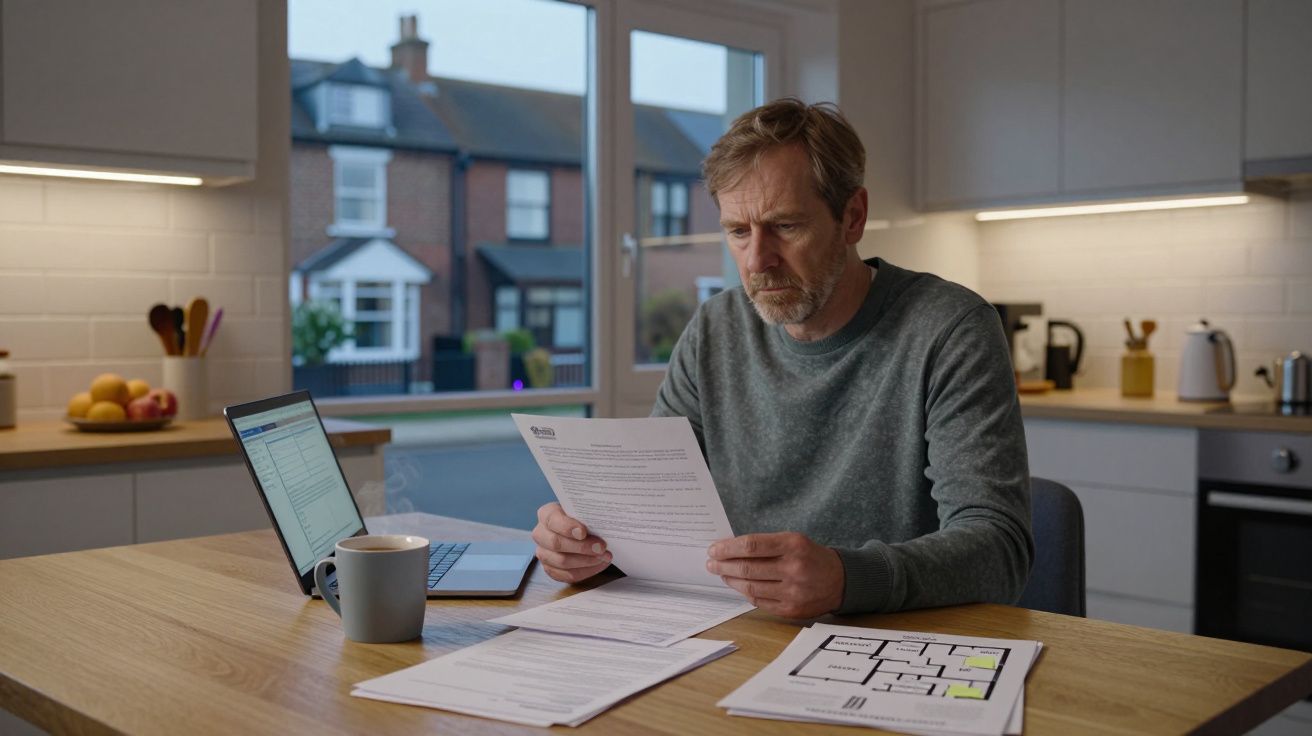
Why your council tax bill may change in 2026 – and the one form homeowners should watch out for
For most people, council tax is background noise: a direct debit that leaves the account each month and a bill that gets filed in a drawer. But in 2026, many homeowners could discover that the quiet assumptions underneath their bill have shifted. A review that has been talked about for years is edging closer to reality, and one unremarkable-looking form could end up costing some households hundreds of pounds a year.
On the surface, nothing dramatic has happened. Your house has not moved, your bin collection looks the same, and banding letters are not dropping through doors yet. Yet surveyors, councils and civil servants are preparing for a moment when the map of who pays what no longer matches the streets we actually live on. When that gap becomes too wide, governments tend to reach for revaluation.
The big question: is a revaluation finally coming?
Council tax in England and Scotland is based on what your home was worth in the early 1990s. Not last year, not even this century. Entire neighbourhoods have changed shape since then: flats on old industrial land, loft conversions, extensions, and streets once written off now sitting in commuter gold.
The longer that bands stay frozen, the more arbitrary the bills feel. Two similar houses on the same road can pay very different amounts because one was improved or sold at the “wrong” time, causing its band to be challenged or checked. Policy papers have been circling a 2026 window as a practical point to reboot the system: update the underlying values, simplify some discounts, and quietly nudge more revenue into the system.
Nobody expects a fanfare. If it comes, it will arrive dressed as “modernisation” or “fairness”, backed by data rather than slogans. But fairness has an edge: when one house moves down a band, another usually moves up.
A revaluation does not raise council tax overall by itself – it moves the slices of the same pie between homes.
The one form that can change your band
Hidden in the bureaucracy is a document with real teeth: the re-banding or “proposal to alter the valuation list” form. In England and Wales it usually runs through the Valuation Office Agency (VOA); in Scotland it goes via the local Assessor. The name differs, but the effect is the same. It’s how your property’s band is formally questioned and, potentially, changed.
Today, most people meet this form only if they believe they are overpaying and want to appeal. In a revaluation cycle, the traffic can run both ways. If you have:
- Added significant floor space (a large extension or loft conversion)
- Turned a house into multiple self-contained flats
- Blended two small properties into one large one
- Converted non-residential space (barn, shop, office) into a home
then your council or the VOA/Assessor may eventually send you a notice or form asking for details. It looks administrative. It is not. The answers you give can be used to justify moving your property into a higher band.
The flipside is also true. If your home has been structurally altered in a way that reduces value – serious subsidence, demolition of a wing, or permanent loss of access – correctly documented changes can support a lower band. The form cuts both ways, but the initiative rarely starts with you.
How revaluation actually shifts your bill
Revaluation does three jobs at once. It updates the value of property, re-sorts homes into bands, and resets the overall rate at which band D is charged so that councils do not appear to have inflicted sudden, universal rises. The lived reality on a street can be very different from the smooth chart in a policy document.
Imagine three neighbouring homes:
- A modest terrace, unchanged for 30 years.
- A similar terrace with a two-storey rear extension.
- A former shop on the corner, now a sizeable four-bedroom house.
In the current frozen system, all three might sit in the same band if the paperwork has not caught up. Under a 2026-style revaluation, homes with extra, legally recognised space are more likely to move up a band. That can happen even if the family inside has not changed job, school or car.
There are a few key levers that matter more than people think:
- Usable internal area, not just footprint.
- Permanent improvements, not portable fittings.
- Local market shifts, including gentrification and new transport links.
- Split or merged titles, especially for former flats or commercial conversions.
Revaluation is not about how smart your kitchen looks. It is about how the property as an asset would be valued in a consistent snapshot in time, relative to everything around it.
Common triggers and what they tend to mean
| Change to your property | Likely direction of band movement |
|---|---|
| Major extension or loft conversion signed off by Building Control | Up one band, sometimes more |
| Conversion of a single house to two or more self-contained flats | Each unit assessed separately; bands can vary |
| Demolition or loss of significant living space | Possible band reduction, if recorded |
| Area-wide regeneration or new transport hub | Many nearby bands at risk of moving up together |
The quiet risk: “information” forms that feel optional
The form to alter a valuation list is not always labelled in bold as a re-banding request. It can arrive as an “information notice”, “dwelling questionnaire” or “review of property details”. Homeowners skim the covering letter, see no demand for payment, and put it off.
That is the mistake to avoid in 2026.
Statutory notices from the VOA, Assessors or councils come with deadlines and, in some cases, penalties for non-response. They may ask:
- When specific works were completed
- Whether parts of the property are self-contained
- How many rooms are used as bedrooms or living space
- Whether any part is let out on a long-term basis
You are usually required to answer truthfully and within the stated time. Failing to respond does not freeze your band where it is; it simply means decisions may be made without the nuance you could have provided. Misleading information can backfire during any later appeal.
If a form mentions “valuation list”, “banding” or “domestic property review”, take it seriously – even if the tone feels routine.
How to prepare before anything lands on your doormat
You cannot stop a revaluation if the government decides to run one. You can, however, avoid being surprised, disorganised or misinformed when it reaches your postcode. Preparation is mostly paperwork and perspective.
Start with three simple steps:
Find your current band and compare locally.
Use your country’s online council tax band checker and look up a few similar homes on your street. Large, unexplained differences are worth noting.Gather your property documents.
Keep planning approvals, Building Control completion certificates, and any structural survey in one folder (digital or physical). These are your evidence base if banding is questioned.Walk through your home as an assessor would.
Count usable rooms, not how you personally use them. That “office” could be read as a bedroom. That occasional annex might be seen as a separate dwelling if it has its own kitchen and entrance.
When changes have clearly reduced the quality or size of the home, keep clear records: engineers’ reports, insurer correspondence, or council notes about structural issues. These can support a case if your band looks optimistic compared with reality.
Protecting yourself without gaming the system
There is a line between being prepared and trying to hide improvements. Assessors and the VOA can access aerial imagery, planning records and sales data. If a large extension appears on publicly available records but disappears from your form, you will have a problem.
A more productive approach is to:
- Be accurate, not expansive. Answer the questions asked, clearly and honestly, without adding volunteered speculation.
- Keep copies of everything you send. If the form is online, save screenshots or confirmation emails.
- Check who is actually asking. Genuine notices will reference legislation, give an official reference number, and be contactable via a verifiable government or council address.
If you genuinely think your band is too high compared with similar homes around you, 2026 could also be an opportunity. Revaluation may prompt a broader look at anomalies, and a well-evidenced challenge at the right time can save money in future years. Just do not assume that any challenge only moves numbers down.
What to watch between now and 2026
The timeline matters. Revaluation talk moves through predictable stages: consultation, trial data exercises, quiet letters to professionals, and then public leaflets and guidance. Most of this happens long before bills change.
Key signals to keep an eye on:
- Official consultations on council tax “modernisation” or “banding reform”.
- Announcements from the VOA, local Assessors or devolved governments about pilot valuation projects.
- Guidance to estate agents and surveyors about new data requirements with property sales.
When the language shifts from “considering options” to “implementing a new list from [date]”, you will know the train is moving. At that point, any homeowner who has ignored prior correspondence will find themselves on the back foot.
FAQ:
- Will everyone’s council tax bill go up in 2026?
No. A revaluation shuffles who pays what rather than automatically raising the total. Some homes go up a band, some go down, and some stay where they are, depending on how their value has changed relative to others.- Can I refuse to fill in a valuation or property information form?
You can ignore it, but you may face penalties and decisions made without your input. In many cases you are legally required to respond, and cooperation puts you in a stronger position if you later dispute the outcome.- Do cosmetic changes like a new kitchen affect my band?
Usually not on their own. Council tax bands focus more on size, layout, and overall property value rather than individual fixtures, though a series of high-end upgrades in a rising area can still be reflected in comparative sales.- How do I know if a revaluation notice is genuine?
Check that it comes from an official government or council domain, includes a reference to the relevant valuation authority (VOA or Assessor), cites legislation or guidance, and offers contact details you can verify independently on a government website.- Is it worth appealing my band now or waiting for 2026?
If there is clear evidence that your home is over-banded compared with near-identical properties, it can be worth challenging sooner. If the case is marginal, some people prefer to wait and see how their band looks after any revaluation process.




Comments (0)
No comments yet. Be the first to comment!
Leave a Comment