Why your freezer is making ice cream taste like fish – and the two‑step fix that stops odour transfer
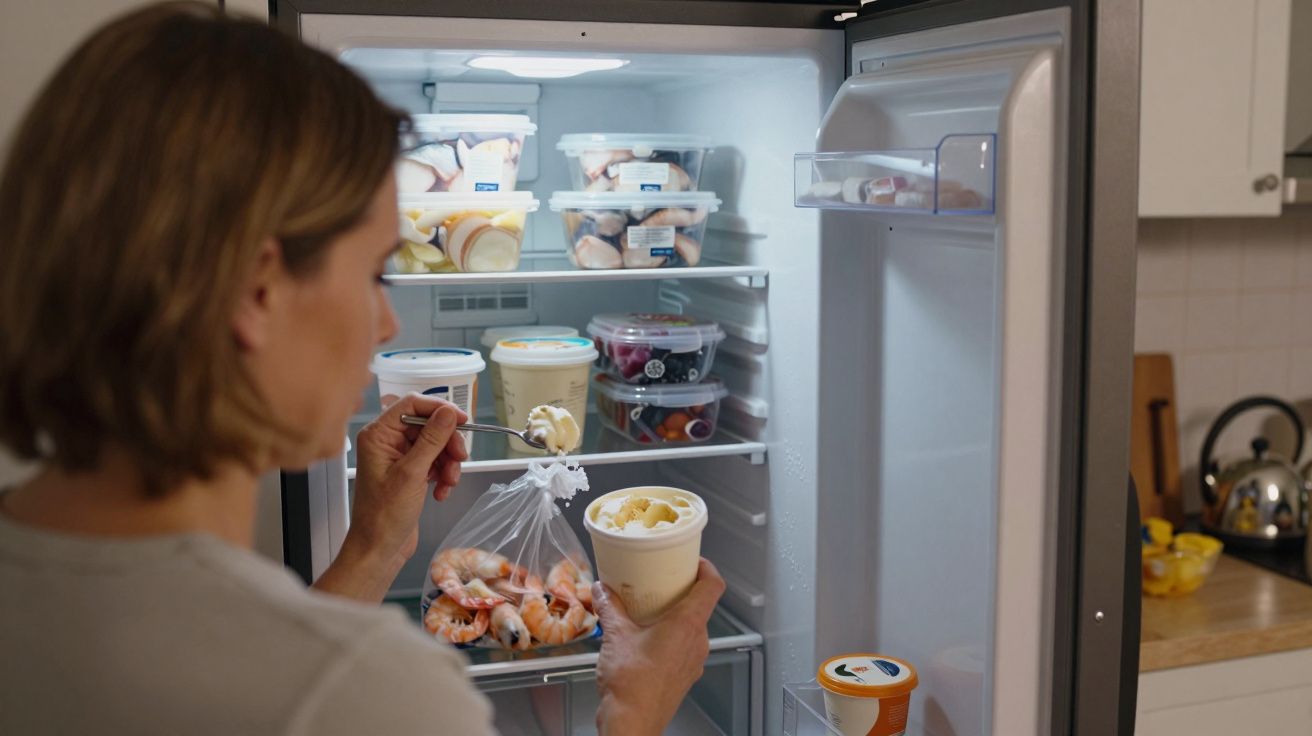
The tub looked fine. The lid was on. But the first spoonful of vanilla tasted faintly… like last week’s salmon. He checked the date, sniffed the carton twice, then opened the freezer again as if it might confess. It didn’t. Inside, peas, fish fingers, ice cubes and three half‑used bags of something frosty shared the same cold breath.
Two shelves down, a bag of frozen prawns lay clipped but not fully sealed. Ice crystals fanned out from the corner, like smoke caught mid‑escape. No one had shouted, no one had done anything “wrong”. Yet dessert had quietly turned into a reminder of Friday’s tea. That’s the unnerving thing about freezers: the fault often hides in the air, not the food.
He put the tub back, annoyed with himself and slightly suspicious of everything else in there. It sticks with you, that first strange spoonful.
What’s really happening inside your freezer
Freezers feel like vaults. Cold, closed, safe. In reality, they are small wind tunnels. Every time you open the door, warm, moist kitchen air rushes in, then condenses and freezes. Odour molecules from strong‑smelling foods hitch a ride on that moisture, then settle onto anything that is not properly sealed.
Fat is the other culprit. Ice cream, butter, frozen pastry and leftover lasagne all contain fat, and fat is like a sponge for smells. Volatile compounds from fish, garlic, onions and spicy marinades dissolve into those fats over time. The temperature slows the process down, but it does not stop it.
There’s a second, quieter factor: your freezer’s own breath. Many upright and frost‑free freezers use a small fan to circulate cold air evenly. That circulation is brilliant for stable temperatures, and terrible if there is an open packet of smoked mackerel sitting next to your “treat” shelf. The air does not care which shelf is savoury and which is sweet.
You end up with a kind of cold potpourri: fish oils, onion notes, freezer burn, and cardboard. Ice cream, being soft, fatty and often in slightly flexible tubs, is one of the first things to absorb it.
The two‑step fix that actually works
You do not need a deep clean and a brand‑new appliance. You need two habits, repeated without drama:
- Seal the smells properly.
- Stabilise the cold air.
Think of step one as putting a lid on the loudest singers in the choir. Anything with a strong odour – fish, cooked meats, curry, garlic bread, blue cheese, leftovers with rich sauces – needs an airtight barrier. The supermarket bag or flimsy inner tray is almost never enough once opened.
Step two is about keeping the freezer as calm and boring as possible. Big swings in temperature make ice crystals grow, lids flex and gaps open. The more stable the cold, the less the air churns, and the less chance strong smells have to roam.
Done together, these two steps turn your freezer from a communal wardrobe into a set of closed suitcases. Everything still lives in the same space, but the smells stop sharing a drawer.
Step 1: Seal the smells (and the sweets)
Start with containers, not gadgets. Ice cream belongs in something genuinely airtight, especially once opened. If the factory lid feels loose or the tub is cardboard, decant the rest into a clip‑top box or a screw‑lid tub designed for freezing. Press a piece of baking parchment or cling film directly onto the surface before closing if you want to go further; it reduces both odour transfer and icy crystals.
Apply the same discipline to the smelliest foods:
- Double‑bag fish and seafood in freezer‑grade zip bags, pressing out as much air as you can.
- Wrap cheese first in baking paper, then in a bag or box before freezing.
- Cool leftovers fully, then portion into lidded boxes that actually snap shut on all sides.
- Avoid leaving anything just pegged in its original, torn packet.
Labels help more than you think. When you write “Fish – Jan” on a bag, you are far more likely to spot it later and keep it from migrating next to the ice cream. Stack strong‑smelling foods together on one shelf or in a dedicated box. The aim is to create a “smell zone” and a “treat zone” that rarely swap cargo.
If something already smells off before it freezes, do not rely on the cold to rescue it. Freezing pauses bacteria; it does not remove bad odours already bound to fat. Those will happily share themselves with your desserts.
Step 2: Calm the air, stop the churn
A freezer that swings between “door wide open” and “frost storm” works harder and smells busier. You want the opposite: a consistently cold, mostly undisturbed box. That rests on a few small, boring habits.
Keep it reasonably full. A lightly packed freezer warms up faster when opened; a well‑loaded freezer, with boxes and bags acting as cold blocks, barely flinches. If you are running low, even a few containers of tap water frozen into ice blocks can help stabilise the temperature until your next shop.
Open the door with intent. Decide what you need before you tug the handle, grab it, then close the door. Standing there browsing with the door open invites moist kitchen air in; that air brings odours and makes every surface wet before it refreezes. Over time, that moisture becomes the frost that traps smells and makes packaging brittle.
Defrost or run the frost‑free cycle when you notice ice thickening. Those layers of frost are not just ugly; they lock in old smells and make the motor work harder. A cleaner, thinner layer of ice means less surface for odours to cling to and less air turbulence as the fan does its job.
Finally, avoid storing uncovered baking trays or open containers “just for a bit”. That “bit” often becomes weeks. Anything that goes in the freezer should have a lid, a wrap or a bag around it, even if it is just for overnight.
Quick checks: is your freezer helping or sabotaging?
You can tell a lot from a 60‑second look and sniff:
- Ice cream lid: does it sit flat and tight, or wobble and lift at one edge?
- Smell test: does a cold, clean spoon left in there for ten minutes come out smelling neutral or faintly savoury?
- Packet audit: how many bags are clipped rather than sealed in something airtight?
If two or three answers make you wince, the two‑step fix will give you faster results than any deodoriser. Baking soda tubs and coffee grounds are popular tricks, but they work best after you have sealed the real sources. Otherwise, you are just adding more things for the smells to cling to.
Think of it like laundry: a bowl of bicarbonate will not help much if you keep throwing damp socks in a pile.
Where to keep what – without overthinking it
You do not need a map on the door, just a loose zoning that your household can remember.
| Zone | What belongs there | Why it helps |
|---|---|---|
| “Smell shelf” | Fish, meat, cooked meals, garlic bread, curries | Keeps the strongest odours contained and easy to bag properly |
| “Treat shelf” | Ice cream, frozen fruit, pastries, bread | Fatty, neutral‑tasting foods that absorb smells quickly |
| Door & top | Ice packs, ice cubes, herbs, things you use often | Warmer, more disturbed area where smells move fastest |
If your freezer is a drawer style, think in front‑to‑back instead of shelves, but keep the same idea: strong flavours grouped and sealed at one end, treats safe at the other.
Once you explain the logic at home – “this shelf is the fish corner; this one is the pudding corner” – it becomes a simple habit, not a house rule.
The real goal: a freezer you can trust
This is about more than fishy ice cream. It is about trusting that what you freeze will come out tasting like itself. When that trust wobbles, people waste food “just in case”, or stop batch‑cooking entirely because last time the lasagne tasted like onions and something they could not quite place.
A freezer that keeps its smells in their lane is a quiet asset. It lets you buy yellow‑sticker bargains without fear, stash leftovers for busy nights, and keep treats on hand without rolling the dice on every spoonful. The two‑step fix – seal the smells, calm the air – is not glamorous. It is just the kind of boring discipline that makes the cold box work for you, not against you.
Key takeaways at a glance
| Point | Detail | Why it matters |
|---|---|---|
| Seal odours | Airtight containers, double‑bag fish and leftovers, group strong smells | Stops flavour molecules hitching a ride to your ice cream |
| Stabilise cold | Keep freezer reasonably full, quick door openings, defrost when frosty | Reduces air churn and the spread of odours |
| Zone your space | One “smell shelf”, one “treat shelf”, labels where needed | Simple system everyone at home can follow |
FAQ:
- Why does ice cream absorb smells more than other foods? Its high fat content and soft texture make it a magnet for volatile odour molecules, especially from fish, onions and strong spices.
- Will cleaning the freezer once fix the problem? A clean, defrosted freezer helps, but without better sealing and calmer air, smells will slowly return. The two habits matter more than a one‑off scrub.
- Do baking soda or coffee really remove freezer smells? They can absorb some odours, but they work best as a backup after you have sealed strong‑smelling foods. They cannot compensate for open fish packets.
- Is it safe to eat ice cream that tastes of fish? It is usually safe if stored frozen and in date, but the off flavour makes it unappetising. If in doubt about how long food has been open, it is safer to bin it.
- How often should I reorganise the freezer? A quick five‑minute tidy once a month – grouping smellier foods and checking lids – is enough to keep odour transfer under control.




Comments (0)
No comments yet. Be the first to comment!
Leave a Comment